
Ralph Abernathy Biography Quotes 5 Report mistakes
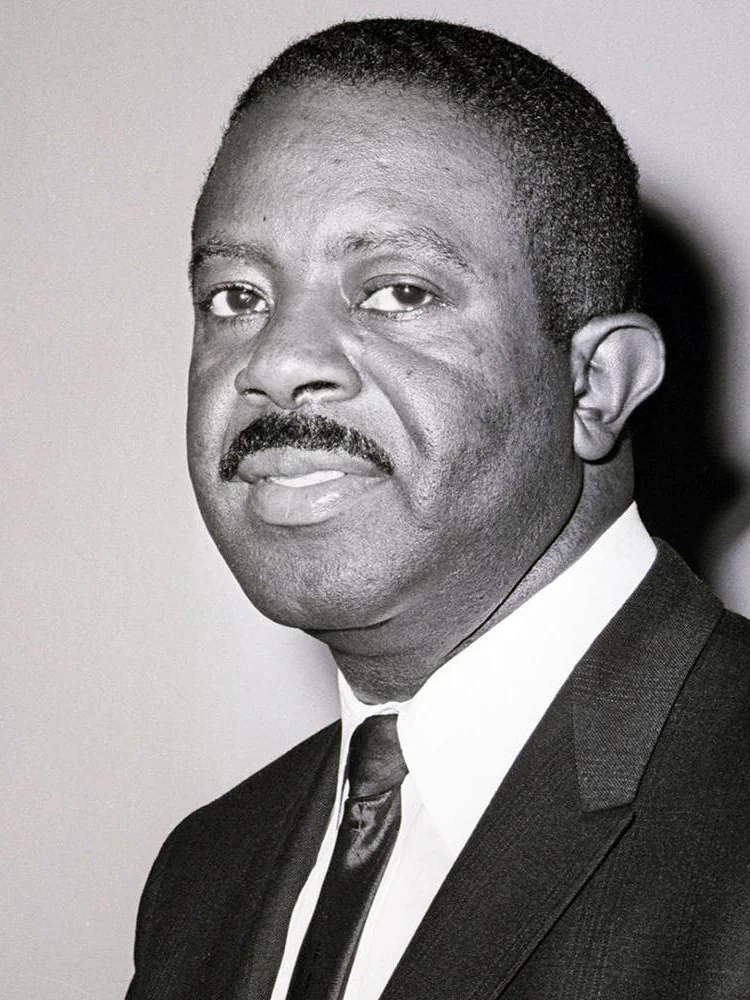
Attr: biography.com
| 5 Quotes | |
| Born as | Ralph David Abernathy |
| Known as | Ralph D. Abernathy |
| Occup. | Activist |
| From | USA |
| Born | March 11, 1926 Linden, Alabama, United States |
| Died | April 17, 1990 Atlanta, Georgia, United States |
| Aged | 64 years |
| Cite | |
Citation Formats
APA Style (7th ed.)
Ralph abernathy biography, facts and quotes. (2026, February 11). FixQuotes. https://fixquotes.com/authors/ralph-abernathy/
Chicago Style
"Ralph Abernathy biography, facts and quotes." FixQuotes. February 11, 2026. https://fixquotes.com/authors/ralph-abernathy/.
MLA Style (9th ed.)
"Ralph Abernathy biography, facts and quotes." FixQuotes, 11 Feb. 2026, https://fixquotes.com/authors/ralph-abernathy/. Accessed 26 Mar. 2026.
Early Life and Background
Ralph David Abernathy was born on March 11, 1926, in Linden, Alabama, a Black Belt town defined by cotton, debt, and the daily humiliations of Jim Crow. He grew up in a large family in which faith and labor were inseparable disciplines. His father, William L. Abernathy, farmed and did skilled work, and the family achieved a measure of stability unusual for Black Alabamians of the era - enough to teach Ralph early that dignity was not a gift from white power but a condition to be practiced and defended.World War II widened his horizon and hardened his realism. He served in the U.S. Army, encountering a world beyond Alabama even as the military remained segregated. Returning home, he carried both impatience and method: impatience with the South's rituals of racial submission, and method in the form of organization, chain of command, and the habit of steady presence under pressure. Those traits would later make him less a public symbol than a sustaining engine of the movement.
Education and Formative Influences
Abernathy studied mathematics at Alabama State College in Montgomery and absorbed the Black intellectual and church-based traditions that treated uplift as both spiritual and political work. He became a Baptist minister and, in the postwar years, found in the Social Gospel and the Black freedom struggle a single vocation - to make the moral claims of Christianity operational in public life. The church gave him a pulpit, but also a membership roll, a treasury, a meeting hall, and a language that could turn private fear into shared resolve.Career, Major Works, and Turning Points
By the mid-1950s Abernathy was pastor of First Baptist Church in Montgomery and quickly became a strategist and fundraiser in the Montgomery Bus Boycott, helping found the Montgomery Improvement Association and anchoring its day-to-day operations alongside the young Martin Luther King Jr. Their partnership deepened through the creation of the Southern Christian Leadership Conference in 1957, and through crises that demanded both courage and logistics: mass meetings, bail money, rides to work, and the constant threat of violence. Abernathy marched in Birmingham in 1963 and in Selma in 1965, stood near King on major stages including the 1963 March on Washington, and was with him in Memphis in April 1968, where he was also wounded when King was assassinated. He succeeded King as SCLC president, then led the 1968 Poor People's Campaign in Washington, D.C., attempting to translate civil rights into economic rights. In later years he remained a public witness - sometimes controversial, often underestimated - and narrated his experience in the memoir And the Walls Came Tumbling Down (1989). He died on April 17, 1990, in Atlanta, Georgia.Philosophy, Style, and Themes
Abernathy's inner life was forged at the intersection of pastoral care and political emergency. He believed movements survive not only by prophetic speeches but by the less glamorous arts of staying power: feeding people, keeping them unified, negotiating without surrender, and returning again after defeat. His theology was not abstract consolation; it was an engine for risk. “I don't know what the future may hold, but I know who holds the future”. In Abernathy's hands, such faith functioned as psychological armor, enabling him to absorb threats, jailings, and grief without collapsing into fatalism or rage.His public voice combined Christian universalism with a stubborn, almost physical refusal to retreat. “Bring on your tear gas, bring on your grenades, your new supplies of Mace, your state troopers and even your national guards. But let the record show we ain't going to be turned around”. That sentence captures his style: a preacher's cadence yoked to a field organizer's defiance, designed to stiffen spines in the street and sanctuaries alike. He also understood that moral struggle required moral flexibility - the willingness to change habits, institutions, and even churches in pursuit of justice. “Christians should be ready for a change because Jesus was the greatest changer in history”. Underneath the rhetoric was a practical psychology: people could endure sacrifice if they felt it was meaningful, shared, and guided by a moral story larger than themselves.
Legacy and Influence
Abernathy's enduring influence lies in how he modeled leadership as accompaniment. History often frames him as King's lieutenant, yet the movement's continuity depended on his gifts: organizing infrastructure, sustaining morale, and insisting that civil rights without economic rights was an unfinished gospel. His SCLC years exposed the difficulties of translating charismatic momentum into long-term policy, but they also preserved a vision of multiracial democracy grounded in nonviolence and faith. In biographies and scholarship, Abernathy increasingly appears not as a shadow but as a crucial interpreter of the era's inner mechanics - the man who kept the meetings going, the people moving, and the moral claim alive when victory was neither immediate nor assured.Our collection contains 5 quotes written by Ralph, under the main topics: Justice - Freedom - Faith - Legacy & Remembrance - Embrace Change.