
Ralph Bakshi Biography Quotes 30 Report mistakes
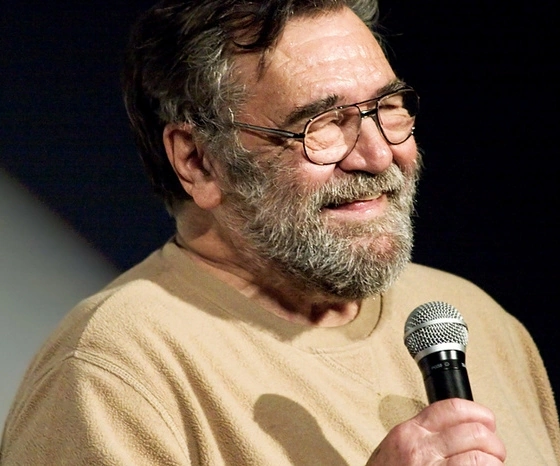
| 30 Quotes | |
| Occup. | Director |
| From | USA |
| Born | October 29, 1938 Haifa, British Mandate for Palestine |
| Age | 87 years |
| Cite | |
Citation Formats
APA Style (7th ed.)
Ralph bakshi biography, facts and quotes. (2026, February 11). FixQuotes. https://fixquotes.com/authors/ralph-bakshi/
Chicago Style
"Ralph Bakshi biography, facts and quotes." FixQuotes. February 11, 2026. https://fixquotes.com/authors/ralph-bakshi/.
MLA Style (9th ed.)
"Ralph Bakshi biography, facts and quotes." FixQuotes, 11 Feb. 2026, https://fixquotes.com/authors/ralph-bakshi/. Accessed 12 Feb. 2026.
Early Life and Background
Ralph Bakshi was born on October 29, 1938, in Haifa, then in the British Mandate of Palestine, to a Jewish family whose life was quickly reshaped by war and displacement. In 1939 his parents took him to the United States, and he grew up in the working-class, immigrant neighborhoods of Brooklyn, New York, amid the pressures and street textures that would later surface in his films as a mix of bravado, anxiety, and gallows humor. The city gave him more than scenery - it gave him a social map: ethnic enclaves, hustlers, and outsiders living cheek-by-jowl, with class friction always close to the surface.As a child he drew obsessively, attracted to the immediacy of cartoons and the way they could smuggle taboo feelings past adult gatekeepers. His early environment was not the pastoral America sold on television; it was crowded, loud, and improvised, where identity was performed daily and where the line between comedy and cruelty could be thin. That sensibility - streetwise, suspicious of sanctimony, and hungry for intensity - became the emotional engine of his later work, especially his insistence that animation could carry the same adult contradictions as live-action cinema.
Education and Formative Influences
Bakshi attended the High School of Art and Design in Manhattan, a pipeline for commercial art that trained the eye in draftsmanship, layout, and visual problem-solving rather than in genteel "fine arts" distance. He absorbed newspaper comics, pulp illustration, and the elasticity of mid-century American animation, but he was equally shaped by the era's urban realism - crime tabloids, stand-up cadences, and the emergent counterculture's distrust of official narratives. Entering the industry young, he learned that style was inseparable from labor politics: who controlled the studio, whose tastes dictated the work, and which subjects were declared "unanimatable".Career, Major Works, and Turning Points
He broke in at Terrytoons in the late 1950s, then moved to Paramount's animation operation, where he rose to director on projects such as the 1968 feature Heavy Traffic, and soon became the best-known American champion of adult animation. His breakthrough was Fritz the Cat (1972), adapted from Robert Crumb, which became the first X-rated animated feature to receive wide release; he followed with Heavy Traffic (1973), Coonskin (1975), the ambitious fantasy The Lord of the Rings (1978), and the hybrid, rotoscoped American Pop (1981). After Fire and Ice (1983) and Cool World (1992), his output slowed, but his reputation solidified: a director who treated the cartoon frame as a place for sex, violence, racism, longing, and nostalgia - not as a nursery. His turning points often arrived through conflict: battles over ratings and censorship, studio unease with his abrasive satire, and the creative strain of attempting epic storytelling with limited resources, all of which pushed him toward a more personal, less compromise-friendly artistic identity.Philosophy, Style, and Themes
Bakshi's inner life as an artist is best understood as a continual argument with the American mythology of "pure" animation. He wanted the medium to express sweat, panic, lust, tenderness, and fear - the full adult range - and he built techniques to match that urgency: aggressive caricature, collage-like backgrounds, rotoscoping to capture lived motion, and soundtracks that carried vernacular speech like documentary evidence. For him, animation was not a genre but a set of tools, and he guarded authorship fiercely, insisting, "As an artist, I want to interpret my feelings - not run across the street and ask what my mother thinks". That sentence exposes a psychology of self-reliance bordering on defiance: he treated consensus as the enemy of honesty, and he preferred the risk of being hated to the safety of being approved.His themes return to power - who gets to speak, who gets punished for speaking, and who profits from cultural innocence. He distrusted corporate aesthetics and the way studios could turn artists into obedient technicians, complaining, "Look what Disney's done to their animation department. There wasn't an animator in charge of their animation unit!" The attack is not just about management; it is about craft as moral authority, the belief that animation loses its soul when it becomes a product designed by committees. At the same time he framed his own work less as provocation for its own sake than as emotional transmission: "What's most important in animation is the emotions and the ideas being portrayed. I'm a great believer of energy and emotion". That credo explains why his films often feel deliberately overheated - crowded frames, abrasive jokes, melodrama snapping into satire - as if only high temperature could melt through American hypocrisy and reach something like truth.
Legacy and Influence
Bakshi helped reopen a door that American culture had largely shut after the studio era: the idea that animation could be an adult art form with political bite, erotic candor, and tragic weight. Even filmmakers who reject his roughness inherited his permissions, from prime-time television satire to independent animated features and the broader acceptance of rotoscoping and mixed-media grit. His work remains controversial, sometimes rightly criticized for crude stereotypes even as it attempts to expose racism's machinery, but its historical importance is durable: he forced audiences and executives to confront what they had been trained not to see - that cartoons can carry the same dangerous human material as any live-action film, and that the medium's future depends on artists willing to wager their reputations on that fact.Our collection contains 30 quotes written by Ralph, under the main topics: Witty One-Liners - Art - Sarcastic - Movie - Work.
Other people related to Ralph: Peter S. Beagle (Author), Frank Frazetta (Artist)
Source / external links