
Ralph Bunche Biography Quotes 6 Report mistakes
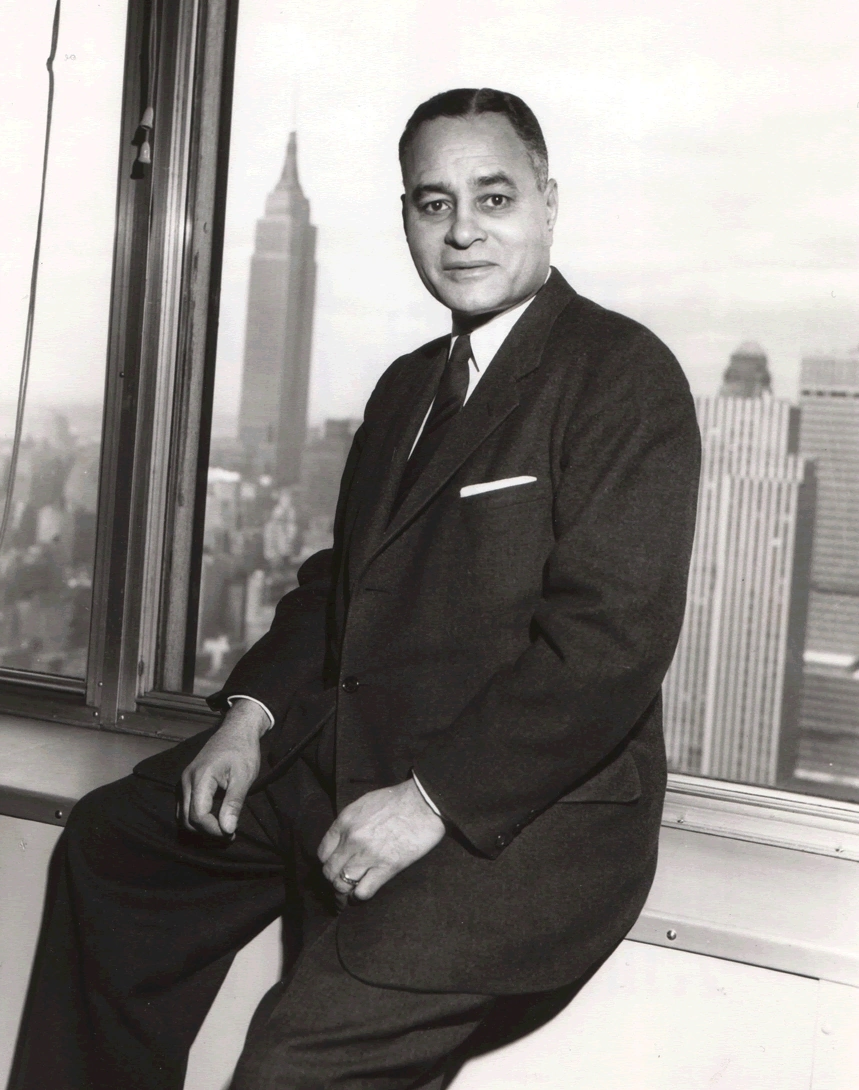
| 6 Quotes | |
| Born as | Ralph Johnson Bunche |
| Occup. | Diplomat |
| From | USA |
| Born | August 7, 1904 |
| Died | December 9, 1971 |
| Aged | 67 years |
| Cite | |
Citation Formats
APA Style (7th ed.)
Ralph bunche biography, facts and quotes. (2026, February 11). FixQuotes. https://fixquotes.com/authors/ralph-bunche/
Chicago Style
"Ralph Bunche biography, facts and quotes." FixQuotes. February 11, 2026. https://fixquotes.com/authors/ralph-bunche/.
MLA Style (9th ed.)
"Ralph Bunche biography, facts and quotes." FixQuotes, 11 Feb. 2026, https://fixquotes.com/authors/ralph-bunche/. Accessed 6 Mar. 2026.
Early Life and Background
Ralph Johnson Bunche was born on August 7, 1904, in Detroit, Michigan, to a Black family navigating the hard edges of early 20th-century America. His father, Fred Bunche, and mother, Olive Agnes Johnson Bunche, struggled with illness and instability, and Ralph was drawn early into a life where achievement would be both refuge and proof. The United States he entered was defined by Jim Crow, race violence, and the Great Migration - a country proclaiming democracy while rationing it.After his mother died and his father faded from the household, Bunche and his sister were raised largely by their maternal grandmother, Lucy Taylor Johnson. The family moved west, and Los Angeles became the setting for his disciplined ascent: public schools, odd jobs, and a reputation for being uncommonly focused. Those close to him later recalled a young man who seemed to decide - quietly but irrevocably - that the world would not be allowed to set the limits of his mind.
Education and Formative Influences
Bunche studied at the University of California, Los Angeles, graduating as valedictorian in 1927, then earned a PhD in political science at Harvard University in 1934, after study at Northwestern and research travel in Africa funded by fellowships. His intellectual formation blended rigorous social science with a moral impatience: he examined colonial administration, race, and power as systems, not anecdotes, and he learned to translate scholarship into institutional language - the skill that later let him operate inside government without surrendering to it.Career, Major Works, and Turning Points
In the 1930s Bunche taught at Howard University and emerged as a leading analyst of race and empire, contributing to the landmark UNESCO statement The Race Question (1950) and helping shape empirical arguments against biological racism. During World War II he joined the Office of Strategic Services and then the State Department, working on decolonization and trusteeship planning; at the 1945 San Francisco conference he was part of the US delegation that helped found the United Nations, later becoming director of the UN Trusteeship Division and a key architect of the UN's approach to self-government in former colonies. His defining turning point came in 1948-49 when he succeeded the assassinated mediator Count Folke Bernadotte and negotiated the 1949 Arab-Israeli Armistice Agreements; for that work he received the 1950 Nobel Peace Prize, the first African American so honored. In the 1950s and 1960s he remained a central UN troubleshooter - in Suez, Congo, Cyprus, and beyond - advancing peacekeeping as a practical craft, even as he endured fierce criticism from multiple sides and lived with the strain of chronic overwork.Philosophy, Style, and Themes
Bunche's inner life was marked by a tension between skepticism about human motives and faith in human capacity. He distrusted romantic slogans, preferring incremental mechanisms - supervision, reporting, neutral forces, staged agreements - that could reduce the temperature of conflict. Yet his realism was not cynicism. “The United Nations is our one great hope for a peaceful and free world”. That sentence captures both his wager and his self-discipline: he treated institutions as imperfect instruments that still mattered because nothing else scaled to the problem of modern war.His style as a diplomat was to personalize without sentimentalizing - to listen for the private fear inside public positions. “If you want to get across an idea, wrap it up in person”. In negotiations he pressed parties to see how their narratives sounded in the mouth of an opponent, turning abstraction into consequence. Underneath was a moral anthropology sharpened by racism and colonialism: he believed ordinary people were not born for slaughter, but could be driven there by the ambitions of elites. “There are no warlike people - just warlike leaders”. The psychology implied is revealing: Bunche placed responsibility where agency truly sits, refusing to blame whole populations while still demanding accountability.
Legacy and Influence
Bunche helped invent the modern grammar of multilateral conflict management - armistice supervision, peacekeeping, trusteeship, and the patient linking of ideals to procedures - and he made it harder for the world to pretend that race was a local problem rather than a global contradiction. His Nobel Prize symbolized possibility, but his deeper legacy lies in method: the idea that peace is built less by grand declarations than by durable arrangements, and that international legitimacy can restrain power even when it cannot abolish it. Institutions he shaped still bear his imprint, and the dilemmas he lived - between justice and order, sovereignty and human rights, hope and hard bargaining - remain the core dilemmas of diplomacy.Our collection contains 6 quotes written by Ralph, under the main topics: Ethics & Morality - Wisdom - Peace - Human Rights - Perseverance.
Other people related to Ralph: E. Franklin Frazier (Sociologist), Mordecai Wyatt Johnson (Educator), Trygve Lie (Politician), U Thant (Statesman)
Source / external links