
Ralph Waldo Emerson Biography Quotes 205 Report mistakes
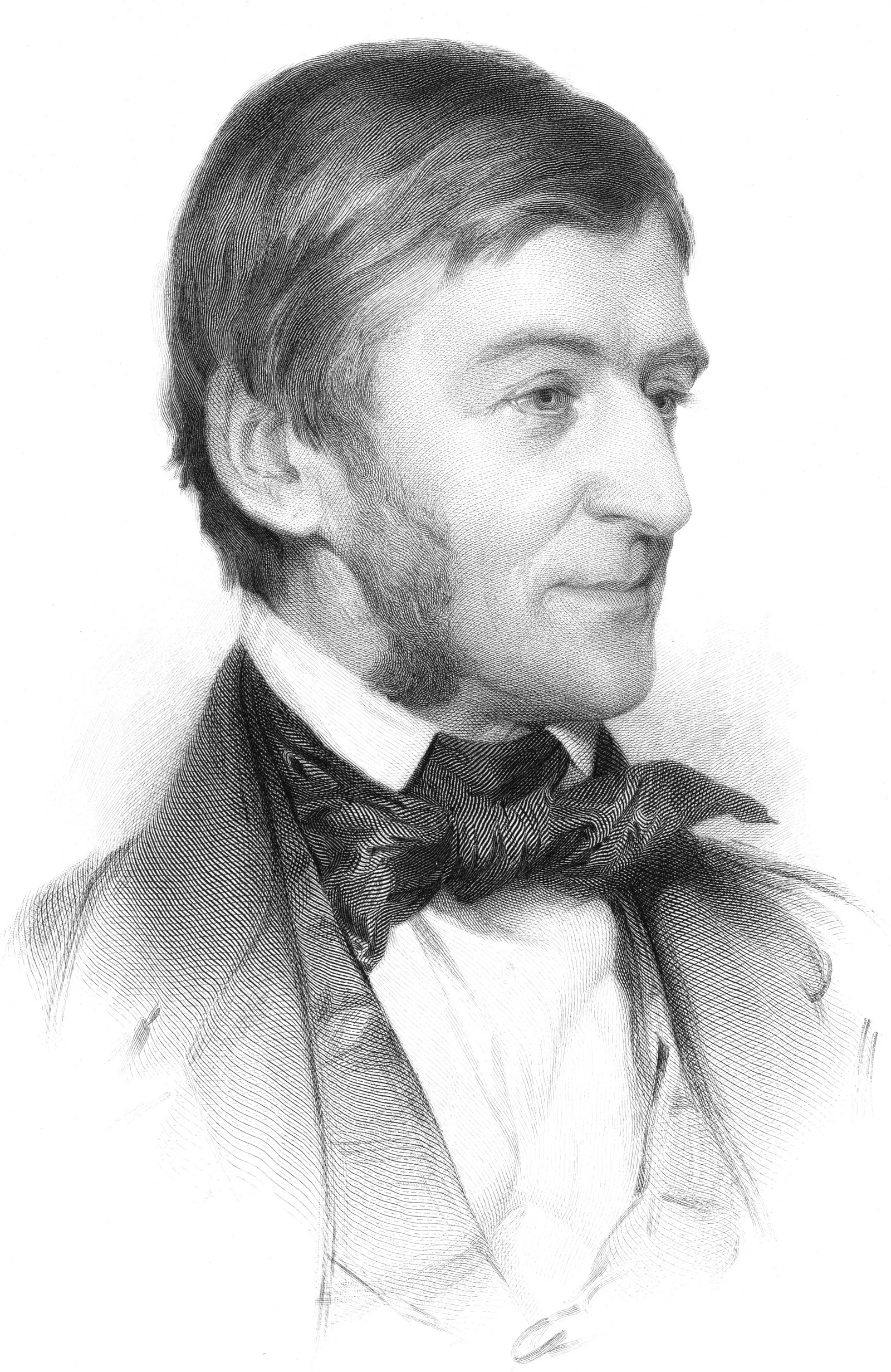
| 205 Quotes | |
| Occup. | Philosopher |
| From | USA |
| Born | May 25, 1803 Boston, Massachusetts, U.S. |
| Died | April 27, 1882 Concord, Massachusetts, U.S. |
| Aged | 78 years |
| Cite | |
Citation Formats
APA Style (7th ed.)
Ralph waldo emerson biography, facts and quotes. (2026, February 7). FixQuotes. https://fixquotes.com/authors/ralph-waldo-emerson/
Chicago Style
"Ralph Waldo Emerson biography, facts and quotes." FixQuotes. February 7, 2026. https://fixquotes.com/authors/ralph-waldo-emerson/.
MLA Style (9th ed.)
"Ralph Waldo Emerson biography, facts and quotes." FixQuotes, 7 Feb. 2026, https://fixquotes.com/authors/ralph-waldo-emerson/. Accessed 5 Mar. 2026.
Early Life and Background
Ralph Waldo Emerson was born on May 25, 1803, in Boston, Massachusetts, into a line of New England ministers whose authority rested as much on learning as on piety. His father, the Rev. William Emerson, died when Ralph was eight, leaving the household to the formidable energy of his mother, Ruth Haskins Emerson, and to the practical guidance of his aunt Mary Moody Emerson, a fierce, self-educated moralist whose letters trained the boy to think in sentences, not slogans. The early republic around him was tightening its civic institutions while loosening inherited certainties; the pulpit still dominated public speech, yet commerce, newspapers, and political parties were remaking what counted as influence.Loss and precarity shaped his inward life early. He learned thrift and self-command, but also the habit of turning deprivation into a spur for mental independence. Boston's intellectual climate offered him models of eloquence and public service, yet he also absorbed a quiet skepticism toward secondhand belief. That tension - between inherited calling and private conviction - became the emotional engine of his later break from conventional ministry and his search for a more immediate religious and moral authority.
Education and Formative Influences
Emerson entered Harvard College at fourteen (1817) and graduated in 1821, then moved through teaching and theological study at Harvard Divinity School (1825-1826). He read widely in Plutarch, Montaigne, and the English Romantics, and he encountered the new German idealism indirectly through Coleridge and Carlyle, learning to treat mind as active, world-making power rather than passive receiver. Mary Moody Emerson remained a crucial, abrasive mentor, pressing him toward austerity, sincerity, and a personal sense of vocation; the result was a writer trained to extract moral meaning from experience while distrusting mere conformity.Career, Major Works, and Turning Points
Ordained a Unitarian minister in Boston in 1829, Emerson married Ellen Louisa Tucker, whose death from tuberculosis in 1831 devastated him and accelerated his spiritual reorientation. In 1832 he resigned his pulpit, partly over objections to administering the Lord's Supper as a fixed rite, and traveled in Europe (1833), meeting Thomas Carlyle and visiting Wordsworth and Coleridge. Settling in Concord, Massachusetts, he married Lydia Jackson in 1835 and became the central voice of New England Transcendentalism: he published Nature (1836), delivered the "Divinity School Address" (1838) that scandalized orthodox and liberal clergy alike, and built his career as a lecturer and essayist with Self-Reliance (1841), The American Scholar (1837), Essays (1841, 1844), and Representative Men (1850). Personal grief returned with the death of his son Waldo in 1842, deepening the stoic tenderness of later work; public crisis mounted with slavery and civil conflict, pushing him from cautious reform sympathy to open antislavery advocacy, including support for John Brown after Harpers Ferry. In his final years, memory loss shadowed him, but he remained a national symbol of the independent American mind until his death on April 27, 1882, in Concord.Philosophy, Style, and Themes
Emerson's philosophy turned on immediacy: the conviction that moral insight arises from direct encounter with nature, conscience, and the present moment, not from inherited institutions. His essays argue that the self is not selfishness but the living point where the universal becomes local; to protect that point, he praised nonconformity, intellectual courage, and an ethic of continual revision. He treated America not as a finished civilization but as a field of moral experiment, a place where the old European weight could be refused for the sake of a new seriousness about freedom. His reform impulses - on slavery, education, women's intellectual equality - came less from party loyalty than from a belief that society should not petrify into custom.His style mirrors his mind: aphoristic, associative, sermon-trained yet anti-dogmatic, moving by flashes rather than systems. “The value of a principle is the number of things it will explain”. That sentence captures his psychological hunger for unity without rigidity - a drive to hold the world together while leaving the conscience uncoerced. “Trust your instinct to the end, though you can render no reason”. Here the private self is not indulged but tested; he believed that genuine intuition carries an impersonal authority, as if the soul were a conduit for something larger. And his optimism was never mere cheerfulness; it was a discipline of perception: “Every wall is a door”. For Emerson, obstruction was not denied but reinterpreted as the very condition of growth, a way to convert grief, dissent, and solitude into access to deeper power.
Legacy and Influence
Emerson helped invent the modern American essay and gave democratic culture a language for individuality that could sound like liberation or like burden, depending on the reader's circumstances. He shaped friends and heirs - Thoreau, Margaret Fuller, Bronson Alcott - and later currents from pragmatism (William James) to modern poetry and self-help rhetoric, while remaining a touchstone in debates about religion without creed, politics without party, and character without orthodoxy. His enduring influence lies in a specific moral psychology: the insistence that a person must answer to an inward standard, yet must keep that standard porous to nature, history, and the claims of justice.Our collection contains 205 quotes written by Ralph, under the main topics: Witty One-Liners - Motivational - Ethics & Morality - Wisdom - Truth.
Other people related to Ralph: John Burroughs (Author), John Jay Chapman (Poet), Van Wyck Brooks (Critic), Julia Ward Howe (Activist), Frederick Henry Hedge (Clergyman), Arthur Hugh Clough (Poet), Francis Herbert Hedge (Philosopher), Ralph W. Trine (Writer)
Frequently Asked Questions
- Ralph Waldo Emerson works: His works include essays such as 'Nature', 'Self-Reliance', and 'Circles', as well as poems like 'The Rhodora' and 'Concord Hymn'.
- What was Ralph Waldo Emerson known for: Emerson was known for his influential essays, speeches, and poems that championed transcendentalist philosophy, individualism, and nonconformity.
- Ralph Waldo Emerson cause of death: Pneumonia
- Ralph Waldo Emerson nationality: American
- Ralph Waldo Emerson summary: Ralph Waldo Emerson was an American philosopher, essayist, and poet who led the transcendentalist movement. He advocated for individualism and self-reliance.
- Ralph Waldo Emerson famous works: Some of his famous works include 'Nature', 'Self-Reliance', 'The American Scholar', and 'The Over-Soul'.
- How old was Ralph Waldo Emerson? He became 78 years old
Ralph Waldo Emerson Famous Works
- 1870 Society and Solitude (Book)
- 1867 May-Day and Other Pieces (Poetry Collection)
- 1860 The Conduct of Life (Book)
- 1856 English Traits (Book)
- 1850 Representative Men (Book)
- 1844 The Poet (Essay)
- 1844 Essays: Second Series (Book)
- 1841 Essays: First Series (Book)
- 1836 Nature (Book)
Source / external links