
Ray Blanton Biography Quotes 3 Report mistakes
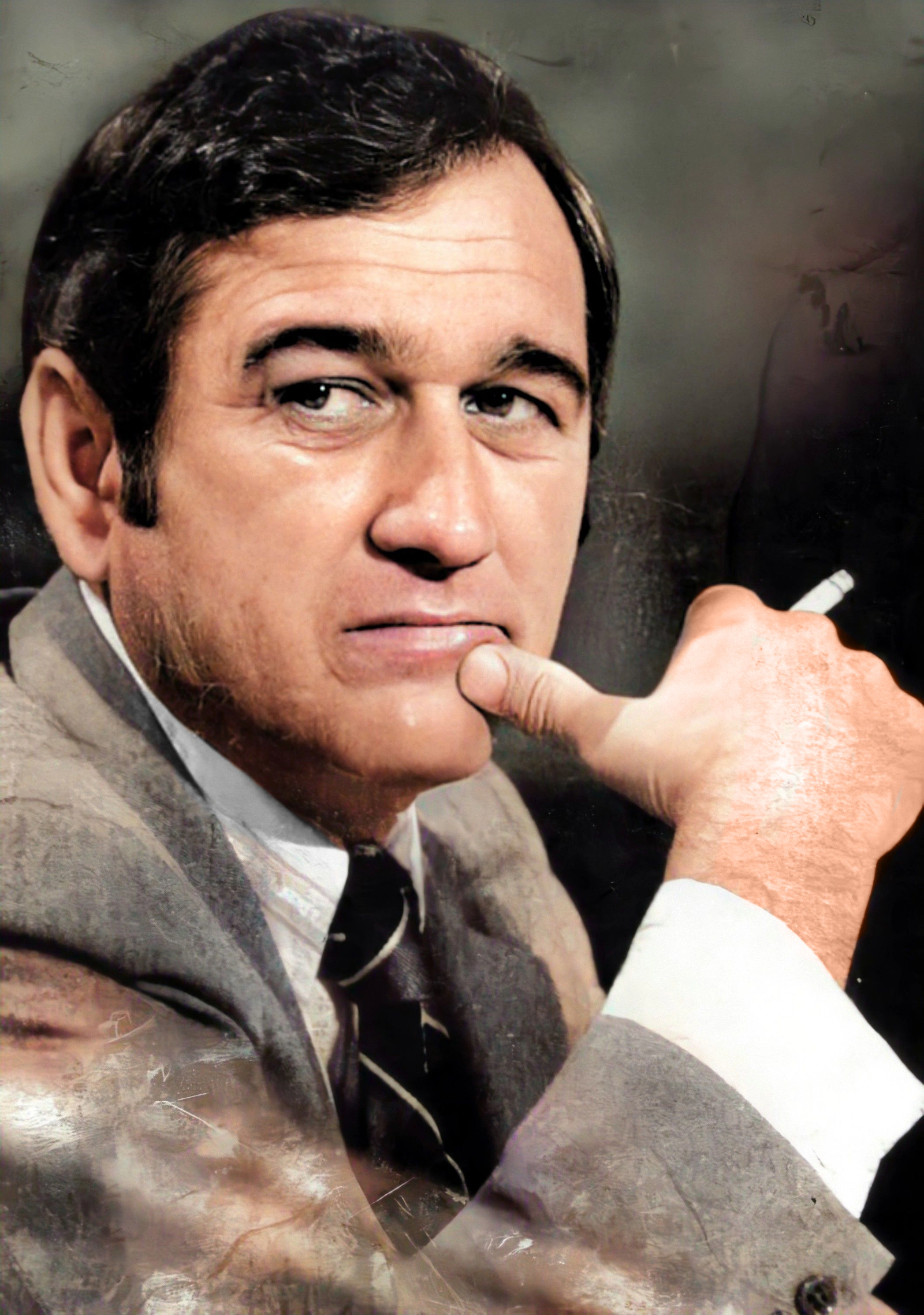
| 3 Quotes | |
| Born as | Leonard Ray Blanton |
| Occup. | Politician |
| From | USA |
| Born | April 10, 1930 Hardin County, Tennessee, U.S. |
| Died | November 22, 1996 Jackson, Tennessee, U.S. |
| Aged | 66 years |
| Cite | |
Citation Formats
APA Style (7th ed.)
Ray blanton biography, facts and quotes. (2026, February 11). FixQuotes. https://fixquotes.com/authors/ray-blanton/
Chicago Style
"Ray Blanton biography, facts and quotes." FixQuotes. February 11, 2026. https://fixquotes.com/authors/ray-blanton/.
MLA Style (9th ed.)
"Ray Blanton biography, facts and quotes." FixQuotes, 11 Feb. 2026, https://fixquotes.com/authors/ray-blanton/. Accessed 27 Mar. 2026.
Early Life
Leonard Ray Blanton was born on February 25, 1930, in rural West Tennessee. Raised in a part of the state where politics and community life were closely intertwined, he developed an early interest in public affairs and the workings of state and national government. His background helped shape a populist style that would mark his political career: direct in tone, attentive to local concerns, and focused on the practical effects of policy on small towns and working families.Entry into Politics
Blanton rose through Democratic Party politics at a time when Tennessee was undergoing major realignments. He proved an effective campaigner, comfortable at courthouses, civic clubs, and county fairs. By the mid-1960s, he had moved beyond local activism to seek federal office. He won election to the U.S. House of Representatives and served in Washington in the late 1960s and early 1970s, positioning himself as an advocate for Tennessee's interests during an era of rapid change. In Congress, he aligned with the Democratic leadership on many domestic issues while working to secure projects and programs that promised jobs and infrastructure investment for his state.Congress and Statewide Ambitions
Having built name recognition in Washington, Blanton sought to translate that visibility into statewide office. In 1972 he ran for the U.S. Senate against the incumbent Republican, Howard Baker, one of the most prominent political figures in Tennessee and, later, a national leader in the Senate. Blanton lost that race, but the campaign introduced him to voters across all three Grand Divisions of the state and set the stage for a gubernatorial bid.Governor of Tennessee
Blanton returned to the campaign trail in 1974, this time for governor. Running as a Democrat, he defeated the Republican challenger, Lamar Alexander, in a hard-fought race that hinged on economic development and the promise of responsive state government. He took office in January 1975 as the state's 44th governor. His administration's public agenda emphasized attracting industry, improving roads and public facilities, and addressing pressures on schools and prisons that had accumulated during a decade of population growth and fiscal uncertainty.As governor, Blanton navigated a complex relationship with the General Assembly. In the Senate, Lieutenant Governor John S. Wilder was a central figure who could make or break gubernatorial priorities, while in the House, Speaker Ned McWherter brought a pragmatic approach to budgeting and legislative scheduling. Blanton's team worked with these leaders to pass measures intended to stimulate employment, support rural areas, and modernize parts of state government. The details were often incremental rather than sweeping, but they reflected a focus on immediate needs and the demands of a geographically diverse state.
Controversy and the Early Transition
Late in Blanton's term, his administration was engulfed by controversy over the issuance of executive clemencies. Reports surfaced in 1978 and early 1979 that a spate of last-minute pardons and commutations had been processed in ways that raised serious legal and ethical questions. Federal authorities, including the office of U.S. Attorney Hal Hardin, scrutinized the circumstances and signaled that further actions might be imminent. Alarmed at the prospect of additional clemencies, legislative leaders conferred with the incoming governor, Lamar Alexander, about the timing of the transition.In an extraordinary step, Alexander was sworn in a few days earlier than the customary inauguration date in January 1979, an arrangement made possible through coordination with John S. Wilder and Ned McWherter. That early swearing-in effectively halted further clemency actions and has remained one of the most dramatic transfer-of-power episodes in Tennessee history. The moment indelibly linked Blanton's governorship with a broader national conversation about executive power and accountability.
Legal Troubles and Imprisonment
After leaving office, Blanton faced federal prosecution in a case separate from the clemency controversy. The charges involved abuse of office connected to the issuance of state licenses. He was convicted and served time in federal prison, a stunning fall for a politician who had, only a few years earlier, held one of the most powerful positions in state government. Although he maintained his perspective on the accomplishments of his administration, the conviction ensured that debates about his career would be framed as much by legal and ethical questions as by public policy.Later Years and Death
Following his release, Blanton kept a lower profile, occasionally reemerging in public discussions of state politics but never reclaiming the central role he had once occupied. He remained a reference point in Tennessee political discourse, both a cautionary example and a figure whose rise reminded observers of the potent appeal of retail politics in small communities. He died on November 22, 1996, closing a life that had spanned the postwar transformation of Tennessee from a predominantly rural state to one more diversified in economy and outlook.Legacy
Ray Blanton's legacy is complex. Supporters have pointed to his attention to economic development and infrastructure needs, and to a style of governance that prioritized constituents far from the state's urban power centers. Critics have emphasized the clemency crisis and the subsequent federal conviction, which they argue undermined public trust and overshadowed his policy agenda. The early inauguration of Lamar Alexander, engineered with the assent of John S. Wilder and Ned McWherter after warnings by U.S. Attorney Hal Hardin, has become the single most widely remembered episode of his tenure, a reminder of how institutional safeguards and political leadership can converge to address perceived abuses.For Tennessee, the Blanton years became a turning point. They prompted closer scrutiny of executive clemency procedures, strengthened norms around transitions of power, and influenced how later governors approached ethics and transparency. For students of political history, his career illustrates the volatile mix of personality, patronage, policy, and legal peril that can define a statehouse. For those who watched him rise from rural beginnings to the governorship and then fall, it remains a story both of the possibilities of American politics and of its limits when public confidence is lost.
Our collection contains 3 quotes written by Ray, under the main topics: Truth - Honesty & Integrity - Anger.
Other people related to Ray: Fred Thompson (Politician)
Source / external links