
Ray Bradbury Biography Quotes 30 Report mistakes
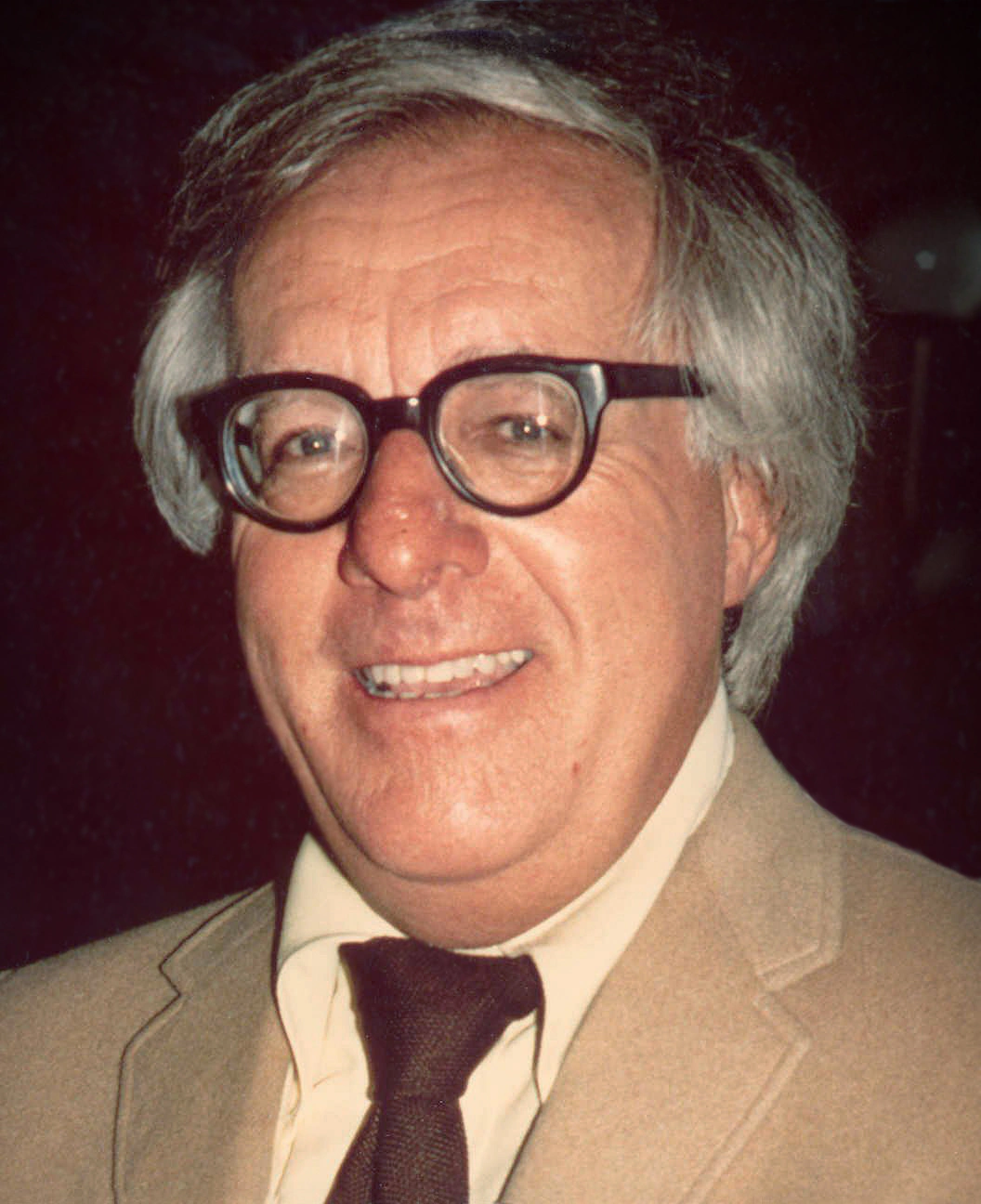
Attr: photo by Alan Light, CC BY 2.0
| 30 Quotes | |
| Born as | Ray Douglas Bradbury |
| Occup. | Writer |
| From | USA |
| Spouse | Marguerite McClure (m. 1947–2003) |
| Born | August 22, 1920 Waukegan, Illinois, USA |
| Died | June 5, 2012 Los Angeles, California, USA |
| Cause | Natural Causes |
| Aged | 91 years |
| Cite | |
Citation Formats
APA Style (7th ed.)
Ray bradbury biography, facts and quotes. (2026, February 11). FixQuotes. https://fixquotes.com/authors/ray-bradbury/
Chicago Style
"Ray Bradbury biography, facts and quotes." FixQuotes. February 11, 2026. https://fixquotes.com/authors/ray-bradbury/.
MLA Style (9th ed.)
"Ray Bradbury biography, facts and quotes." FixQuotes, 11 Feb. 2026, https://fixquotes.com/authors/ray-bradbury/. Accessed 31 Mar. 2026.
Early Life and Background
Ray Douglas Bradbury was born on August 22, 1920, in Waukegan, Illinois, a Midwestern lakeside town that never stopped haunting his imagination. The son of Leonard Spaulding Bradbury, a power and telephone lineman, and Esther Moberg Bradbury, a Swedish immigrant, he grew up amid the ordinary pressures of the interwar years and the extraordinary shocks of early loss - including the death of an older brother in infancy and the death of a young sister, experiences that sharpened his lifelong sensitivity to childhood, mortality, and memory. Waukegan became his personal myth-space, later transfigured into Green Town in his fiction - less a setting than an emotional geography built from front porches, carnivals, and the dread that the seasons carry away what they give.The Great Depression pushed the family west, and by 1934 they had settled in Los Angeles. In Southern California Bradbury encountered Hollywood spectacle and the citys harsher realities: job scarcity, transient neighborhoods, and the loud modernity of radio, billboards, and pulp magazines. He sold newspapers as a teenager, haunted used bookstores, attended science-fiction gatherings, and watched the new mass culture teach Americans how to desire - and how to forget. The collision between small-town innocence and a technologized metropolis became the engine of his inner life: a romantic temperament trying to defend wonder against the flattening pressures of modern life.
Education and Formative Influences
Bradbury graduated from Los Angeles High School in 1938 and did not attend college, choosing instead a self-made apprenticeship in reading and writing. He educated himself through public libraries, voraciously absorbing Edgar Allan Poe, H.G. Wells, Jules Verne, L. Frank Baum, and the American storytellers of dread and nostalgia, while also learning from comics, radio drama, and the pulps. Early encouragement came from fan communities and mentors in the Los Angeles science-fiction scene, including contacts around the Los Angeles Science Fantasy Society and professional writers who treated his ambition seriously; this blend of popular culture and self-discipline forged his distinctive confidence that literary seriousness could be achieved through genre forms.Career, Major Works, and Turning Points
Bradbury began publishing professionally in the early 1940s; his first book, Dark Carnival (1947), announced a poet of the macabre, but The Martian Chronicles (1950) made him a national figure by turning space travel into a parable of American longing, colonial guilt, and loneliness. In 1953 he delivered his most famous warning, Fahrenheit 451, shaped by Cold War conformism, censorship anxieties, and the seductions of screen entertainment; its firemen who burn books were never only about governments, but about citizens who surrender attention. The 1950s and 1960s brought a prolific run across forms - The Illustrated Man (1951), Dandelion Wine (1957), Something Wicked This Way Comes (1962), and acclaimed screenwriting including the screenplay for John Hustons Moby Dick (1956) - alongside radio, television, and theater work that widened his audience. Though often labeled a science-fiction writer, he resisted the tag, preferring to be seen as a fantasist and moral fabulist; his turning point was not a change of genre but a consolidation of purpose: to use the future as a pressure chamber for the present.Philosophy, Style, and Themes
Bradburys art is built from immediacy - lyrical sentences, quick scene-changes, and images that behave like dreams - yet it is also a disciplined defense of the human voice. He distrusted creativity that arrives strangled by over-analysis, insisting, “Don't think. Thinking is the enemy of creativity. It's self-conscious, and anything self-conscious is lousy. You can't try to do things. You simply must do things”. That admonition reveals a psychology of urgency: he wrote as if hesitation were a kind of death, and as if the only reliable path to truth was through speed, surprise, and emotional accuracy. His characters often live in the instant before loss - the child at the edge of adolescence, the astronaut at the edge of a dead planet, the reader at the edge of a society that no longer reads.At the center of his work is a civic, almost devotional faith in reading as cultural memory and personal salvation. “Without libraries what have we? We have no past and no future”. The line is not mere slogan; it maps his deepest fear - that modern life, intoxicated by convenience and distraction, would dissolve the interior life required for empathy. He sharpened the point with moral heat: “There are worse crimes than burning books. One of them is not reading them”. In Bradburys universe, the catastrophe is rarely technology itself; it is the human choice to abandon curiosity, to trade complexity for comfort, and to let noise replace thought. His nostalgia is therefore not escapism but a warning system - a way of measuring what progress costs when it is unmoored from attention, tenderness, and responsibility.
Legacy and Influence
Bradbury died on June 5, 2012, in Los Angeles, leaving a body of work that helped define modern speculative literature while crossing into mainstream American letters. Fahrenheit 451 became a durable shorthand for censorship and cultural anesthesia; The Martian Chronicles and his story collections kept proving that the future can be written as lyric, not blueprint. He influenced generations of writers, filmmakers, educators, and librarians, and his phrases entered public argument whenever societies debated reading, screens, and freedom. His enduring contribution is not prediction but preservation: he made wonder feel ethically urgent, insisting that imagination is a public resource and that a humane future depends on the fiercely private act of paying attention to words.Our collection contains 30 quotes written by Ray, under the main topics: Motivational - Wisdom - Love - Leadership - Writing.
Other people related to Ray: Julius Schwartz (Editor), Rock Hudson (Actor), Norman Corwin (Writer), Clifford D. Simak (Writer)
Ray Bradbury Famous Works
- 1962 Something Wicked This Way Comes (Novel)
- 1957 Dandelion Wine (Novel)
- 1953 Fahrenheit 451 (Novel)
- 1951 The Illustrated Man (Short Story Collection)
- 1950 The Martian Chronicles (Short Story Collection)
Source / external links