
Raymond Chandler Biography Quotes 33 Report mistakes
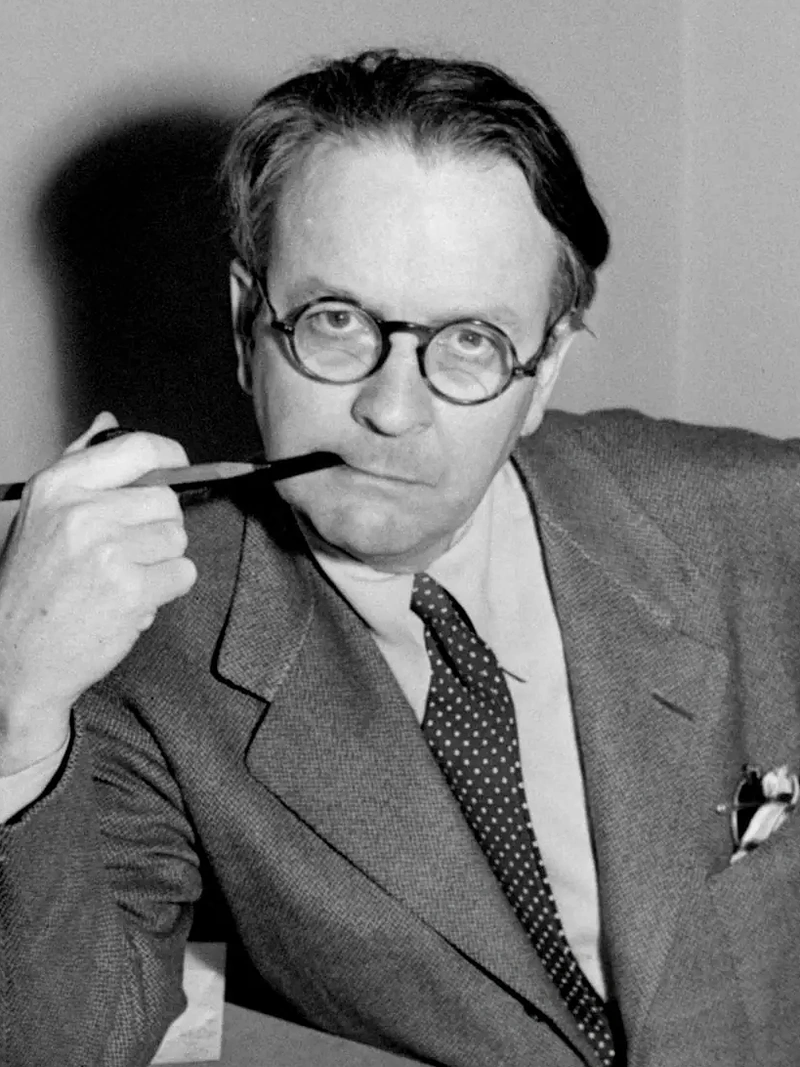
Attr: Britannica
| 33 Quotes | |
| Born as | Raymond Thornton Chandler |
| Occup. | Writer |
| From | USA |
| Born | July 23, 1888 Chicago, Illinois, USA |
| Died | March 26, 1959 La Jolla, California, USA |
| Aged | 70 years |
| Cite | |
Citation Formats
APA Style (7th ed.)
Raymond chandler biography, facts and quotes. (2026, February 11). FixQuotes. https://fixquotes.com/authors/raymond-chandler/
Chicago Style
"Raymond Chandler biography, facts and quotes." FixQuotes. February 11, 2026. https://fixquotes.com/authors/raymond-chandler/.
MLA Style (9th ed.)
"Raymond Chandler biography, facts and quotes." FixQuotes, 11 Feb. 2026, https://fixquotes.com/authors/raymond-chandler/. Accessed 25 Mar. 2026.
Early Life and Background
Raymond Thornton Chandler was born on July 23, 1888, in Chicago, Illinois, into a family whose early instability shaped his lifelong sense of dislocation. After his parents separated, he was taken by his mother, Florence, to England while still a child, an uprooting that gave him both polish and a lasting outsider's vigilance. His father drifted out of the picture, and the boy absorbed, early, the idea that a person might have to invent his own code when domestic structures fail.In Edwardian Britain he learned to watch class manners and moral posturing with a skeptic's eye, then carried that skepticism back across the Atlantic. Chandler would later set his fiction in sunlit Los Angeles and fill it with shadows - a city of money, real estate, studios, and police departments, where appearances were for sale. The gap between surfaces and truths, and the loneliness of a decent man navigating corrupt systems, can be traced to a childhood spent between countries and loyalties, trying to become fluent in belonging.
Education and Formative Influences
Chandler was educated in England, including time at Dulwich College in London, where he encountered classical rhetoric, a disciplined prose tradition, and the cultural self-confidence of the British establishment. He aspired briefly to the civil service and published poems and journalism, but discovered that the kind of authority he could not fully respect was the kind he could not comfortably serve. After returning to the United States, he lived in the Pacific West and found in the region's speed, boosterism, and social mobility a different kind of theater - less formal than England, more improvisational, and therefore more revealing.Career, Major Works, and Turning Points
Chandler built a conventional career first, working in the oil industry in Southern California and rising to executive positions, before a personal collapse - marked by alcoholism, depression, and dismissal during the early 1930s - pushed him toward reinvention. In middle age he taught himself the craft of pulp fiction by studying and imitating the Black Mask school, publishing stories and then, in 1939, introducing Philip Marlowe in The Big Sleep, followed by Farewell, My Lovely (1940), The High Window (1942), The Lady in the Lake (1943), and The Long Goodbye (1953). Hollywood drew him in as a screenwriter; he co-wrote Double Indemnity (1944) with Billy Wilder and worked on The Blue Dahlia (1946), but he often found the studio system both lucrative and humiliating, a place where talent was managed like property. His private life tightened around his marriage to Cissy Pascal, older than he was and fiercely important to him; after her long illness and death in 1954, Chandler's grief sharpened his drinking and isolation, and he died on March 26, 1959, in La Jolla, California.Philosophy, Style, and Themes
Chandler's central philosophical problem was how to live decently inside institutions designed for something other than decency. Marlowe is his answer - a man with a conscience, but not a sermon, walking into rooms where power expects compliance. Chandler distrusted official virtue, treating law and money as mechanisms that could be worked by those who knew the levers. His moral vision is summed up in his blunt diagnosis: “The law isn't justice. It's a very imperfect mechanism. If you press exactly the right buttons and are also lucky, justice may show up in the answer. A mechanism is all the law was ever intended to be”. That sentence is less cynicism than self-defense, a way of keeping sentiment from being exploited, and it explains why his heroes hold to private standards even when public ones fail.His style fused high-literary cadence with streetwise shock, making metaphor a tool for moral perception: not decoration, but a flashlight. Los Angeles becomes an emotional weather system, with guilt and greed thickening the air - “The streets were dark with something more than night”. Even his sensuality is double-edged, drawn to pleasure yet aware of its trapdoors, as in his famous simile: “Alcohol is like love. The first kiss is magic, the second is intimate, the third is routine. After that you take the girl's clothes off”. The joke turns into diagnosis - desire as escalation, intimacy as habit, and habit as dependence. Under the wisecracks sits a bruised romanticism: Chandler believed in feeling, but feared the ways feeling could be commodified, betrayed, or drowned.
Legacy and Influence
Chandler helped define the modern hard-boiled detective, not simply as a tough professional but as a moral narrator whose language carries the weight of an era's disillusionment. His Los Angeles - glamorous, crooked, and lonely - became the template for noir in fiction and film, influencing writers from Ross Macdonald to James Ellroy and shaping screen dialogue for generations. More broadly, he proved that genre could bear literary pressure: that a detective story could be, at once, a plot machine, a social x-ray, and a personal confession in disguise.Our collection contains 33 quotes written by Raymond, under the main topics: Witty One-Liners - Motivational - Art - Justice - Sarcastic.
Other people related to Raymond: Dashiell Hammett (Author), Mickey Spillane (Author), James Ellroy (Writer)
Raymond Chandler Famous Works
- 1958 Playback (Novel)
- 1953 The Long Goodbye (Novel)
- 1950 Trouble Is My Business (Collection)
- 1949 The Little Sister (Novel)
- 1946 The Blue Dahlia (Screenplay)
- 1944 Double Indemnity (Screenplay)
- 1944 The Simple Art of Murder (Essay)
- 1943 The Lady in the Lake (Novel)
- 1942 The High Window (Novel)
- 1940 Farewell, My Lovely (Novel)
- 1939 The Big Sleep (Novel)
- 1935 Killer in the Rain (Short Story)
- 1933 Blackmailers Don't Shoot (Short Story)