
Raymond Holliwell Biography Quotes 8 Report mistakes
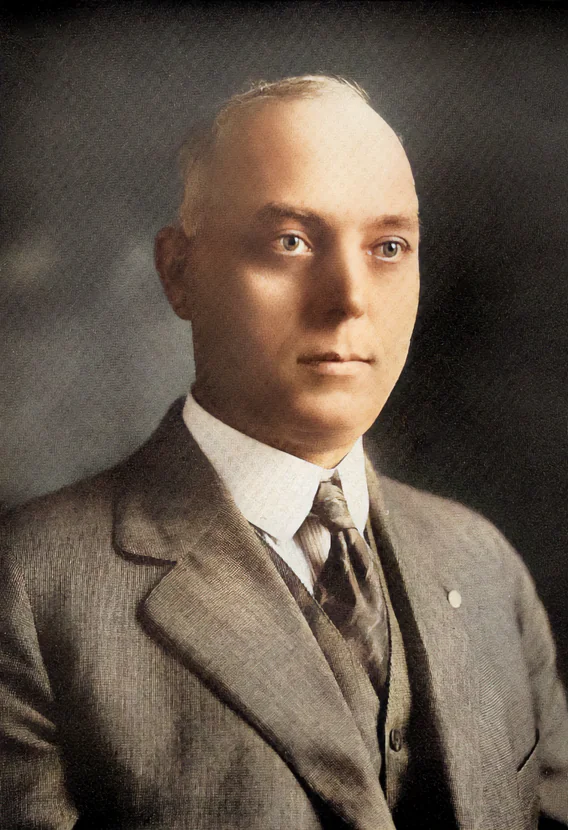
| 8 Quotes | |
| Occup. | Author |
| From | USA |
| Spouse | Dorothy Richardson (1926) |
| Born | January 6, 1900 Waverly, Iowa, USA |
| Died | July 17, 1986 |
| Aged | 86 years |
| Cite | |
Citation Formats
APA Style (7th ed.)
Raymond holliwell biography, facts and quotes. (2026, February 2). FixQuotes. https://fixquotes.com/authors/raymond-holliwell/
Chicago Style
"Raymond Holliwell biography, facts and quotes." FixQuotes. February 2, 2026. https://fixquotes.com/authors/raymond-holliwell/.
MLA Style (9th ed.)
"Raymond Holliwell biography, facts and quotes." FixQuotes, 2 Feb. 2026, https://fixquotes.com/authors/raymond-holliwell/. Accessed 4 Mar. 2026.
Early Life and Background
Raymond Charles Holliwell was born on January 6, 1900, in the United States, entering adulthood as the country pivoted from the certainties of the Victorian moral order toward the mass anxieties of modern life. His formative years coincided with the Progressive Era and then World War I, a sequence that fed both optimism about self-improvement and disillusionment about institutions. The emotional climate of his generation - hustle, migration, and the new gospel of efficiency - would later show up in his insistence that inner discipline was not a luxury but a survival skill.Little in the public record suggests a famous childhood, but the contours of his later work point to an early fascination with character as a practical force: how habits, desire, and attention shape outcomes more reliably than luck. Holliwell wrote as someone acquainted with the American promise and the American wound - the sense that opportunity is real yet conditional, purchased by sacrifice and sustained by self-mastery. By the time the Great Depression and then World War II reshaped daily life, he was positioned to speak to a public hungry for explanations that were neither purely theological nor purely material.
Education and Formative Influences
Holliwell came of age when "New Thought", mind-cure traditions, Protestant self-examination, and the emerging language of psychology overlapped in bookstores and lecture halls across the United States. His writing reflects reading in practical metaphysics and inspirational psychology rather than academic specialization: he favored demonstrations, exercises, and lived proof over abstraction. The era also mattered - radio, correspondence courses, and civic clubs created national audiences for teachers who could translate private struggle into a repeatable method, and Holliwell absorbed that pedagogical, plainspoken style.Career, Major Works, and Turning Points
Holliwell built his reputation as an American self-help and spiritual-inspirational author, best known for "Working With the Law" (often circulated as a concise manual on the "law" of mind, thought, and consequence). The book and its related lectures framed spiritual principles as operational - closer to engineering than sermonizing - and that framing fit mid-century readers balancing churchgoing traditions with a growing appetite for self-directed change. His career arc followed a familiar pattern for metaphysical teachers of the period: teaching, publishing in accessible formats, and refining a core message that could survive shifting cultural moods, from Depression-era scarcity thinking to postwar striving and the therapeutic culture of the 1970s.Philosophy, Style, and Themes
Holliwell's central preoccupation was causality inside the self. He treated thought not as decoration but as the workshop where events are shaped, a view that made personal responsibility both empowering and relentless. “Are we controlled by our thoughts, or are we controlling our thoughts?” The question reads like a diagnostic: if life feels fated, he suggests, begin by examining the mental habits that quietly pre-select what you notice, what you attempt, and what you abandon. His tone is that of a coach who believes the mind can be trained - but only if the student stops romanticizing intention and starts measuring results.He also wrote with a moral austerity that matched the hard lessons of early- and mid-20th-century America. Progress, in his account, is purchased, not granted: “No matter what we want of life we have to give up something in order to get it”. Sacrifice is not presented as tragedy but as the hidden mechanics of change, the trade that converts longing into direction. Yet his work is not merely stern; it is transactional in a hopeful way, insisting on a reciprocal universe: “To give your best is to receive the best”. Psychologically, this reveals a man trying to cure despair with practice - replacing vague wishing with disciplined giving, clear intention, and the confidence that inner order can call forth outer order.
Legacy and Influence
Holliwell died on July 17, 1986, after a lifetime spent translating metaphysical ideas into a usable daily regimen. His influence persists less through celebrity than through durable concepts - the insistence that thought is causal, that desire must be harnessed, and that spiritual principles can be tested in conduct. In the long genealogy of American self-help, he stands as a bridge between early New Thought teachers and later motivational psychology: a writer who addressed the hidden life of motives and attention while speaking in the practical idiom of work, trade-offs, and earned results.Our collection contains 8 quotes written by Raymond, under the main topics: Motivational - Wisdom - Reason & Logic - God - Free Will & Fate.
Raymond Holliwell Famous Works
- 1964 Working with the Law (Book)
Source / external links