
Recep Tayyip Erdogan Biography Quotes 32 Report mistakes
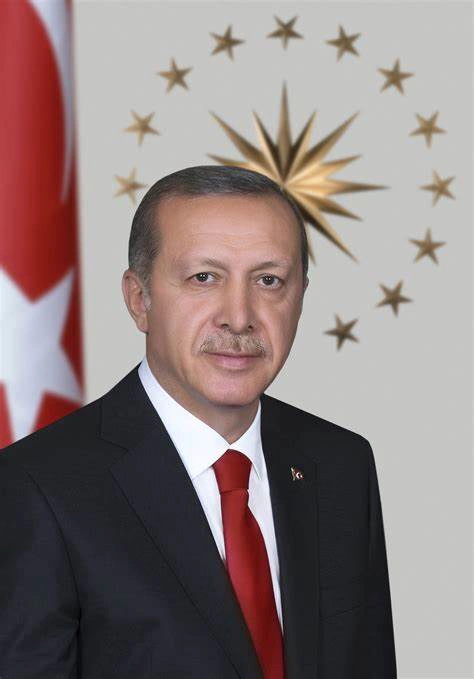
| 32 Quotes | |
| Occup. | President |
| From | Turkey |
| Born | February 26, 1954 Istanbul, Turkey |
| Age | 72 years |
| Cite | |
Citation Formats
APA Style (7th ed.)
Recep tayyip erdogan biography, facts and quotes. (2026, February 11). FixQuotes. https://fixquotes.com/authors/recep-tayyip-erdogan/
Chicago Style
"Recep Tayyip Erdogan biography, facts and quotes." FixQuotes. February 11, 2026. https://fixquotes.com/authors/recep-tayyip-erdogan/.
MLA Style (9th ed.)
"Recep Tayyip Erdogan biography, facts and quotes." FixQuotes, 11 Feb. 2026, https://fixquotes.com/authors/recep-tayyip-erdogan/. Accessed 6 Mar. 2026.
Early Life and Background
Recep Tayyip Erdogan was born on 1954-02-26 in Istanbul, a city where neighborhood loyalties, religion, and politics routinely overlapped. He grew up largely in Kasimpasa, long known for its hard-edged street culture and working-class pride, while his family roots lay in Turkey's Black Sea region. The Turkey of his childhood was marked by rapid urbanization, ideological polarization, and periodic military tutelage over civilian life - conditions that made politics feel less like an abstract debate and more like a matter of survival, honor, and belonging.As a boy and teenager he sold small goods in the streets and played football, experiences that fed a public persona built on grit and proximity to ordinary people. The language he later used about "the nation" and "the people" drew on these early impressions: society as a moral community, easily wounded by elites, and in need of protection. His instinct to frame conflicts as contests over dignity - of believers, of the poor, of the sidelined - would become a durable source of political energy.
Education and Formative Influences
Erdogan attended an Imam Hatip school in Istanbul, part of a network that combined standard curricula with religious instruction and produced a cadre of pious, upwardly mobile students. In the 1970s he was active in Islamist youth circles associated with Necmettin Erbakan's National Salvation Party, learning disciplined organization, street-level mobilization, and the art of turning cultural grievance into votes. He later studied at Marmara University (then Academy), in the economics and commercial sciences milieu, absorbing the language of development and administrative competence that he would fuse with identity politics.Career, Major Works, and Turning Points
Erdogan rose through municipal politics and became mayor of Istanbul in 1994, gaining a reputation for managerial pragmatism in a metropolis strained by water shortages, pollution, and infrastructural decay. His 1998 conviction and brief imprisonment for reciting a poem widely deemed Islamist turned him into a symbol of a system that punished religiously coded speech, and it hardened his conviction that power, not persuasion alone, guaranteed security. In 2001 he co-founded the Justice and Development Party (AKP), presenting it as conservative-democratic rather than Islamist; after the AKP's 2002 victory, legal barriers delayed his premiership until 2003. Over the next decade Turkey experienced high growth, ambitious infrastructure, and EU-oriented reforms alongside increasingly centralized governance. A series of turning points - the 2007 e-memorandum crisis, the 2013 Gezi Park protests, the breakdown of the Kurdish peace process, and especially the failed coup attempt of 2016 - accelerated a shift toward securitized politics, mass purges, and a presidential system approved in the 2017 referendum. He became the system's first executive president after the 2018 election, ruling through a tight inner circle, loyal media ecosystems, and a state apparatus reshaped by emergency-era decrees.Philosophy, Style, and Themes
Erdogan's inner life as a politician is defined by a fusion of mission and siege. He repeatedly casts politics as the defense of a moral majority against coups, cultural contempt, and foreign manipulation. Even when he speaks in the register of universal norms, he treats them as instruments to stabilize sovereignty rather than as constraints that stand above politics. His rhetoric therefore oscillates between inclusion and boundary-drawing: invitations to pluralism in principle, and hard lines in practice when he perceives existential threats. The result is a governing temperament that values loyalty, speed, and symbolic victories - visible in his preference for mega-projects, command-style crisis management, and public confrontation as a tool of agenda setting.Yet Erdogan has also long sought to rebut the claim that the Muslim world is doomed to authoritarianism, and he has presented Turkey as a model capable of reconciling faith, markets, and elections. “Similarly, it is argued that the culture of Islam is incompatible with democracy”. The sentence reveals a preoccupation with being judged by civilizational stereotypes - and a desire to overturn them through performance, not merely argument. In the same vein, his language of democratization can be strikingly procedural: “In other words, the bar should be maintained at the level of a pluralistic and participatory democracy”. That aspiration, however, sits uneasily beside his insistence that democratization can be “abused as a provisional instrument to establish an anti-democratic regime”. Psychologically, the pairing helps explain his justification for concentrating authority: he frames consolidation as prophylaxis, a temporary tightening to prevent permanent takeover by hidden networks, military guardians, or ideological rivals.
Legacy and Influence
Erdogan's legacy is inseparable from the remaking of Turkey's institutions and political imagination. He normalized a mass, religiously conservative style of populism that merged welfare delivery with identity, displaced the old military-bureaucratic guardianship, and expanded Turkey's regional assertiveness in Syria, Libya, the Caucasus, and beyond. At the same time, the erosion of judicial independence, press freedom, and bureaucratic neutrality under his rule altered the country's democratic texture and left a polarized public sphere in which elections remain pivotal but the playing field is contested. For supporters he embodies restored pride and national will; for critics he represents the personalization of the state. Either way, Erdogan has become a defining figure of early 21st-century politics: a leader who turned biography into myth, crisis into mandate, and governance into a permanent referendum on identity and power.Our collection contains 32 quotes written by Recep, under the main topics: Ethics & Morality - Freedom - Equality - Change - Peace.
Other people related to Recep: Abdullah Gul (President), Mahmoud Ahmadinejad (Statesman), Bashar al-Assad (Statesman), Anders Fogh Rasmussen (Statesman), Ahmet Necdet Sezner (President)
Source / external links