
Rene Descartes Biography Quotes 29 Report mistakes
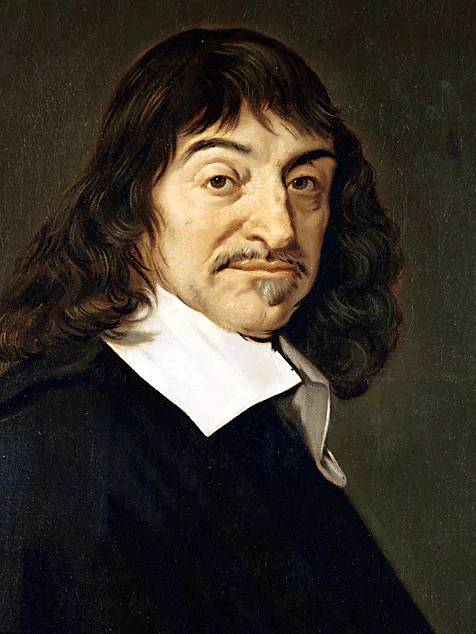
| 29 Quotes | |
| Known as | Renatus Cartesius |
| Occup. | Mathematician |
| From | France |
| Born | March 31, 1596 La Haye en Touraine, Kingdom of France |
| Died | February 11, 1650 Stockholm, Swedish Empire |
| Aged | 53 years |
| Cite | |
Citation Formats
APA Style (7th ed.)
Rene descartes biography, facts and quotes. (2026, February 2). FixQuotes. https://fixquotes.com/authors/rene-descartes/
Chicago Style
"Rene Descartes biography, facts and quotes." FixQuotes. February 2, 2026. https://fixquotes.com/authors/rene-descartes/.
MLA Style (9th ed.)
"Rene Descartes biography, facts and quotes." FixQuotes, 2 Feb. 2026, https://fixquotes.com/authors/rene-descartes/. Accessed 23 Mar. 2026.
Early Life and Background
Rene Descartes was born on 1596-03-31 in La Haye en Touraine (later renamed Descartes), in the old province of Touraine, France. His father, Joachim Descartes, served as a counselor in the Parliament of Brittany, anchoring the family in the robe nobility of law and administration rather than the sword nobility of war. His mother, Jeanne Brochard, died when he was very young, and the early experience of loss, combined with a childhood often described as physically delicate, helped shape a temperament that prized interior control over external circumstance.Seventeenth-century France was consolidating royal power while Europe fractured along confessional lines, and Descartes grew up in the long shadow of the French Wars of Religion and the coming Thirty Years' War. In that climate, intellectual risk carried social cost: a new idea could be mistaken for heresy, sedition, or mere imprudence. From the beginning, his life shows a careful balancing act - a desire for radical certainty pursued through private study, travel, and strategic distance from institutions that could punish speculative thought.
Education and Formative Influences
From 1607 he studied at the Jesuit College of La Fleche, one of the crown's premier schools, absorbing Latin, classical authors, Aristotelian logic, and the newer mathematical sciences. He admired the discipline and rhetorical rigor of Jesuit training yet became dissatisfied with inherited scholastic explanations that seemed to multiply words faster than certainties. After taking a law degree at the University of Poitiers (1616), he drifted toward the life of a gentleman-scholar, traveling and observing, convinced that method mattered more than mere accumulation of learning.Career, Major Works, and Turning Points
Descartes served briefly with the Dutch States Army and later in the Catholic League's forces, less as a career soldier than as a mobile observer of Europe in motion; in 1618 at Breda he met Isaac Beeckman, who prodded him toward mathematical physics and sharpened his ambition for a unified science. In 1619, while in Germany, he reported a sequence of intense dreams that he interpreted as a vocation to reform knowledge. He settled for long periods in the Dutch Republic from 1628, drawn by its relative tolerance and quiet; there he produced a new analytic geometry that married algebra to Euclidean space (La Geometrie, appended to Discourse on the Method, 1637), and pursued a mechanistic account of nature in works like the unpublished Le Monde, withheld after Galileo's condemnation (1633). His Meditations on First Philosophy (1641) reconstructed certainty from radical doubt, and Principles of Philosophy (1644) offered a systematic physics and metaphysics for a Europe hungry for order. Late in life he accepted an invitation to Stockholm from Queen Christina of Sweden; the severe winter and early morning lessons undermined his health, and he died on 1650-02-11.Philosophy, Style, and Themes
Descartes' inner life was governed by a fierce demand for intellectual security: he distrusted anything that arrived in the mind merely by habit, authority, or the body's reporting. “If you would be a real seeker after truth, it is necessary that at least once in your life you doubt, as far as possible, all things”. The line is not a pose but a psychological strategy - a controlled crisis, staged to flush out the hidden dependencies of belief. His suspicion of perception was equally personal and programmatic: “The senses deceive from time to time, and it is prudent never to trust wholly those who have deceived us even once”. From this wariness he built the famous pivot from doubt to self-awareness - cogito ergo sum - treating consciousness as the one datum that remains when everything else is put on trial.Yet Descartes was not a romantic skeptic; he was an engineer of certainty. “It is not enough to have a good mind; the main thing is to use it well”. That insistence on method shaped his style: spare, stepwise, and intentionally portable across disciplines. Mathematics became both model and weapon. By translating geometry into algebraic relations, he made space calculable and thereby encouraged the modern habit of treating nature as a system of measurable variables. His dualism of mind and body, and his mechanistic explanations of animals and physiology, reveal the era's tension between religious doctrine and scientific ambition - a thinker trying to safeguard the soul by relocating it, and to liberate physics by stripping it of occult qualities.
Legacy and Influence
Descartes' impact is twofold: he remade the tools of thought and the map of reality. In mathematics, Cartesian coordinates and analytic geometry became prerequisites for calculus and for the later mathematization of physics. In philosophy, his methodological doubt, his account of ideas, and his sharpened mind-body distinction set agendas that later thinkers - from Spinoza and Leibniz to Locke, Hume, and Kant - either extended or fought to escape. Modern philosophy's concern with subjectivity, and modern science's faith that nature is legible through clear definitions and controlled inference, both carry his imprint, along with the cautionary aftereffects of his split between inner certainty and outer mechanism.Our collection contains 29 quotes written by Rene, under the main topics: Ethics & Morality - Truth - Wisdom - Justice - Never Give Up.
Other people related to Rene: Queen Christina (Royalty), Giambattista Vico (Philosopher), Margaret Cavendish (Writer), Pierre de Fermat (Lawyer)
Rene Descartes Famous Works
- 1701 Rules for the Direction of the Mind (Essay)
- 1664 The World (Treatise on the Light) (Book)
- 1664 Treatise on Man (Book)
- 1649 The Passions of the Soul (Book)
- 1644 Principles of Philosophy (Book)
- 1641 Objections and Replies (to the Meditations) (Essay)
- 1641 Meditations on First Philosophy (Book)
- 1637 The Meteors (Essay)
- 1637 Dioptrics (Essay)
- 1637 La Géométrie (Book)
- 1637 Discourse on the Method (Book)