
Richard Bach Biography Quotes 48 Report mistakes
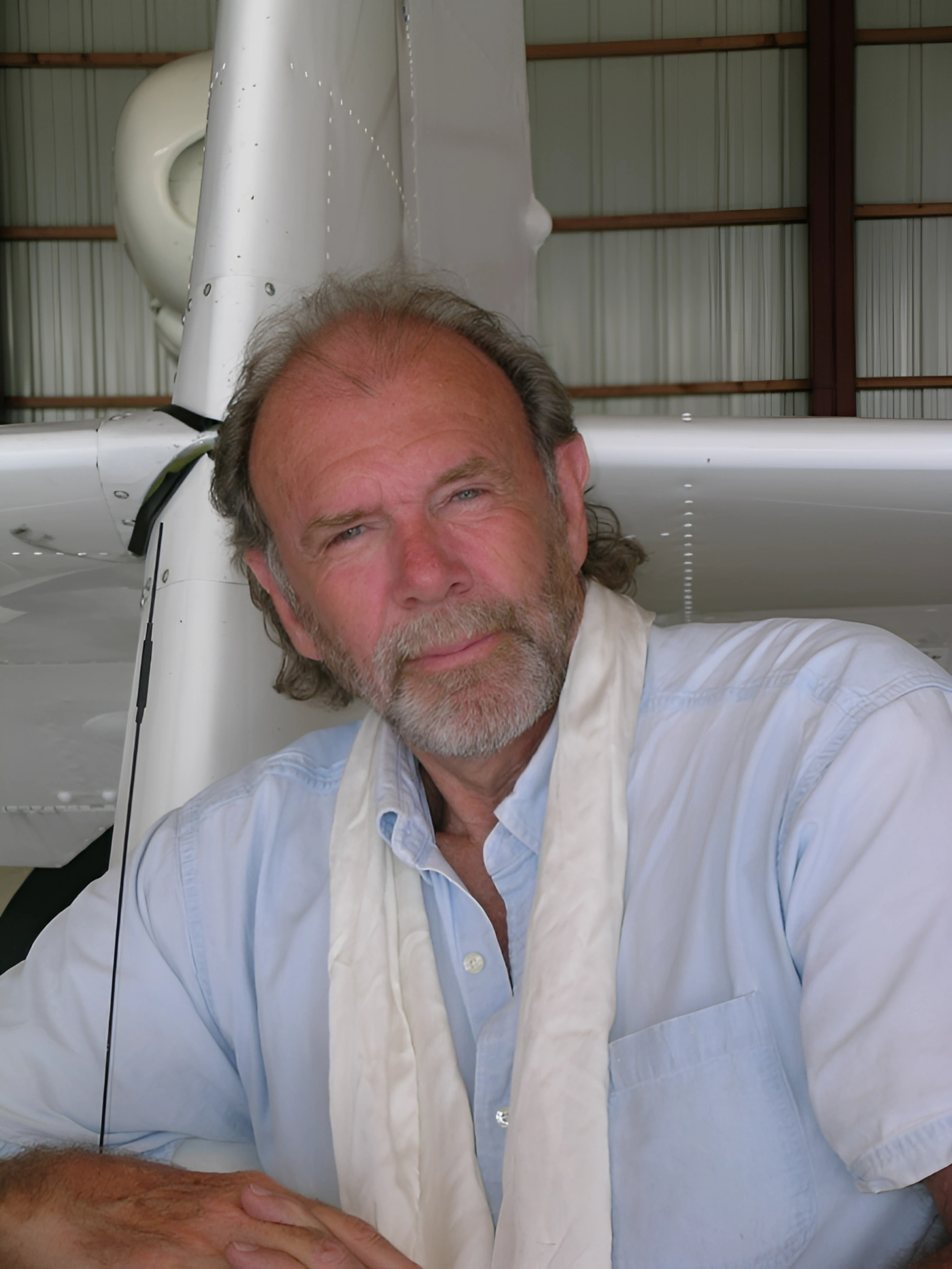
| 48 Quotes | |
| Occup. | Novelist |
| From | USA |
| Born | June 23, 1936 |
| Age | 89 years |
| Cite | |
Citation Formats
APA Style (7th ed.)
Richard bach biography, facts and quotes. (2026, February 11). FixQuotes. https://fixquotes.com/authors/richard-bach/
Chicago Style
"Richard Bach biography, facts and quotes." FixQuotes. February 11, 2026. https://fixquotes.com/authors/richard-bach/.
MLA Style (9th ed.)
"Richard Bach biography, facts and quotes." FixQuotes, 11 Feb. 2026, https://fixquotes.com/authors/richard-bach/. Accessed 5 Mar. 2026.
Early Life and Background
Richard David Bach was born on June 23, 1936, in Oak Park, Illinois, into a Midwestern America shaped by the long shadow of the Depression and the mobilized confidence that followed World War II. He grew up amid the postwar boom, when suburban skies filled with small planes and military aviation carried a near-mythic aura. From early on he was drawn to flight not only as a craft but as a kind of private religion - a place where fear, skill, and solitude could be tested against the open air.That tension between ordinary life and an inner insistence on freedom became the pulse of his later fiction. Bach was temperamentally independent, suspicious of purely external definitions of success, and attentive to the ways families and institutions can feel both sustaining and confining. The emotional landscape of his youth - disciplined, aspirational, and quietly restless - set the stage for a writer who would keep translating lived experience into parable, especially parables about escape, risk, and self-chosen meaning.
Education and Formative Influences
Bach attended Long Beach State College in California before committing himself to aviation, and the practical rigor of flying quickly became his true education: navigation, weather, maintenance, and the unforgiving feedback loop of physics. He served as a United States Air Force pilot in the 1950s, an era when Cold War readiness and jet-age speed made pilots symbols of national nerve. The cockpit trained his attention - to instruments, to silence, to the intimate consequences of decisions - and it also supplied the metaphors that would later make his work feel both airy and exact.Career, Major Works, and Turning Points
After leaving the Air Force, Bach wrote for aviation magazines and built a career that fused memoir, technical awe, and spiritual longing. His breakthrough came with the fable-like novella Jonathan Livingston Seagull (1970), a slim book whose allegory of disciplined transcendence became a cultural phenomenon in the early 1970s, resonating with readers hungry for personal meaning outside inherited institutions. He followed with Illusions: The Adventures of a Reluctant Messiah (1977), a more openly metafictional road narrative that blended mysticism, aphorism, and the lure of an ordinary life remade by perception. Later works such as The Bridge Across Forever (1984) pursued love and partnership as a spiritual discipline, while his continuing nonfiction and novels kept circling the same turning point: the decision to treat life as a deliberate creation rather than an obligation endured.Philosophy, Style, and Themes
Bach wrote as a pilot-essayist turned modern fabulist, favoring spare scenes, quick epiphanies, and dialogue that reads like a campfire lesson. His central psychological drama is the struggle between safety and possibility: the part of the self that wants guarantees versus the part that cannot breathe without open sky. In his best-known parables, mastery is not domination but release - the shedding of habits that masquerade as realism. He repeatedly suggests that despair is often a perceptual error, a misreading of transition as catastrophe: “What the caterpillar calls the end of the world the master calls a butterfly”. The line captures his characteristic optimism, but also his impatience with forms of suffering that are maintained by belief.That impatience points inward as much as outward. Bach tends to treat identity as a set of chosen interpretations, and his aphorisms read like self-directed counterspells against fatalism: “Argue for your limitations, and sure enough they're yours”. The insistence can sound bracing, even severe, because it places responsibility where many readers would prefer comfort; yet it also explains the enduring therapeutic pull of his work. He frames ongoing existence as a sign of unfinished purpose rather than mere inertia: “Here is a test to find whether your mission on Earth is finished: If you're alive, it isn't”. Underneath the buoyant tone is a recognizable private anxiety - that meaning must be actively made, or it evaporates - and a pilot's faith that fear can be answered by practice.
Legacy and Influence
Bach became one of the signature spiritual-pop writers of late 20th-century America, bridging self-help, New Age seeking, and the older tradition of the moral fable without fully belonging to any of them. Jonathan Livingston Seagull and Illusions in particular helped normalize the idea that fiction could function as a manual for inner life, and his aviation-rooted metaphors gave that inward turn an outward, physical credibility. Admired for clarity and hope and critiqued for simplification, he nonetheless influenced generations of readers, speakers, and writers who learned from him to treat freedom as a discipline, perception as a practice, and the self as a story that can be rewritten in midair.Our collection contains 48 quotes written by Richard, under the main topics: Motivational - Wisdom - Truth - Friendship - Love.
Richard Bach Famous Works
- 1994 Running from Safety: A Memoir (Memoir)
- 1988 One (Novel)
- 1984 The Bridge Across Forever: A Lovestory (Novel)
- 1977 Illusions: The Adventures of a Reluctant Messiah (Novel)
- 1970 Jonathan Livingston Seagull (Novel)
Source / external links