
Richard J. Daley Biography Quotes 20 Report mistakes
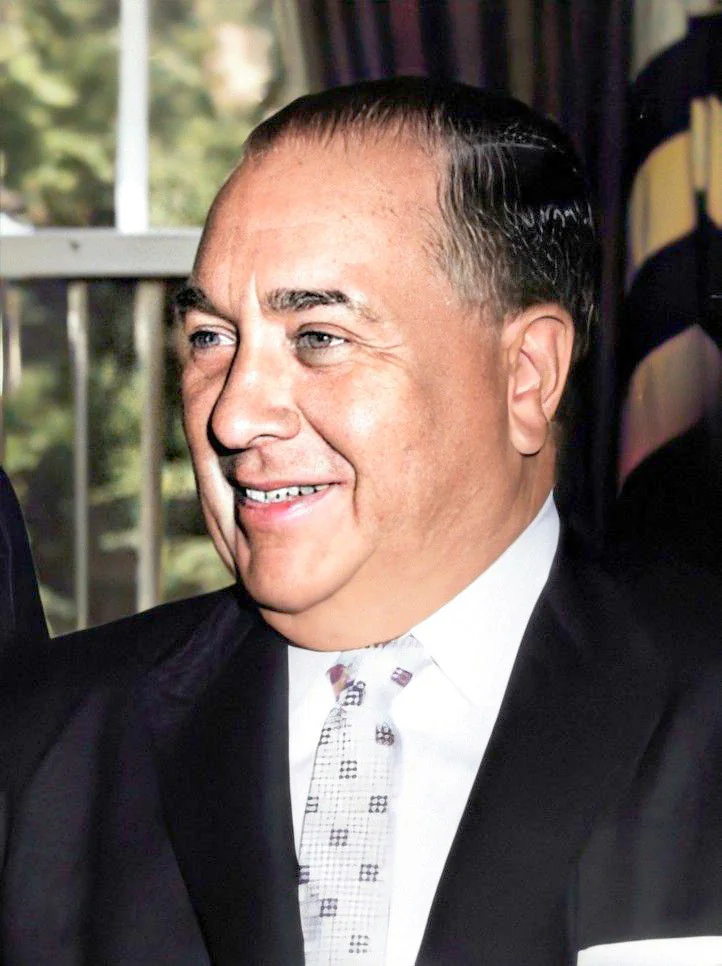
| 20 Quotes | |
| Born as | Richard Joseph Daley |
| Occup. | Politician |
| From | USA |
| Born | May 15, 1902 Chicago, Illinois |
| Died | December 20, 1976 Chicago, Illinois |
| Cause | Heart attack |
| Aged | 74 years |
| Cite | |
Citation Formats
APA Style (7th ed.)
Richard j. daley biography, facts and quotes. (2026, February 11). FixQuotes. https://fixquotes.com/authors/richard-j-daley/
Chicago Style
"Richard J. Daley biography, facts and quotes." FixQuotes. February 11, 2026. https://fixquotes.com/authors/richard-j-daley/.
MLA Style (9th ed.)
"Richard J. Daley biography, facts and quotes." FixQuotes, 11 Feb. 2026, https://fixquotes.com/authors/richard-j-daley/. Accessed 12 Feb. 2026.
Early Life and Background
Richard Joseph Daley was born May 15, 1902, in the working-class, heavily Irish Catholic neighborhood of Bridgeport on Chicago's South Side. His parents, Michael and Lillian Daley, were part of the citys dense parish-and-union world, where ward organizations doubled as social welfare, job pipelines, and informal courts of loyalty. That ecosystem taught Daley early that politics was not an abstraction but an everyday exchange of protection, favors, and belonging - especially for immigrant families navigating big-city capitalism.Chicago in Daley's youth was still marked by the aftershocks of the 1919 race riot, Prohibition-era vice economies, and an industrial boom that drew migrants from the U.S. South and immigrants from Europe into close quarters. Daley absorbed a hard lesson from that turbulence: order was a political achievement. The ward boss, the precinct captain, the parish priest, and the police sergeant were all, in their different ways, custodians of stability - and stability was the currency of legitimacy in a city that often felt one strike, one scandal, or one street fight away from fracture.
Education and Formative Influences
Daley attended local parochial schools and earned a law degree from DePaul University, a Catholic institution that reinforced his belief in discipline, hierarchy, and practical ethics over ideology. In the 1920s and 1930s he apprenticed in Chicago Democratic politics under the citys machine tradition, learning the mechanics of precinct organization, patronage, and voter mobilization, while the Great Depression expanded expectations that government should provide jobs and services - expectations Daley would later meet through a blend of municipal building, careful control of contracts, and relentless attention to turnout.Career, Major Works, and Turning Points
Daley rose from ward committeeman to state senator and then became clerk of Cook County (1950-1955), building alliances that culminated in his election as mayor of Chicago in 1955; he would hold the office until his death on December 20, 1976. As mayor he fused City Hall, the Cook County Democratic organization, and a disciplined precinct operation into one of the most effective machines in modern American politics, delivering votes to national Democrats while using federal and local dollars to remake downtown and expand infrastructure. His tenure saw expressway expansion, public housing high-rises, O'Hare's development into a global airport, and a business-friendly push to keep the Loop strong - achievements entwined with the costs of segregation, displacement, and patronage. The defining turning point came during the 1968 Democratic National Convention, when clashes between police and antiwar demonstrators on live television branded Daley worldwide as the face of urban "law and order", deepening the generational divide and tightening his grip at home even as it corroded his reputation elsewhere.Philosophy, Style, and Themes
Daley's governing philosophy was managerial and paternalistic: the city as a system to be kept running, not a forum for moral theater. He prized loyalty, coordination, and predictability, treating politics as a team sport rather than a seminar. "We all like to hear a man speak out on his convictions and principles. But at the same time, you must understand that when you're running on a ticket, you're running with a team". Psychologically, the line reveals a man who distrusted solo virtuosity - he read independence as a threat to cohesion - and who believed legitimacy came from winning together, then distributing the proceeds of victory through institutions he could supervise.His public language, often blunt and malaprop-prone, masked a shrewd instinct for the symbolic use of authority. During moments of unrest he framed policing as the maintenance of civic equilibrium, not merely the enforcement of statutes: "The police are not here to create disorder, they're here to preserve disorder". The apparent slip is revealing: Daley understood that cities often ran on managed tensions, and he defended the states coercive arm as a tool to freeze a precarious balance. Yet he also voiced an almost religious warning about the intoxication of control: "Power is dangerous unless you have humility". In him, humility did not mean softness; it meant remembering that a machine could devour its operator, and that public anger, demographic change, and national scrutiny could turn a mayor from patriarch to villain overnight.
Legacy and Influence
Daley left behind a template for late-20th-century urban rule: centralized executive authority, disciplined party organization, infrastructure-driven development, and a pragmatic alliance with business - all anchored in neighborhood-level political work. His accomplishments helped keep Chicago financially and commercially competitive, but his era also became a case study in the moral limits of machine politics, especially in policing, civil rights, housing, and transparency. The Daley name endured through his son, Richard M. Daley, who later served as mayor, but the deeper legacy is institutional: modern Chicago politics still debates, in Daley's shadow, whether a city is best governed by participatory conflict or by enforced order - and what price a democracy pays when competence is purchased with control.Our collection contains 20 quotes written by Richard, under the main topics: Justice - Sarcastic - Leadership - Equality - Poetry.
Other people related to Richard: Eugene McCarthy (Politician), Harold Washington (Politician), Saul Alinsky (Activist), Irv Kupcinet (Journalist), Bill Lipinski (Politician), William M. Daley (Politician), Jane Byrne (Politician)
Source / external links