
Richard Jewell Biography Quotes 6 Report mistakes
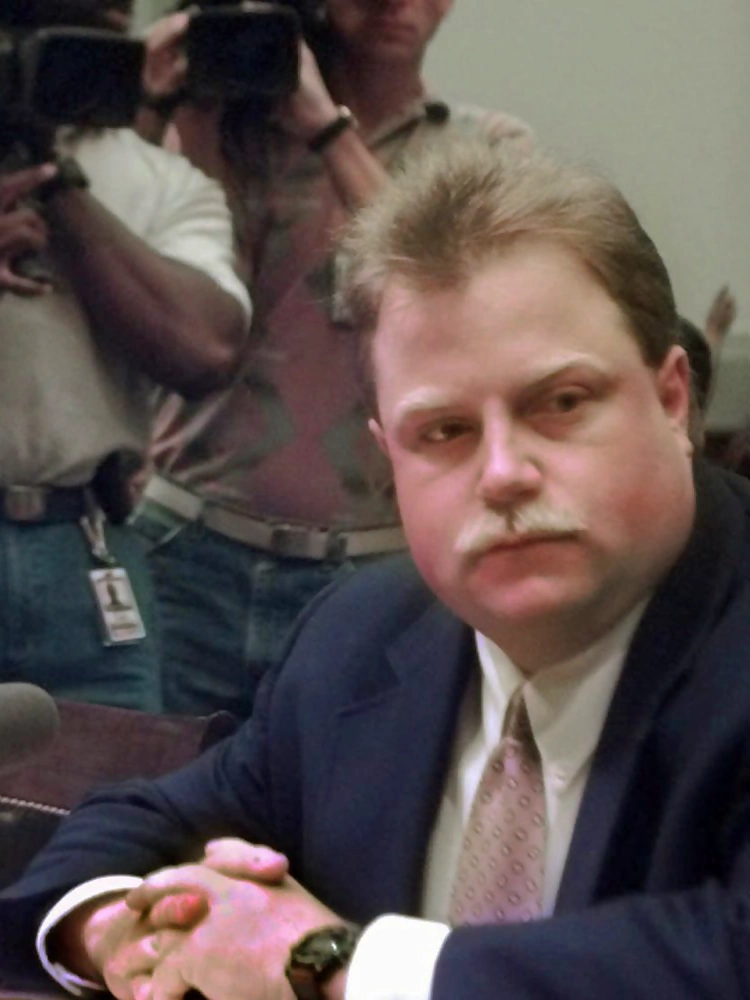
Attr: AP Photo/Greg Gibson
| 6 Quotes | |
| Occup. | Celebrity |
| From | USA |
| Born | November 17, 1962 Danville, Virginia, United States |
| Age | 63 years |
| Cite | |
Citation Formats
APA Style (7th ed.)
Richard jewell biography, facts and quotes. (2026, March 4). FixQuotes. https://fixquotes.com/authors/richard-jewell/
Chicago Style
"Richard Jewell biography, facts and quotes." FixQuotes. March 4, 2026. https://fixquotes.com/authors/richard-jewell/.
MLA Style (9th ed.)
"Richard Jewell biography, facts and quotes." FixQuotes, 4 Mar. 2026, https://fixquotes.com/authors/richard-jewell/. Accessed 25 Mar. 2026.
Early Life and Background
Richard Allensworth Jewell was born Richard White on November 17, 1962, in Danville, Virginia, and grew up amid the blue-collar churn of the late-20th-century American South, a world where steady work and respectability were social currency. His parents divorced when he was young; his mother, Bobi, became the fixed point of his life, and he later took the surname of her second husband, becoming Richard Jewell. He moved to the Atlanta area, where the citys rapid expansion, rising crime anxiety, and boom-era security culture created a steady demand for uniforms, badges, and the promise of order.Jewells inner life was shaped by a deep need to be useful and recognized. He was not a born celebrity, but a man drawn to authoritys rituals - radios, procedures, the unglamorous vigilance that most people do not notice when it works. That desire, earnest and sometimes socially awkward, became both his strength and his vulnerability: he wanted to belong to the institutions that confer legitimacy, yet he lived close to the margins of them, taking contract and auxiliary work and measuring himself by whether he was seen doing the right thing.
Education and Formative Influences
Jewell attended high school in Georgia and briefly studied at Piedmont College in Demorest, where he also worked in campus security, a formative apprenticeship in rules, patrol routes, and the moral clarity of preventing harm. He pursued law enforcement work in several capacities - including a period as a dispatcher and later as a sheriff department employee - absorbing the era's post-crime-wave emphasis on control and risk management. In the 1980s and early 1990s, as American policing professionalized and private security expanded, Jewell internalized the idea that public safety was built from small acts of attentiveness, a worldview that would collide with the medias appetite for a single dramatic narrative.Career, Major Works, and Turning Points
Jewells life turned on July 27, 1996, during the Centennial Olympic Park concert at the Atlanta Olympics. Working as a security guard, he noticed an unattended backpack and helped clear the area, actions that reduced casualties when the bomb exploded; one person was killed and many were injured. Initially hailed as a hero, Jewell was then publicly targeted after investigators leaked that he was a focus of inquiry, and major outlets amplified a profile of the lone, authority-seeking misfit who stages heroism. For 88 days he lived under intense scrutiny before the FBI formally cleared him, but his exoneration could not reverse the stigma. He later sued media organizations; he reached settlements with some, while others fought or were dismissed. He returned to law enforcement work in Georgia in later years, seeking normalcy and professional dignity. Jewell died in 2007, at 44, from complications related to diabetes.Philosophy, Style, and Themes
Jewells public voice was not philosophical in the academic sense; it was the language of a working man trying to reclaim reality from a story told about him. The Olympics episode revealed a temperament built around procedure and immediate duty: when he saw the suspicious bag, his instinct was to act, not perform, and his remembered urgency - “It's a bomb. I've already called law enforcement. Let's get out of here”. - reads like a credo of practical responsibility. Yet the same trait that made him effective in a crisis - visibility, initiative, the desire to be useful - also made him easy to caricature once suspicion took hold.His deeper themes were reputation, due process, and the asymmetry between accusation and repair. Jewell described the experience as totalizing surveillance, the body reacting to public contempt as if it were physical pursuit: “I felt like a hunted animal, followed constantly, waiting to be killed”. Beneath the legal milestones was a psychological demand for moral accounting, condensed into a plea that is both personal and civic: “I want my name back”. In that insistence, Jewell became a case study in how quickly institutions - investigators needing momentum, newsrooms needing a face - can convert an ordinary man into a symbol, and how the symbolic wound outlasts the factual correction.
Legacy and Influence
Jewells legacy endures as a cautionary landmark at the intersection of criminal investigation, media ethics, and the fragile economics of attention. His ordeal is taught and debated as an example of how leaks and insinuation can manufacture guilt without a charge, and how retractions rarely travel as far as the first headline. Later cultural portrayals, including Clint Eastwoods film "Richard Jewell" (2019), renewed public debate about the press, the FBI, and the human cost of narrative shortcuts. More quietly, Jewell remains emblematic of the uncelebrated civic role he tried to inhabit: the citizen-guardian whose best moment was real, and whose worst months showed how easily a society can mistake familiarity with authority for criminal intent.Our collection contains 6 quotes written by Richard, under the main topics: Justice - Police & Firefighter - Fear.