
Richard Krajicek Biography Quotes 21 Report mistakes
| 21 Quotes | |
| Occup. | Athlete |
| From | Netherland |
| Born | December 6, 1971 |
| Age | 54 years |
| Cite | |
Citation Formats
APA Style (7th ed.)
Richard krajicek biography, facts and quotes. (2026, February 11). FixQuotes. https://fixquotes.com/authors/richard-krajicek/
Chicago Style
"Richard Krajicek biography, facts and quotes." FixQuotes. February 11, 2026. https://fixquotes.com/authors/richard-krajicek/.
MLA Style (9th ed.)
"Richard Krajicek biography, facts and quotes." FixQuotes, 11 Feb. 2026, https://fixquotes.com/authors/richard-krajicek/. Accessed 6 Mar. 2026.
Early Life and Background
Richard Peter Stanislav Krajicek was born on December 6, 1971, in Rotterdam, in a Netherlands that was comfortable, outward-looking, and increasingly professional about sport. His family history carried a sharper edge: his father was Czech, and the Krajicek household kept a sense of Central European seriousness about discipline and craft even as Richard grew up in the pragmatic Dutch port city. That mixture of cultures helped form a player who could be genial in public yet hard-nosed in the private arithmetic of winning points.Tall and rangy, he was drawn early to the geometry of tennis: angles, leverage, and the blunt advantage of height at the net. Dutch tennis in the 1980s still lived in the shadow of larger powers, so ambition had to be imported from within. Krajicek learned to compete as if he were slightly underestimated - a useful psychological fuel for a man whose best tennis arrived when he could turn skepticism into urgency.
Education and Formative Influences
Like many elite European players of his generation, Krajicek was educated through training blocks, junior travel, and the gradual replacement of ordinary schooling by professional routine, with coaches and federation structures shaping him more than classrooms did. The era mattered: the late 1980s and early 1990s were a crossroads between the serve-and-volley tradition and the coming baseline power game, and Krajicek grew up studying how to end points efficiently, using a big serve, a compact first strike, and confident forward movement.Career, Major Works, and Turning Points
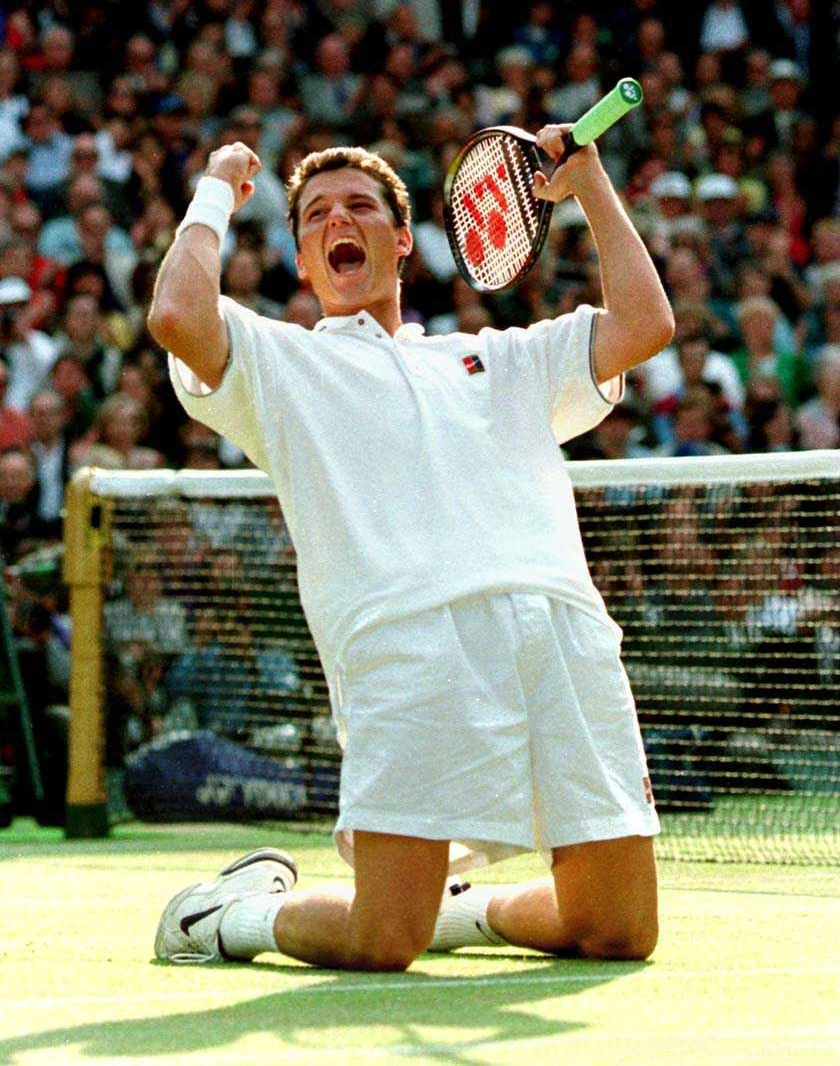
Krajicek turned professional in 1989 and established himself through the early 1990s as a fast-court threat whose serve could dominate and whose forehand could finish. His defining achievement came at Wimbledon in 1996, where he produced the tournament of his life, most memorably defeating two-time defending champion Pete Sampras in the quarterfinals and then winning the final to become the first Dutchman to take the Wimbledon singles title. Reaching a career-high ranking of world No. 4 in 1995, he collected multiple tour titles and remained a factor at the top level, but his later years were increasingly dictated by physical breakdown, especially the elbow problems that blunted the very serve that had made him dangerous.Philosophy, Style, and Themes
Krajicek understood tennis as a mental profession disguised as an athletic one. He spoke with unusual clarity about the psychological costs of sustained excellence, admiring the players who could keep paying that price year after year. “But Pete had the desire to play at the highest level for so many years. That is very difficult, mentally”. The comment reads like confession as much as praise: Krajicek could reach a peak that few touched, but he also recognized how rare it is to inhabit the peak indefinitely.His own analysis of his best period emphasized pressure creation rather than simple shot-making, a blueprint for how an aggressive player must think to win seven matches in a major. “I was serving good but was returning especially well, which was a weakness in my game. So not only was I serving well, but I was also breaking these other guys, and they felt the pressure”. In that framing, his Wimbledon run was not an accident of hot serving; it was a temporary expansion of his identity into a more complete competitor. Yet his inner life was also marked by the body as limit and warning. “But, then again, I had to stop because there was too much pain or too much trouble. After I retired I still had one more elbow surgery just to be able to do normal things”. The candor reveals the darker underside of a power game: when your livelihood is built on a violent motion repeated thousands of times, the line between greatness and ordinary life can be a tendon.
Legacy and Influence
Krajicek endures as the Netherlands most accomplished male singles champion of the Open Era and as a case study in how a single transcendent fortnight can reshape a nations sporting imagination. His Wimbledon title remains a touchstone for Dutch tennis and a reference point for later generations seeking proof that the biggest stages are not reserved for the traditional superpowers. In later life he became influential off court as well, notably through leadership roles in Dutch tennis administration and through philanthropic work for children, extending his impact beyond trophies into the civic life of the sport that made him.Our collection contains 21 quotes written by Richard, under the main topics: Motivational - Never Give Up - Love - Sarcastic - Victory.
Source / external links