
Richard M. Daley Biography Quotes 31 Report mistakes
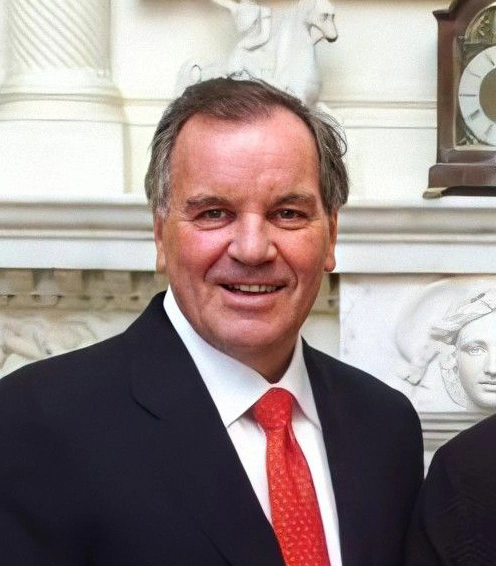
| 31 Quotes | |
| Born as | Richard Michael Daley |
| Occup. | Politician |
| From | USA |
| Born | April 24, 1942 Chicago, Illinois, USA |
| Age | 83 years |
| Cite | |
Citation Formats
APA Style (7th ed.)
Richard m. daley biography, facts and quotes. (2026, February 28). FixQuotes. https://fixquotes.com/authors/richard-m-daley/
Chicago Style
"Richard M. Daley biography, facts and quotes." FixQuotes. February 28, 2026. https://fixquotes.com/authors/richard-m-daley/.
MLA Style (9th ed.)
"Richard M. Daley biography, facts and quotes." FixQuotes, 28 Feb. 2026, https://fixquotes.com/authors/richard-m-daley/. Accessed 21 Mar. 2026.
Early Life and Background
Richard Michael Daley was born on April 24, 1942, in Chicago, Illinois, into the thick-grained world of mid-century urban Democratic politics. He grew up in Bridgeport, a tight, Catholic, ethnically Irish neighborhood that treated city government not as an abstraction but as a system of favors, jobs, and protection against a precarious economy. His father, Richard J. Daley, rose from precinct work to become Chicago's mayor in 1955, and the household absorbed the rules of machine politics the way other families absorbed the rhythms of a trade.
The son learned early that power in Chicago was never merely ideological - it was spatial and personal, mapped onto wards, parishes, unions, and the daily performance of competence. The 1960s brought national turbulence that cut directly through the Daley name: civil rights, antiwar protest, and the 1968 Democratic National Convention, when police confrontations hardened Chicago's reputation. For Richard M. Daley, the era created a private tension that would mark his later public style: a craving for order and momentum, paired with an awareness that the city could be judged harshly, even when it believed it was defending itself.
Education and Formative Influences
Daley attended Providence Seminary and later De La Salle Institute, then earned a bachelor's degree at Providence College (Rhode Island) and a Juris Doctor at DePaul University. Law school sharpened a procedural mind already trained by the ward system - an instinct for rules, leverage, and institutional boundaries. His formative influences were less literary than civic: the Catholic ethic of duty, the family belief in government as a practical instrument, and the spectacle of his father's dominance, which taught him that legitimacy comes from results as much as from rhetoric.
Career, Major Works, and Turning Points
Daley entered public life through the Cook County State's Attorney's office, then served in the Illinois Senate (1973-1980) before winning election as Cook County State's Attorney in 1980, a post he held until 1989; his long tenure there helped brand him as an administrator rather than a flamboyant campaigner. In 1989, after the Harold Washington era and the subsequent political fragmentation, he won the Chicago mayoralty and held it until 2011 - the longest tenure in city history. His administration remade downtown and the lakefront with a builder's emphasis: Millennium Park (opened 2004), neighborhood streetscape projects, and a strong tourism and convention push; it also embraced controversial privatization and long leases, most notably the 2008 Chicago parking meter deal. Turning points included the 1992 flood of the Chicago Tunnel system (a crisis of infrastructure and accountability), the 2003 Hired Truck scandal that deepened cynicism about patronage, and the 2008-2009 financial crisis that exposed how vulnerable city budgets were to debt and shrinking revenues.
Philosophy, Style, and Themes
Daley's governing philosophy blended inherited machine pragmatism with late-20th-century urban competitiveness: keep the city safe enough, clean enough, and attractive enough to hold employers and lure investment. He resisted unfunded mandates, framing federalism as a fiscal argument rather than a constitutional one: “Why should a city be mandated to do something by the federal government or state government without the money to do it?” In that sentence is his core psychology - a mayor who experienced politics as logistics, and who turned moral questions into budget questions because budgets are measurable and enforceable.
His style was disciplined, managerial, often impatient with dissent, and deeply loyal to the idea that the city is an organism that must be protected from drift. He defended the machine tradition as a social safety net for working people, rooted in his father's Depression-era formation: “My dad came out of the Roosevelt era and the Depression. One person and one party made a difference in his life”. Yet the same discipline that produced visible civic improvements also produced blind spots: an inclination to treat opposition as obstruction, and to gamble long-term public assets for short-term certainty. Even his optimism had an instrumental edge, capturing how he sold Chicago as both brand and community: “I've very proud to be mayor of our great city. It's a city with a heart and a soul”.
Legacy and Influence
Daley left office in 2011 with a city physically transformed and politically hardened: a revitalized downtown, expanded parkland, and a global-city posture, alongside enduring critiques about inequality, patronage culture, policing controversies, and the fiscal consequences of privatization and debt. His legacy is the modern template for the strong-mayor urban executive - part builder, part dealmaker, part corporate recruiter - and his long tenure still shapes Chicago's expectations of what mayoral power can accomplish and what it can conceal.
Our collection contains 31 quotes written by Richard, under the main topics: Witty One-Liners - Justice - Leadership - Learning - Equality.
Other people related to Richard: Valerie Jarrett (Lawyer), Bobby Rush (Politician), James R. Thompson (Politician), Jane Byrne (Politician), David Axelrod (Public Servant), Arne Duncan (Public Servant), William M. Daley (Politician)
Source / external links