
Richard M. Nixon Biography Quotes 68 Report mistakes
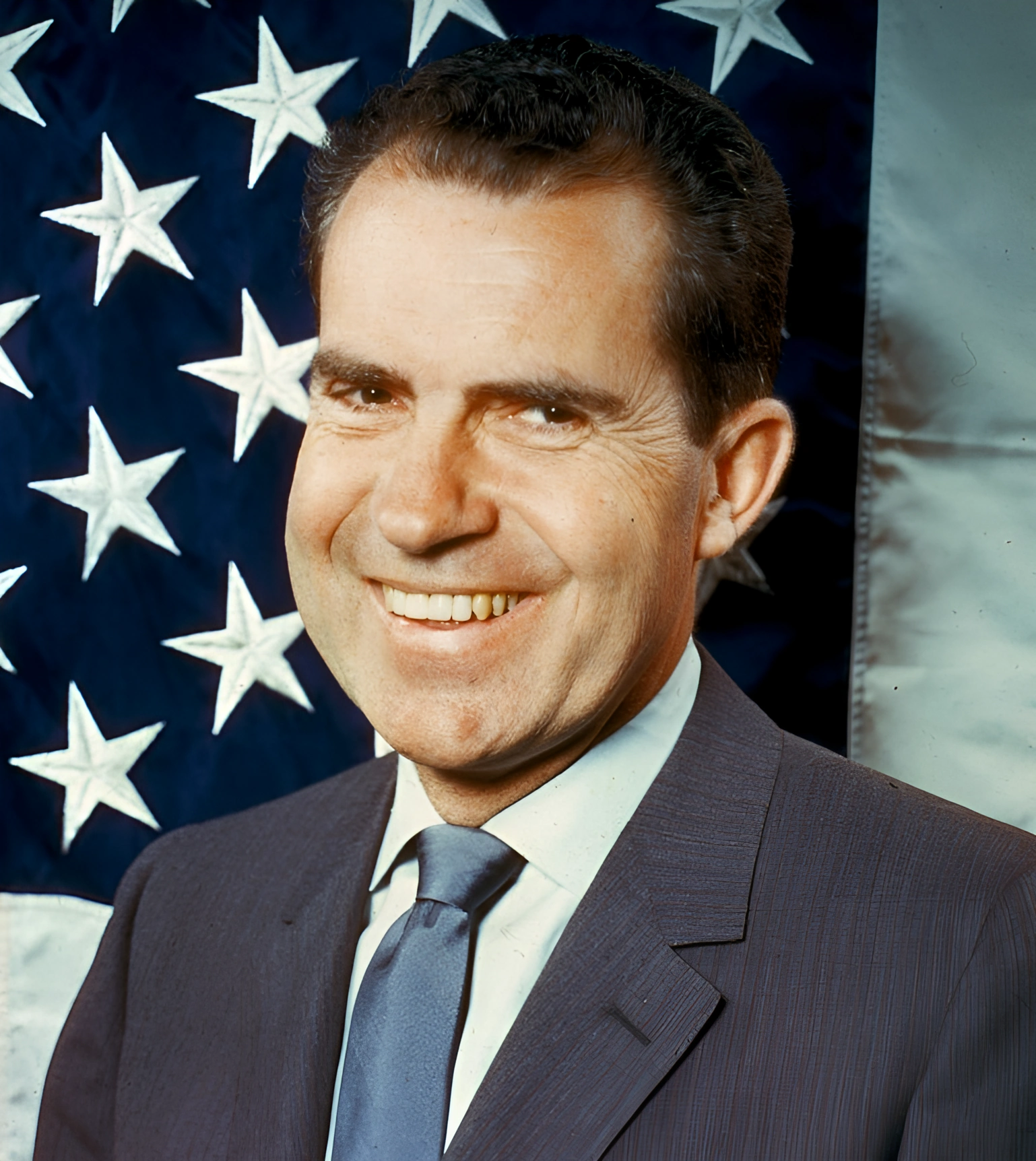
| 68 Quotes | |
| Born as | Richard Milhous Nixon |
| Occup. | President |
| From | USA |
| Born | January 9, 1913 Yorba Linda, California, US |
| Died | April 22, 1994 New York City, New York, US |
| Aged | 81 years |
| Cite | |
Citation Formats
APA Style (7th ed.)
Richard m. nixon biography, facts and quotes. (2026, February 11). FixQuotes. https://fixquotes.com/authors/richard-m-nixon/
Chicago Style
"Richard M. Nixon biography, facts and quotes." FixQuotes. February 11, 2026. https://fixquotes.com/authors/richard-m-nixon/.
MLA Style (9th ed.)
"Richard M. Nixon biography, facts and quotes." FixQuotes, 11 Feb. 2026, https://fixquotes.com/authors/richard-m-nixon/. Accessed 4 Mar. 2026.
Early Life and Background
Richard Milhous Nixon was born January 9, 1913, in Yorba Linda, California, the second of five sons in a family marked by Quaker discipline, financial instability, and persistent grief. His father, Frank Nixon, scraped by as a citrus farmer and grocer; his mother, Hannah Milhous Nixon, was devout, emotionally restrained, and morally exacting - a model of duty that Nixon would both emulate and chafe against. The household prized sobriety and self-control, and the young Nixon learned early that affection was often expressed as expectation.Hardship arrived as a pattern, not an episode. Two brothers, Arthur and Harold, died young (Harold in 1933 after long illness), losses that deepened Nixon's sense that life could turn without warning and that security had to be fought for, not assumed. Moving to Whittier, he excelled in school while working in the family store, absorbing a lifelong suspicion of ease and inherited advantage. That mix - grievance, ambition, and relentless self-management - became the emotional engine of his rise.
Education and Formative Influences
Nixon attended Whittier High School and then Whittier College, where he battled the social dominance of wealthier classmates by organizing the Orthogonian Society, a formative rehearsal for coalition-building against an entrenched establishment. He won a scholarship to Duke University School of Law, graduating in 1937, and returned to Whittier to practice law. The late-Depression years and the approach of world war sharpened his belief that competence and toughness mattered more than pedigree; service in the U.S. Navy during World War II (largely in logistics in the Pacific) reinforced his bureaucratic confidence and his conviction that global power required cold-eyed planning rather than sentiment.Career, Major Works, and Turning Points
Elected to Congress in 1946, Nixon made his national name on the House Un-American Activities Committee, most famously in the Alger Hiss case, then rode anticommunism and sharp-edged campaigning to the U.S. Senate in 1950. As Dwight D. Eisenhower's vice president (1953-1961), he became a tireless emissary of American power, including the 1959 "Kitchen Debate" with Nikita Khrushchev, while surviving the 1952 "Checkers" crisis by turning television into a weapon of intimacy and defiance. Defeated narrowly by John F. Kennedy in 1960 and losing the California governorship in 1962, he rebuilt himself through party work and disciplined positioning, winning the presidency in 1968 amid Vietnam, urban unrest, and cultural fracture, and reelected in 1972 in a landslide. His administration achieved major foreign-policy breakthroughs - opening to China (1972) and detente with the Soviet Union, alongside the Paris Peace Accords (1973) - and significant domestic actions including the creation of the Environmental Protection Agency and a turn toward revenue sharing. Yet Watergate, beginning with the June 1972 break-in and culminating in revelations about Oval Office taping, cover-up, and abuse of power, forced his resignation on August 9, 1974; in later years he sought rehabilitation through extensive writing and counsel on foreign affairs until his death on April 22, 1994, in New York City.Philosophy, Style, and Themes
Nixon's inner life was a contest between moral earnestness and political ferocity. He saw politics not as civic theater but as trial by combat, a domain in which enemies must be read, pressured, and outlasted. That outlook produced stamina - the capacity to endure humiliation, return, and win - and also a hair-trigger defensiveness that invited secrecy. His famous claim, “A man is not finished when he is defeated. He is finished when he quits”. distills the self-myth he sold and lived: endurance as virtue, persistence as absolution. But it also hints at a deeper anxiety - that stopping would mean facing the self without the armor of struggle.His governing imagination was larger than his temperament. He wanted the strategic grandeur of peacemaking and the prestige of history, insisting that “The greatest honor history can bestow is that of peacemaker”. In practice, the same desire for control that enabled diplomatic gambits also fed a closed system of loyalty tests, surveillance, and rationalization. Watergate exposed not only criminal acts but a psychology of exceptionalism, later captured in the chilling formulation, “When the President does it, that means that it's not illegal”. The tragedy of Nixon is that he could imagine national reconciliation and global stability, yet often sought personal security through concealment, converting political risk into moral hazard.
Legacy and Influence
Nixon remains one of the most consequential and controversial U.S. presidents: architect of the modern Republican "silent majority" coalition, pioneer of hard-nosed television-era messaging, and a strategist who reshaped the Cold War map through China opening and detente. His domestic record is ideologically untidy - conservative rhetoric paired with expansive federal action - complicating simple partisan narratives. Watergate permanently altered American governance, strengthening investigative journalism, congressional oversight, ethics law, and public skepticism toward executive power; it also left a cautionary template for how paranoia and secrecy can corrode legitimate achievement. In the decades since, Nixon's post-presidential writings and counsel restored some foreign-policy stature, but his name endures chiefly as a symbol of the thin line between political brilliance and self-inflicted ruin.Our collection contains 68 quotes written by Richard, under the main topics: Witty One-Liners - Motivational - Ethics & Morality - Truth - Justice.
Other people related to Richard: Lewis B. Hershey (Soldier), Howard K. Smith (Journalist), Conrad Black (Businessman)
Richard M. Nixon Famous Works
- 1994 Beyond Peace (Book)
- 1990 In the Arena: A Memoir of Victory, Defeat, and Renewal (Book)
- 1985 No More Vietnams (Book)
- 1982 Leaders (Book)
- 1980 The Real War (Book)
- 1978 RN: The Memoirs of Richard Nixon (Book)
- 1962 Six Crises (Book)
- 1960 The Challenges We Face:Edited and Compiled from the Speeches and Papers of Richard M. Nixon (Book)
Source / external links