
Richard Petty Biography Quotes 9 Report mistakes
| 9 Quotes | |
| Occup. | Athlete |
| From | USA |
| Born | July 4, 1937 |
| Age | 88 years |
| Cite | |
Citation Formats
APA Style (7th ed.)
Richard petty biography, facts and quotes. (2026, February 11). FixQuotes. https://fixquotes.com/authors/richard-petty/
Chicago Style
"Richard Petty biography, facts and quotes." FixQuotes. February 11, 2026. https://fixquotes.com/authors/richard-petty/.
MLA Style (9th ed.)
"Richard Petty biography, facts and quotes." FixQuotes, 11 Feb. 2026, https://fixquotes.com/authors/richard-petty/. Accessed 12 Feb. 2026.
Early Life and Family
Richard Petty was born on July 2, 1937, in Level Cross, North Carolina, into a family that helped shape American stock car racing. His father, Lee Petty, was a pioneering figure and three-time NASCAR champion who established Petty Enterprises, the small-town team that became a powerhouse. Growing up in the family garage, the younger Petty absorbed the craft of building, tuning, and racing cars. His brother, Maurice Petty, would later become one of NASCAR's most respected engine builders, providing the power behind many of Richard's greatest victories. The Petty home, garage, and track-side life formed a single world, and the lessons learned in Level Cross guided him through a career that spanned generations.Beginnings in NASCAR
Richard Petty made his NASCAR Grand National (now Cup Series) debut in 1958 under the Petty Enterprises banner, driving the now-iconic No. 43. Early on, he learned to translate raw speed into measured racecraft, supported by the meticulous preparation of Maurice and the strategic instincts of the team's crew chief, Dale Inman, who was also his cousin. Petty's first wins signaled that he was more than Lee Petty's son; he was a racer with a uniquely smooth style, precise throttle control, and a feel for longer races that required saving equipment until it mattered most. The family operation gave him stability, and the No. 43 soon became inseparable from his identity.Dominance and Records
Petty's ascent turned into dominance during the 1960s and 1970s. He captured seven NASCAR Cup Series championships (1964, 1967, 1971, 1972, 1974, 1975, and 1979), tying a record that would later be matched by Dale Earnhardt and Jimmie Johnson. The 1967 season remains a monument in American motorsports: Petty won 27 races, including an unprecedented streak of 10 consecutive victories, a mark that stands as one of NASCAR's most daunting achievements. Over the course of his career he amassed 200 Cup Series wins, a number so far beyond reach that it defines the upper bound of success in stock car racing. He also won the Daytona 500 a record seven times, cementing his status as "The King" on the sport's grandest stage. Much of this success was shared with Dale Inman, whose preparation and pit decisions often turned fast cars into winning ones.Rivalries and Relationships
Stock car racing is as much about competition as it is about companionship, and Petty's era was rich with both. His enduring rivalry and mutual respect with David Pearson created some of the sport's most memorable duels, with the two finishing first and second to each other in dozens of races. Other formidable competitors included Cale Yarborough, Bobby Allison, and Donnie Allison, each pushing Petty to define the edge between pressure and patience. Beyond rivals, key relationships shaped his image and opportunities. The long-term partnership with STP, championed by Andy Granatelli, brought national attention; their negotiation over the car's paint scheme famously merged STP's day-glo red with Petty Blue, creating one of racing's most recognizable liveries. Petty's bond with fans grew alongside these storylines, reinforced by his open-hand wave and willingness to linger for autographs long after the checkered flag.Signature Races and Safety Impact
Several moments became touchstones in Petty's legend. His victories at Daytona, beginning in the 1960s and stretching into the early 1980s, defined big-race excellence. The 1979 Daytona 500, the first 500-mile NASCAR race broadcast live flag-to-flag nationwide, ended with a last-lap crash between Cale Yarborough and Donnie Allison and a dramatic altercation in the infield. Petty, perfectly positioned, slipped through to win, introducing millions of new viewers to the sport and to his mastery of timing. Safety advancements also trace to incidents in his career. A violent rollover crash in 1970 led NASCAR to adopt the window net, a now-standard device that helps keep drivers' arms inside the car during accidents. In 1988, Petty survived a spectacular crash at Daytona that underscored the need for continued safety improvements at high speeds. Through triumphs and trials, he served as both a champion and a catalyst for progress.Team, Equipment, and Adaptation
Petty's career was a study in adaptation across changing rules, manufacturers, and technologies. He drove a range of makes over the decades while remaining anchored to Petty Enterprises in Level Cross. The team's approach, Maurice Petty's engines, Dale Inman's strategy, and Richard's race management, created a durable template for success. Even as the competition intensified and factory relationships shifted, the No. 43 continued to symbolize craftsmanship and continuity in NASCAR's evolving landscape. Petty's ability to adjust to new cars, tire compounds, and aerodynamics sustained his competitiveness across eras that saw different driving styles and mechanical philosophies rise to prominence.200th Victory and National Spotlight
On July 4, 1984, Petty captured his 200th Cup Series win at Daytona, an achievement witnessed by President Ronald Reagan, who arrived during the event and congratulated Petty in victory lane. The moment transcended sports, placing a uniquely American milestone before a national audience. That afternoon encapsulated his career: speed, strategy, and a flair for significance when the stakes were highest.Farewell and Transition to Ownership
Petty retired from full-time driving in 1992 after a celebrated "Farewell Tour", closing his on-track career in the same season that signaled a new generation's rise. He then focused on ownership and leadership, guiding Petty Enterprises through modern NASCAR's intensifying business demands. Over time, alliances and mergers reshaped the operation, and he remained an influential figure as the organization evolved, later operating under names such as Richard Petty Motorsports. In these roles he mentored rising talent and worked with team leaders like Robbie Loomis, translating decades of competition into management and mentorship.Family, Loss, and Philanthropy
Family remained central to Petty's life. He married Lynda Petty and supported their children as the Petty legacy entered a third generation with his son, Kyle Petty, who became a notable Cup driver. The family's joy and ambition were tested by the tragic death of Richard's grandson, Adam Petty, in 2000. In Adam's honor, the family helped establish Victory Junction, a camp that serves children with serious medical conditions. Richard championed the project alongside Kyle, turning grief into a lasting gift for families. These efforts, combined with countless hospital visits, charity appearances, and fundraising initiatives, extended The King's impact well beyond the track.Public Persona and Cultural Impact
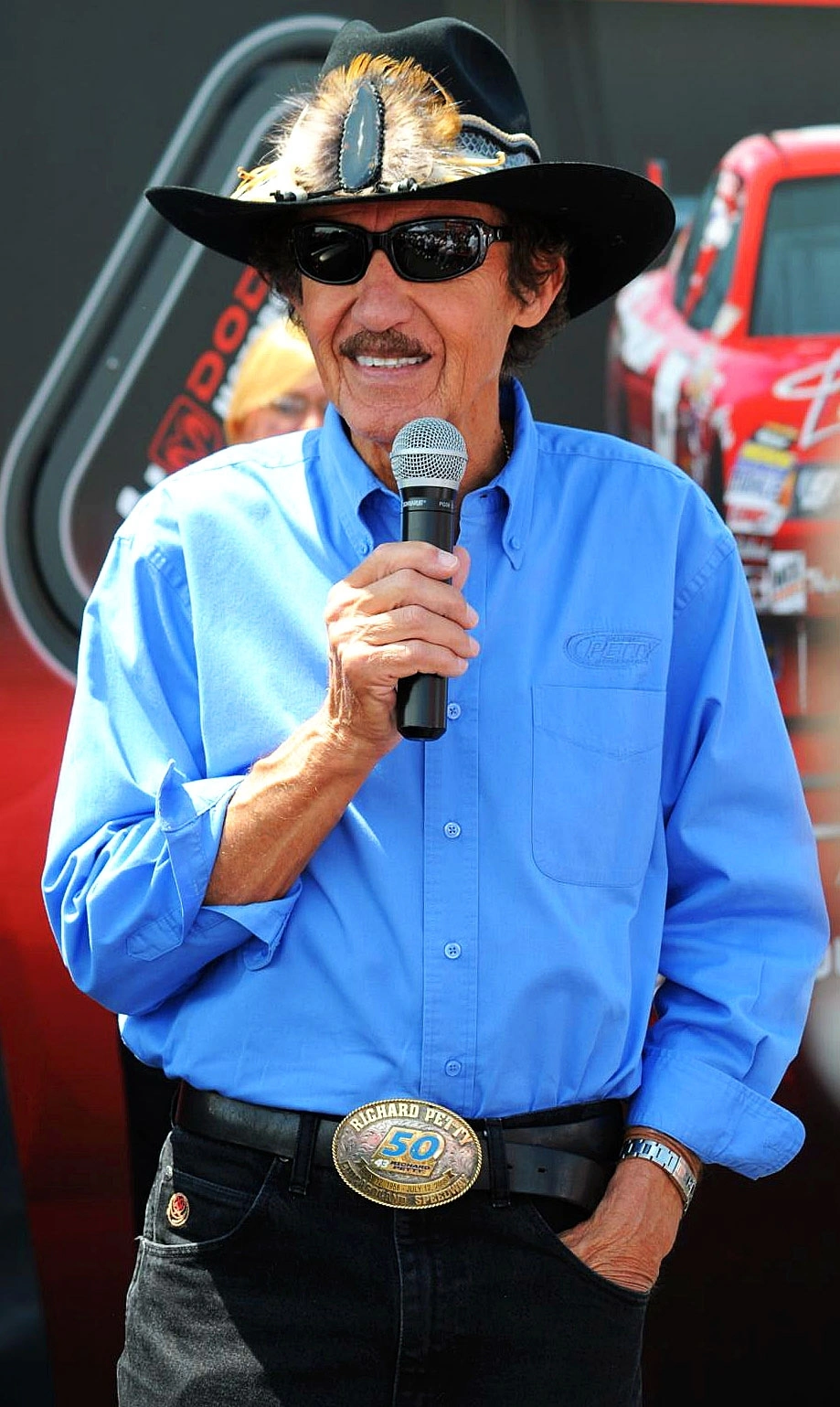
Petty's brimmed cowboy hat, sunglasses, and easy smile crafted a public persona that resonated far beyond NASCAR's core. He connected with fans across regions and generations, appearing in commercials, community events, and broadcast booths. Announcers like Ken Squier helped narrate his legend to national audiences, but it was Petty's own authenticity and accessibility that made him a cultural touchstone. The No. 43 became not only a car number but a symbol of consistency, sportsmanship, and American ingenuity.Honors and Lasting Legacy
Recognition followed his records. Petty was inducted into the inaugural class of the NASCAR Hall of Fame, affirming his place at the foundation of the sport. He had already been welcomed into major motorsports halls of fame, a reflection of achievements that stretched from short tracks to superspeedways. Just as important as trophies are the standards he set: meticulous preparation with Maurice Petty and Dale Inman, respectful but fierce rivalry with David Pearson, and the accessible star power that drew millions to a uniquely American racing tradition. His continuing presence at racetracks, in team offices, and at charitable events sustains a legacy built on excellence, resilience, and service. For fans, competitors, and the broader public, Richard Petty remains The King not only for the victories he amassed, but for the way he carried himself across a lifetime in racing.Our collection contains 9 quotes written by Richard, under the main topics: Witty One-Liners - Never Give Up - Sarcastic - Father - Respect.
Source / external links