
Richard Rogers Biography Quotes 15 Report mistakes
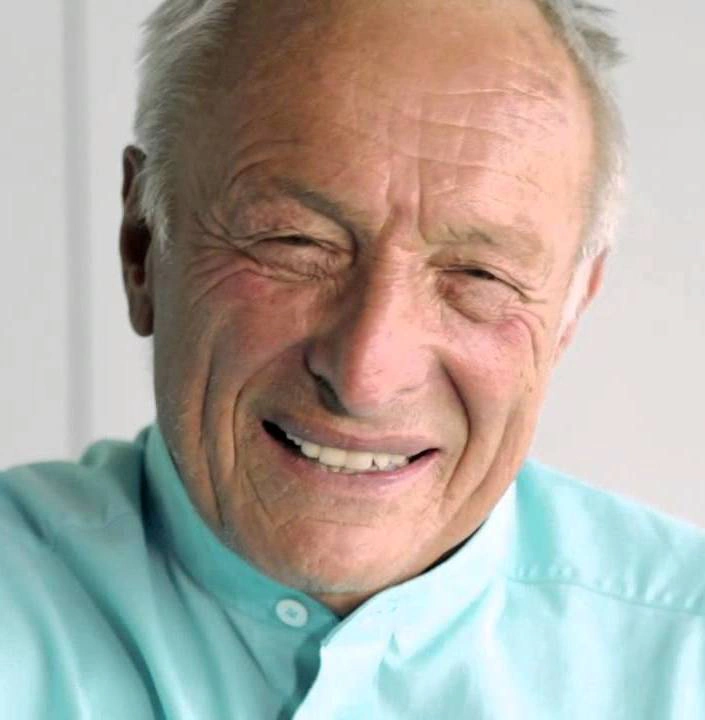
| 15 Quotes | |
| Born as | Richard George Rogers |
| Occup. | Architect |
| From | United Kingdom |
| Born | July 23, 1933 United Kingdom |
| Died | December 18, 2021 |
| Aged | 88 years |
| Cite | |
Citation Formats
APA Style (7th ed.)
Richard rogers biography, facts and quotes. (2026, February 11). FixQuotes. https://fixquotes.com/authors/richard-rogers/
Chicago Style
"Richard Rogers biography, facts and quotes." FixQuotes. February 11, 2026. https://fixquotes.com/authors/richard-rogers/.
MLA Style (9th ed.)
"Richard Rogers biography, facts and quotes." FixQuotes, 11 Feb. 2026, https://fixquotes.com/authors/richard-rogers/. Accessed 26 Mar. 2026.
Early Life and Background
Richard George Rogers was born on 23 July 1933 in Florence, Italy, to Anglo-Italian parents in a Europe sliding toward war and displacement. His father, a physician, and his mother, a pottery designer, gave him an early sense that craft and science could share a single room - an idea that would later surface in his insistence on buildings that declare how they are made. With Fascism tightening its grip and the threat of conflict becoming unavoidable, the family relocated to Britain before and during the Second World War, carrying with them the emotional dissonance of exile: belonging to more than one place, yet never entirely at home in any.Growing up in Britain, Rogers struggled with dyslexia and the self-doubt it can seed - not an incidental biographical detail, but a pressure that shaped his temperament. He learned early to argue through images, models, and spatial clarity rather than through fluent prose. That struggle also sharpened his sympathy for public systems that fail people quietly: housing, schools, transport, and the streets that shape everyday dignity. The postwar years around him were dominated by reconstruction and rationing, by faith in planning and the welfare state, and by the unresolved question of whether modernity would humanize cities or brutalize them.
Education and Formative Influences
Rogers trained at the Architectural Association in London, absorbing a culture that prized invention and the moral ambitions of modernism, then studied at Yale University on a Fulbright scholarship, where he encountered the American scale of industry and the optimism of postwar technology. At Yale he met Norman Foster, and the two formed a lasting rivalry and kinship, each fascinated by lightweight structures, systems thinking, and the idea that architecture could be both socially legible and technically exact. The era was one of competing visions - British New Town idealism, European rationalism, and the emerging consumer metropolis - and Rogers emerged convinced that architecture had to engage the city as an evolving organism rather than a static monument.Career, Major Works, and Turning Points
After early practice in London, Rogers co-founded Team 4 with Foster and others, then, with Renzo Piano, won the competition for the Centre Georges Pompidou in Paris (completed 1977), a turning point that made him a global figure and a lightning rod. The Pompidou externalized structure and services, turning ducts, escalators, and trusses into civic spectacle and proposing the museum as an open, urban machine; it redefined what a cultural building could look like and how it could behave. In the following decades he led Richard Rogers Partnership (later Rogers Stirk Harbour + Partners), producing landmarks that fused engineering candor with public ambition: the Lloyd's Building in London (1986), with its services pushed outward to free flexible floors; the Millennium Dome (now The O2, 1999) as a vast lightweight enclosure; the European Court of Human Rights in Strasbourg (1995); Terminal 4 at Madrid-Barajas Airport (2005) with its rhythmic structure and daylight; and the Leadenhall Building in London (2014). Parallel to practice, he became a public advocate - chairing the UK government's Urban Task Force (1998-2001) and entering the House of Lords as Baron Rogers of Riverside (1996) - insisting that design was inseparable from policy.Philosophy, Style, and Themes
Rogers' signature style is often filed under "high-tech", but its core was ethical rather than merely aesthetic: he treated buildings as civic instruments whose workings should be visible, adaptable, and accountable. The exposed structure, the color-coded services, the preference for modular parts and long spans were means to an end - flexibility over time, daylight and air as rights, and a public realm that invites rather than intimidates. His best work pursued a paradox: make the building read like a machine, yet make the city feel more humane. That paradox also explains his lifelong attention to streets, squares, and transport, the connective tissue that determines whether architecture serves isolated clients or a wider public.His inner life, shaped by early dislocation and later public responsibility, produced a psychology of urgency: cities could not be left to drift into ugliness, inequity, and flight. “The only way forward, if we are going to improve the quality of the environment, is to get everybody involved”. That belief underwrote his bottom-up instincts in regeneration and his impatience with top-down vanity projects. He also diagnosed the distortions of late-20th-century development with a bluntness that cut through professional euphemism: “Form follows profit is the aesthetic principle of our times”. In Rogers' worldview, the task of architecture was to resist that gravitational pull through better rules, better procurement, and an expanded civic literacy about design; hence his push to make architecture a shared language rather than a specialist dialect: “I believe very strongly, and have fought since many years ago - at least over 30 years ago - to get architecture not just within schools, but architecture talked about under history, geography, science, technology, art”.
Legacy and Influence
Rogers died on 18 December 2021, but his influence persists in the look and governance of contemporary cities: the normalization of exposed systems and flexible interiors; the expectation that major cultural and commercial buildings contribute to public space; and the idea that architects must engage planning, housing, and transport policy rather than retreat into form-making. Awards such as the Pritzker Architecture Prize (2007) and the Stirling Prize (twice) recognized his buildings, yet his deeper legacy lies in how he reframed the architect as citizen-advocate - a designer who argued that beauty, sustainability, and social life are not optional extras, but the measurable outcomes of democratic urbanism.Our collection contains 15 quotes written by Richard, under the main topics: Art - Nature - Learning - Equality - Human Rights.
Other people related to Richard: Mary Kay Ash (Businesswoman)
Source / external links