
Richard Scaife Biography Quotes 2 Report mistakes
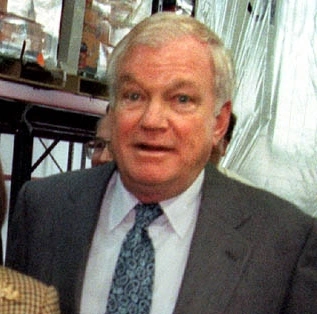
| 2 Quotes | |
| Born as | Richard Mellon Scaife |
| Occup. | Businessman |
| From | USA |
| Born | July 3, 1932 Pittsburgh, Pennsylvania, U.S. |
| Age | 93 years |
| Cite | |
Citation Formats
APA Style (7th ed.)
Richard scaife biography, facts and quotes. (2026, February 11). FixQuotes. https://fixquotes.com/authors/richard-scaife/
Chicago Style
"Richard Scaife biography, facts and quotes." FixQuotes. February 11, 2026. https://fixquotes.com/authors/richard-scaife/.
MLA Style (9th ed.)
"Richard Scaife biography, facts and quotes." FixQuotes, 11 Feb. 2026, https://fixquotes.com/authors/richard-scaife/. Accessed 12 Feb. 2026.
Early Life and Family
Richard Mellon Scaife was born on July 3, 1932, in Pittsburgh, Pennsylvania, into one of the most prominent families in American finance and industry. His mother, Sarah Mellon Scaife, was a major philanthropist and daughter of banker-industrialist Richard Beatty Mellon, while his father, Alan Magee Scaife, was an executive and investor. Through his mother, he was the grandnephew of Andrew W. Mellon, the financier and U.S. Treasury secretary, whose name signaled the family's deep entanglement with banking, aluminum, and oil. His sister, Cordelia Scaife May, would also become a formidable philanthropist. This lineage and the expectations attached to it shaped both his sense of civic duty and his belief in applying private wealth to public ends.Formative Years and Early Interests
Scaife grew up in the Pittsburgh area and in the Ligonier Valley, a region tied closely to Mellon family history. From an early age he was exposed to museums, libraries, and foundations that bore the Mellon name, and he watched his parents and relatives translate private capital into institutions serving art, science, and education. Politics, media, and civic improvement were frequent topics around him, and he developed a lasting interest in how ideas and information flowed through newspapers, magazines, and policy organizations.Philanthropy and Institution Building
As an adult, Scaife became a central figure in American philanthropy, particularly within the conservative movement. He chaired and funded several Pittsburgh-based grantmakers, most prominently the Sarah Scaife Foundation, as well as the Carthage Foundation and the Allegheny Foundation. Through these vehicles he supported public policy research, legal and constitutional studies, and civic projects, with an emphasis on limited government, free enterprise, and national defense. Among the most significant beneficiaries was The Heritage Foundation, led for many years by Edwin Feulner, which grew into one of the best-known conservative think tanks in Washington. He also supported journals and research centers that sought to influence debates on taxation, regulation, and foreign policy. Closer to home, his foundations underwrote regional projects in Western Pennsylvania, aiding historic preservation, community development, and cultural institutions. The family legacy was visible in places like the Sarah Scaife Gallery at the Carnegie Museum of Art, a reminder that his giving stretched beyond politics into the arts and local heritage.Media and Publishing
Scaife translated his interest in ideas into ownership of media. He was the driving force behind the Pittsburgh Tribune-Review and its parent, Trib Total Media, building on the Tribune-Review's roots in nearby Greensburg and expanding it into a second major daily for Pittsburgh. As publisher, he pressed for vigorous local reporting and a robust editorial page with a distinctly conservative viewpoint. The paper's growth introduced competition to the city's media landscape, long dominated by a single major daily, and it gave Scaife a direct platform to advocate reforms he viewed as important in government, education, and the courts. He occasionally wrote his own columns, using the voice of a publisher to outline priorities he felt were insufficiently represented elsewhere.National Politics and the 1990s
During the 1990s, Scaife gained national attention for funding investigations and journalism related to President Bill Clinton. Through grants that reached outlets such as The American Spectator, edited by R. Emmett Tyrrell Jr., he supported reporting projects that scrutinized the Clintons' past and the Whitewater affair. Admirers credited him with underwriting adversarial journalism and policy research; critics accused him of bankrolling politically motivated campaigns. Years later, he surprised observers by softening his public stance after meeting Bill Clinton and expressing a more nuanced view of the former president's post-White House work, a shift he described in a newspaper commentary that noted Hillary Rodham Clinton's policy acumen during the 2008 campaign.Civic Commitments in Western Pennsylvania
Beyond ideology, Scaife's philanthropy often returned to his hometown. Grants from his foundations supported local museums, libraries, parks, and neighborhood revitalization efforts, reflecting a Mellon tradition of civic stewardship. He took an interest in the conservation of the hills and valleys east of Pittsburgh, and in cultural institutions that anchored the region's identity. These commitments linked him directly to community leaders, curators, and educators who were focused on keeping Pittsburgh's cultural infrastructure vibrant.Personal Life
Scaife married twice, and his private life at times drew public scrutiny. The dissolutions of his marriages, including protracted legal disputes in later years, spilled into the press because of his prominence and the assets at stake. He had a close and complicated family world; his sister Cordelia Scaife May pursued distinct philanthropic priorities of her own, illustrating how different branches of the same family could channel their resources in divergent directions while sharing a belief in institutional giving. Despite controversy, he maintained an active role in his foundations and newspapers and kept close counsel with editors, attorneys, and longtime associates who helped manage his affairs.Later Years and Death
In his final years, Scaife remained engaged with Trib Total Media and oversight of his foundations, even as his health declined. He died on July 4, 2014, one day after his 82nd birthday. His passing prompted reflections from allies and adversaries alike: some emphasized his decisive role in building the modern conservative infrastructure of think tanks and media; others focused on the polarizing nature of his interventions. In Pittsburgh, the conversation often centered on his complex legacy as both a hard-driving publisher and an heir who continued a family tradition of cultural philanthropy.Legacy
Richard Mellon Scaife's life brought together three powerful strands: a storied family heritage shaped by figures such as Andrew Mellon and Sarah Mellon Scaife; a robust philanthropic portfolio that nurtured institutions from The Heritage Foundation to regional museums; and a media enterprise that transformed Pittsburgh's journalistic competition and gave him a megaphone in national politics. The people around him, from his parents and sister to public figures like Bill and Hillary Clinton and editors like R. Emmett Tyrrell Jr., helped define the arenas in which he operated. Whether seen as a benefactor of civic life or a relentless ideological combatant, he left an imprint on American public affairs and on the cultural landscape of Western Pennsylvania that endures in foundations, buildings, and newspapers bearing the marks of his priorities.Our collection contains 2 quotes written by Richard, under the main topics: Freedom - Servant Leadership.
Source / external links