
Richard Simmons Biography Quotes 30 Report mistakes
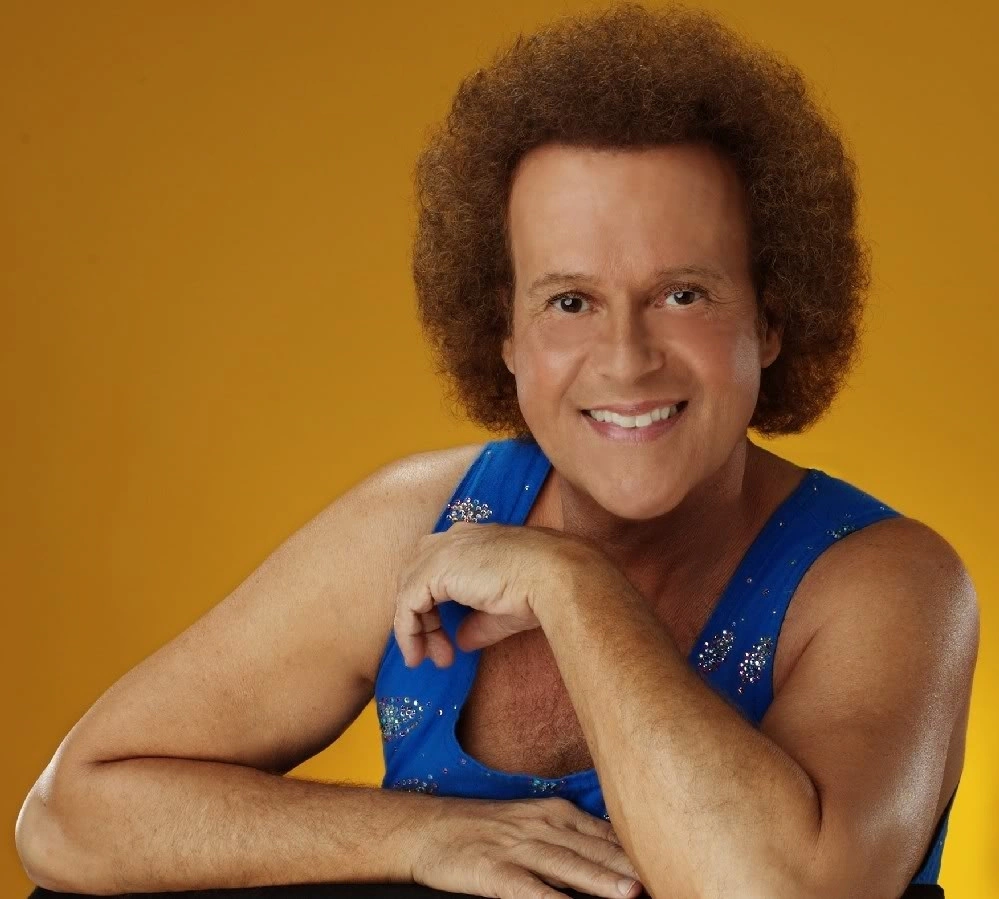
| 30 Quotes | |
| Born as | Milton Teagle Simmons |
| Occup. | Celebrity |
| From | USA |
| Born | July 12, 1948 New Orleans, Louisiana, U.S. |
| Age | 77 years |
| Cite | |
Citation Formats
APA Style (7th ed.)
Richard simmons biography, facts and quotes. (2026, February 28). FixQuotes. https://fixquotes.com/authors/richard-simmons/
Chicago Style
"Richard Simmons biography, facts and quotes." FixQuotes. February 28, 2026. https://fixquotes.com/authors/richard-simmons/.
MLA Style (9th ed.)
"Richard Simmons biography, facts and quotes." FixQuotes, 28 Feb. 2026, https://fixquotes.com/authors/richard-simmons/. Accessed 27 Mar. 2026.
Early Life and Background
Milton Teagle "Richard" Simmons was born on July 12, 1948, in New Orleans, Louisiana, into a Catholic, working-to-middle-class household shaped by postwar optimism and the strict social codes of the American South. He grew up in a city of parades and performance, but also of sharp-edged judgments about bodies and masculinity. As a boy he was heavy, shy, and intensely sensitive, absorbing shame as a daily weather system - the kind that makes a child retreat inward while still aching to be seen.Those early wounds became his private engine. Family life brought love and stability, yet the wider culture offered ridicule, and Simmons later spoke of childhood as something "taken away" by the constant message that he was not acceptable. The experience did not harden him into cynicism so much as into fierce empathy: he learned, early, that humiliation can make people disappear from their own lives, and that rescue often starts with being addressed by name rather than by category.
Education and Formative Influences
Simmons attended Florida State University, where he briefly studied for a time before gravitating toward show business and the larger stage of Los Angeles in the early 1970s, an era when American self-improvement was turning into a mass-media industry. In California he encountered both the glamour machine and the isolating diet culture that promised transformation while often selling contempt; the collision helped clarify his future persona - equal parts entertainer, confessor, and relentless encourager.Career, Major Works, and Turning Points
After his own dramatic weight loss and disillusionment with punishing gym environments, Simmons opened a Los Angeles fitness studio that evolved into "Slimmons", designed to feel less like a proving ground and more like a pep rally for people who had been laughed out of other rooms. His breakthrough came via television: frequent appearances on talk shows made his high-energy sincerity nationally legible, and his empire expanded through bestselling home videos, especially "Sweatin' to the Oldies" (first released in 1988), which fused old pop standards, simple choreography, and unembarrassed joy. He also appeared in film and series cameos, wrote books, sold branded products, and built an unusually personal bond with fans through letters and phone calls. In the 2000s and especially after 2014, his retreat from public appearances fueled tabloid myths, but even the mystery underscored how thoroughly he had been absorbed into American celebrity - a man whose visibility had long functioned as reassurance.Philosophy, Style, and Themes
Simmons' central philosophy was anti-cruelty: no transformation that requires self-loathing is worth the price. He insisted that lasting change comes from ordinary actions repeated with dignity, not from guru theatrics marketed as salvation. “No tricks, gimmicks, special pills, special potions, special equipment. All it takes is desire and will”. The line reads like a sales refusal, and it was - he sold videos, but he sold them as accompaniment to agency, not replacement for it, positioning the participant as the protagonist rather than the consumer.His style made that ethic emotionally believable. He framed himself as a performer in service to people who felt unserved, saying, “I consider myself a court jester - motivator”. The clowning - sequined tanks, short shorts, theatrical exhortations - was not mere camp but a strategy: by making himself the most conspicuous body in the room, he redistributed attention away from the anxious beginner. Just as important was his insistence on contact over instruction: “Yeah, but I do call them back and follow up. Most people talk at overweight people, I talk with them”. Psychologically, this was Simmons' answer to childhood erasure: if shame isolates, then being personally remembered becomes a form of medicine.
Legacy and Influence
Simmons helped mainstream a gentler, more participatory model of fitness media years before "body positivity" had a name, and he did it by blending entertainment with emotional caretaking rather than with intimidation. His work widened the doorway for older adults, beginners, and people in larger bodies to move without first earning permission, and the vocabulary of many later trainers - joy, community, consistency, kindness - echoes his approach. However one interprets his late-life withdrawal, his enduring influence lies in the proof he offered on tape, in studios, and in thousands of private interactions: that dignity can be a workout plan, and that a performer can use fame not to be adored, but to make others feel less alone.Our collection contains 30 quotes written by Richard, under the main topics: Witty One-Liners - Motivational - Friendship - Learning - Life.
Other people related to Richard: Jack LaLanne (Athlete)
Source / external links