
Richard Steele Biography Quotes 15 Report mistakes
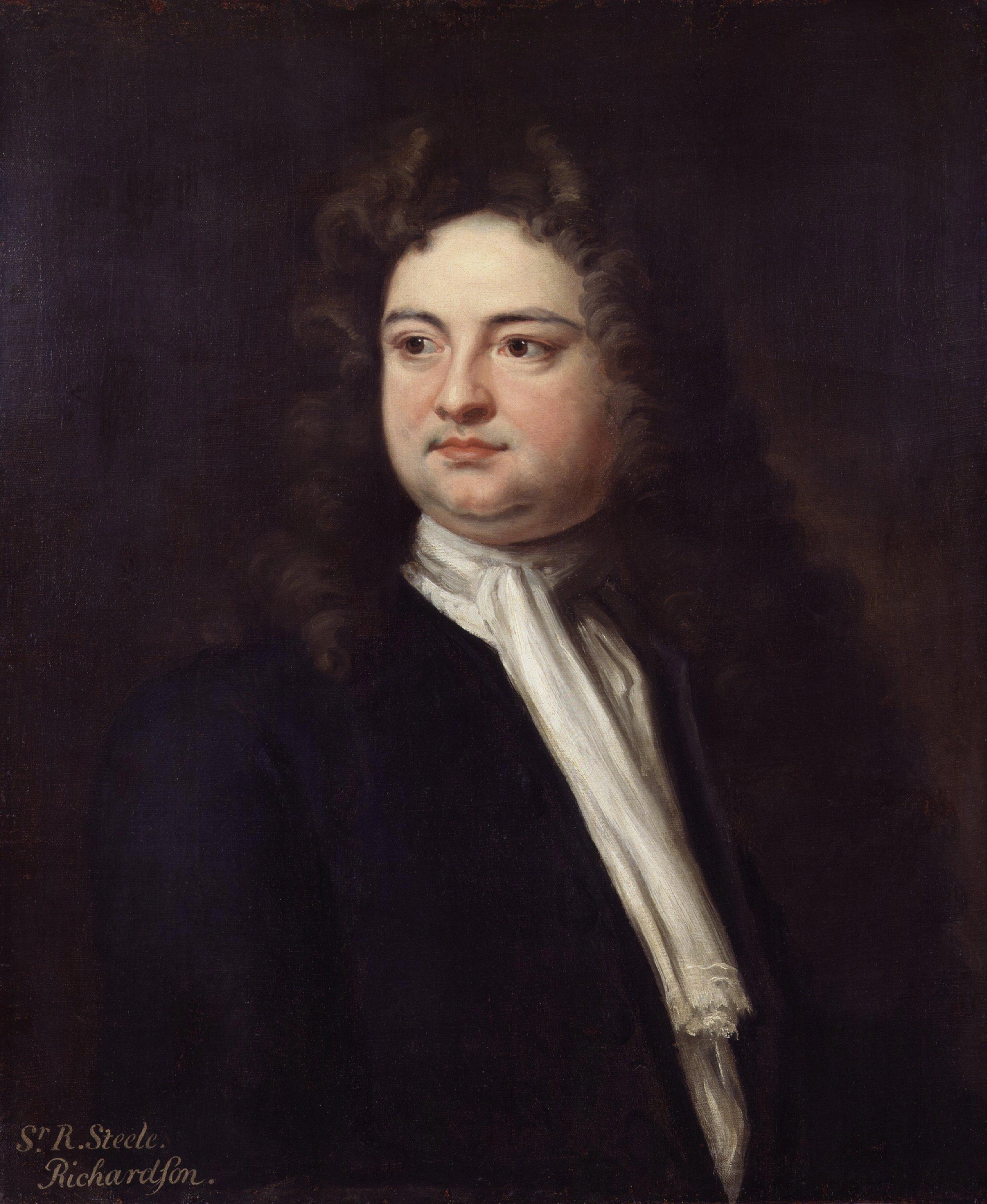
| 15 Quotes | |
| Known as | Sir Richard Steele |
| Occup. | Dramatist |
| From | United Kingdom |
| Spouse | Mary Scurlock |
| Born | January 1, 1672 United Kingdom |
| Died | September 1, 1729 Wimbledon, London, United Kingdom |
| Aged | 57 years |
| Cite | |
Citation Formats
APA Style (7th ed.)
Richard steele biography, facts and quotes. (2026, February 11). FixQuotes. https://fixquotes.com/authors/richard-steele/
Chicago Style
"Richard Steele biography, facts and quotes." FixQuotes. February 11, 2026. https://fixquotes.com/authors/richard-steele/.
MLA Style (9th ed.)
"Richard Steele biography, facts and quotes." FixQuotes, 11 Feb. 2026, https://fixquotes.com/authors/richard-steele/. Accessed 28 Mar. 2026.
Early Life and Background
Sir Richard Steele was born in Dublin in March 1672, the child of English Protestant officials in Ireland at a time when the kingdoms were still knitting themselves together after civil war and revolution. His father, a lawyer and sometime official, and his mother, a woman of firm piety, placed him in the orbit of the Anglo-Irish governing class, but his security was short-lived: he was orphaned young and learned early the precariousness that sat beneath the era's talk of order and providence.Sent across the Irish Sea for schooling, Steele grew up between two worlds - Ireland's charged politics and England's metropolitan ambition. The later writer who could sound both tender and censorious, both convivial and moral, was shaped by this doubleness: he craved belonging and approval yet distrusted cruelty, pretension, and the casual ruin of reputations. Even in youth he showed a taste for company, theatre, and the rituals of male friendship that would later become raw material for his essays - and for his self-reproaches.
Education and Formative Influences
Steele was educated at the Charterhouse School in London, where he formed a lifelong friendship with Joseph Addison, and went on to Oxford (Merton College), leaving without a degree. The late-Stuart and early-Williamite world around him rewarded polish, wit, and party allegiance; it also offered the stage and the coffeehouse as new engines of public opinion. Addison's classical poise balanced Steele's impulsive warmth, and the pair's complementary temperaments became one of the period's most productive partnerships. Steele also briefly pursued a military career, entering the Horse Guards, absorbing the codes of honor, courage, and masculine performance that he would later interrogate with unusual candor.Career, Major Works, and Turning Points
Steele first sought reputation as a dramatist and man-about-town, publishing the moralizing manual The Christian Hero (1701) and then, almost immediately, writing for the theatre with The Funeral (1701), The Lying Lover (1703), and his great hit The Conscious Lovers (1722), a sentimental comedy that helped steer English drama away from Restoration cynicism toward reform and feeling. His decisive turn, however, came in periodical writing: he founded The Tatler (1709-1711), then with Addison created The Spectator (1711-1712) and later The Guardian (1713), bringing daily prose to bear on manners, taste, politics, and private conscience. Politics never stayed out of his life - he sat in Parliament, was knighted in 1715 under the Hanoverian settlement, and repeatedly collided with Tory power; in 1714 he was expelled from the Commons for his pamphleteering. Financial strain, debt, and periodic retreat from London shadowed his success, and in later years he lived partly in Wales and back in Ireland, writing, reconciling and quarreling, and watching the public sphere he helped invent grow harsher.Philosophy, Style, and Themes
Steele's writing is animated by a moral psychology in motion - a man attempting to talk himself into steadiness. Unlike satirists who stand above their targets, he often writes from within the temptations he rebukes: drink, vanity, the desire to be liked, the habit of talking too much, and the ache of domestic conflict. His drama and essays repeatedly stage the question of whether goodness can be made socially attractive, whether politeness can serve virtue rather than merely disguise vice. That ambition aligned with the culture of the coffeehouse and the rising middle class, which wanted guidance in how to feel and behave as much as what to think.His best aphorisms reveal a mind that feared external applause would drown the inner verdict. “It is an endless and frivolous Pursuit to act by any other Rule than the Care of satisfying our own Minds in what we do”. That sentence reads like self-instruction from a man frequently scattered by circumstance - an attempt to anchor identity in conscience rather than fashion. Yet he also understood how society punishes and rewards through speech, treating reputation as a fragile civic currency: “Fire and swords are slow engines of destruction, compared to the tongue of a Gossip”. His ideal of solitude is not misanthropy but relief from the inner storms that social life provokes: “To be exempt from the Passions with which others are tormented, is the only pleasing Solitude”. In style he favors conversational clarity, humane irony, and scenes of ordinary life - the club, the theatre, the breakfast table - using narrative personas and letters to turn moral counsel into lived experience.
Legacy and Influence
Steele helped create modern English periodical culture: the short essay as daily companion, the writer as moral friend, and the public sphere as a place where private life could be examined without being simply exposed. As a dramatist he mattered most where he nudged comedy toward sentiment and reform, but his broader influence comes from The Tatler and The Spectator, which trained generations in a prose of sociability, moderation, and self-scrutiny, shaping models later taken up by Johnson, Goldsmith, and countless journalists and essayists. His life, full of warmth, quarrels, debts, and repeated resolutions, remains inseparable from his art: an early blueprint of the public intellectual whose authority is not purity, but the credible effort to become better in full view of others.Our collection contains 15 quotes written by Richard, under the main topics: Witty One-Liners - Ethics & Morality - Wisdom - Writing - Learning.
Other people related to Richard: Barton Booth (Actor), Henry Austin Dobson (Poet), Matthew Green (Poet)
Source / external links