
Richard Wright Biography Quotes 8 Report mistakes
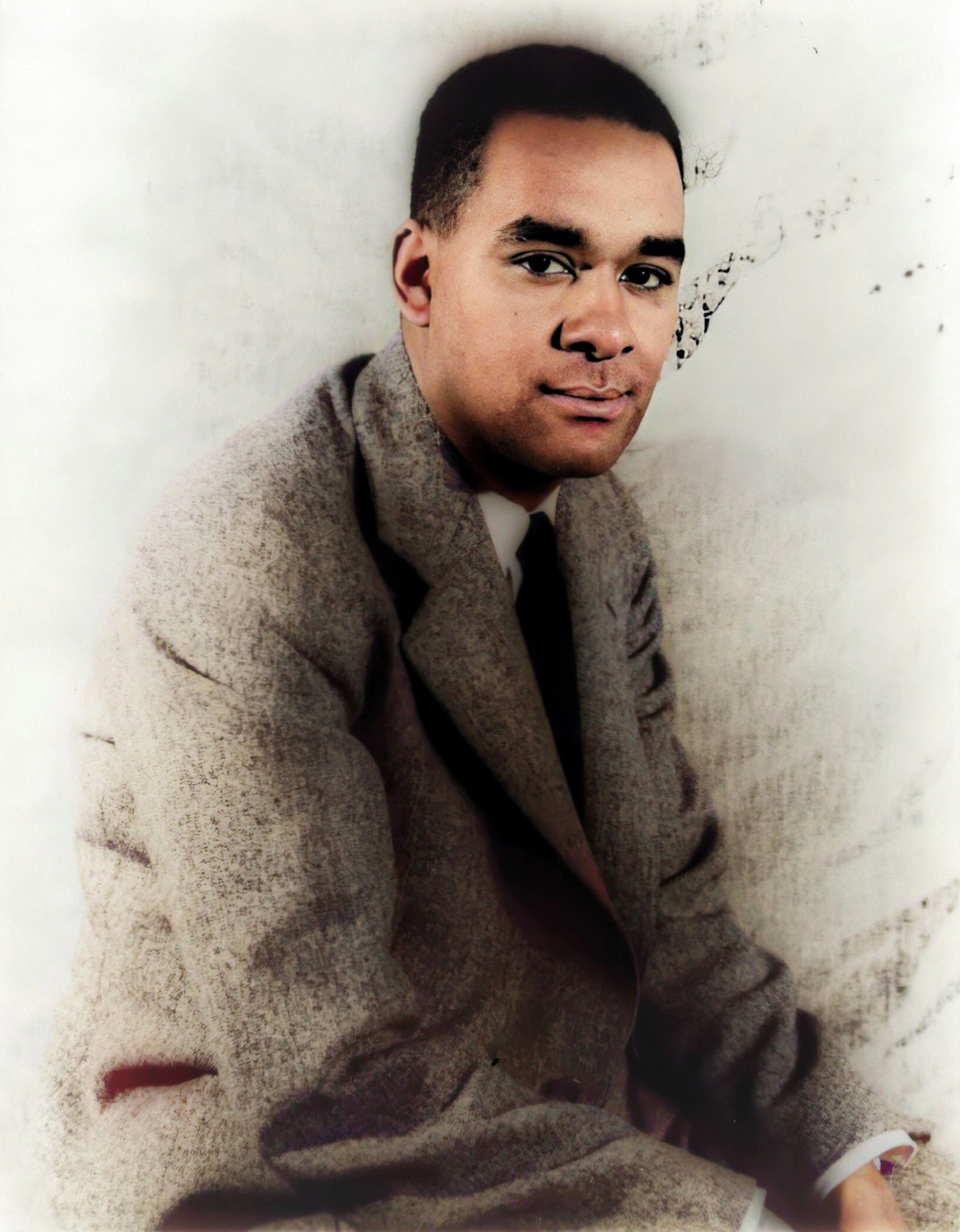
Attr: Carl Van Vechten, Public domain
| 8 Quotes | |
| Born as | Richard Nathaniel Wright |
| Occup. | Novelist |
| From | USA |
| Born | September 4, 1908 Roxie, Mississippi, USA |
| Died | November 28, 1960 Paris, France |
| Cause | Heart attack |
| Aged | 52 years |
| Cite | |
Citation Formats
APA Style (7th ed.)
Richard wright biography, facts and quotes. (2026, February 11). FixQuotes. https://fixquotes.com/authors/richard-wright/
Chicago Style
"Richard Wright biography, facts and quotes." FixQuotes. February 11, 2026. https://fixquotes.com/authors/richard-wright/.
MLA Style (9th ed.)
"Richard Wright biography, facts and quotes." FixQuotes, 11 Feb. 2026, https://fixquotes.com/authors/richard-wright/. Accessed 27 Mar. 2026.
Early Life and Background
Richard Nathaniel Wright was born on September 4, 1908, near Natchez, Mississippi, into the tightening vise of Jim Crow. His parents, Nathan Wright and Ella Wilson Wright, were Mississippi-born sharecroppers turned wage laborers in a South where the color line governed work, movement, and speech. When his father left the family, Wrights childhood became a sequence of rented rooms, temporary kinship, and hunger - not only for food but for steadiness and dignity - as his mother fell ill and the household slid toward dependence on relatives and public charity.
He grew up watching how violence could be both spectacular and ordinary: lynching rumors, white authority in uniform, and the daily humiliations that taught Black children to lower their eyes. That pressure produced in him an early double consciousness - an instinct to observe and an instinct to conceal. The result was a temperament both defiant and analytic: he would later write as someone who had learned, young, that survival often meant reading power before speaking to it.
Education and Formative Influences
Wright attended segregated schools in Mississippi and Arkansas, reading hungrily whenever he could, but his formal education ended early as poverty forced him into work. In his teens and early twenties he drifted through Memphis and then Chicago during the Great Migration, encountering new kinds of racial boundaries - less overtly feudal than the Delta, but still enforced by jobs, housing, and police. In the city he found libraries, immigrant neighborhoods, and political argument; he also discovered that books could function as a private republic of the mind, a place to test ideas about freedom, class, and human motivation without asking permission.
Career, Major Works, and Turning Points
In Chicago in the 1930s Wright wrote for left-wing outlets and joined the Communist Party, drawn by its language of solidarity and its critique of American racism, even as he later broke with it over artistic control and doctrinal pressure. He rose to national prominence with Uncle Toms Children (1938), then detonated American literary culture with Native Son (1940), whose Bigger Thomas forced white readers to confront how fear and segregation could manufacture catastrophe. His autobiographical Black Boy (1945) deepened that confrontation by tracing the making of a writer out of deprivation and terror. Increasingly alienated from both U.S. racism and Cold War conformity, Wright moved to Paris in 1947, where he wrote The Outsider (1953), travel and political works such as Black Power (1954) and The Color Curtain (1956), and a late body of fiction and essays shadowed by questions of exile, surveillance, and the costs of speaking. He died in Paris on November 28, 1960.
Philosophy, Style, and Themes
Wrights inner life was organized around a fierce equation: self-knowledge was a form of sustenance, and its denial was a kind of starvation. That is why his work returns to the appetite for consciousness itself - “Men can starve from a lack of self-realization as much as they can from a lack of bread”. The line reads like autobiography turned ethic. Wright writes characters who are driven not merely by material want but by the claustrophobia of being misrecognized, and he treats that misrecognition as a political system: a society can ration not only wages and rooms, but the very right to define oneself.
Stylistically he fused naturalism with a reportorial insistence on causation, as if clarity were a moral weapon. His narrators and protagonists do not float in abstraction; they are pushed by rent, crowds, and the choreography of fear. Wrights artistic psychology was also combative: language is thrown like a flare into surrounding night, “I would hurl words into this darkness and wait for an echo, and if an echo sounded, no matter how faintly, I would send other words to tell, to march, to fight, to create a sense of hunger for life that gnaws in us all”. And yet he knew that the imagination, once awakened, is not a polite faculty but a devouring one - “The artist must bow to the monster of his own imagination”. That monster is visible in Native Son, where the social facts of Chicago become inseparable from Bigger's inner storm, and in Black Boy, where the making of a writer is portrayed as a perilous refusal to accept the roles assigned.
Legacy and Influence
Wright helped redefine what an American novel could demand of its readers: not sympathy alone, but recognition of how structures - segregation, policing, labor markets, propaganda - shape the most intimate choices. He opened a path for later Black writers to treat race as both lived experience and intellectual problem, influencing figures as different as James Baldwin (even through their famous quarrel), Ralph Ellison, and later generations of novelists and essayists who paired aesthetic ambition with historical indictment. His books endure because they dramatize a hard truth of the 20th-century United States: when a society builds cages, it also builds the kinds of selves that must live inside them - and the kinds of voices that will try to break the bars.
Our collection contains 8 quotes written by Richard, under the main topics: Art - Justice - Writing - Meaning of Life - Honesty & Integrity.
Other people related to Richard: Pink Floyd (Musician), Margaret Walker (Poet), James T. Farrell (Novelist), Syd Barrett (Musician)
Richard Wright Famous Works
- 1953 The Outsider (Novel)
- 1945 Black Boy (Autobiography)
- 1940 Native Son (Novel)
- 1938 Uncle Tom's Children (Short Story Collection)
Source / external links