
Rick Renzi Biography Quotes 19 Report mistakes
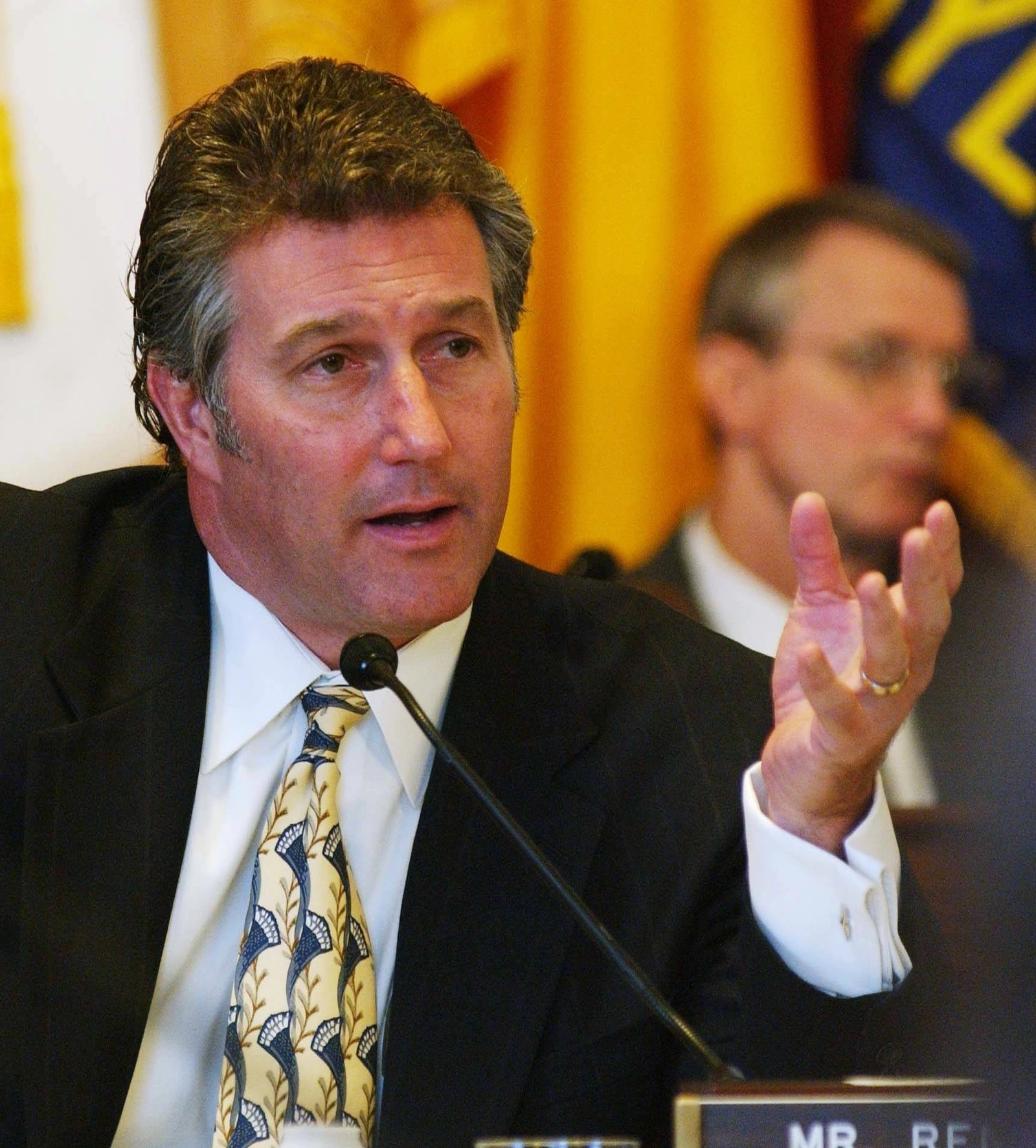
| 19 Quotes | |
| Born as | Richard George Renzi |
| Occup. | Politician |
| From | USA |
| Born | June 11, 1958 Fort Monmouth, New Jersey, U.S. |
| Age | 67 years |
| Cite | |
Citation Formats
APA Style (7th ed.)
Rick renzi biography, facts and quotes. (2026, February 11). FixQuotes. https://fixquotes.com/authors/rick-renzi/
Chicago Style
"Rick Renzi biography, facts and quotes." FixQuotes. February 11, 2026. https://fixquotes.com/authors/rick-renzi/.
MLA Style (9th ed.)
"Rick Renzi biography, facts and quotes." FixQuotes, 11 Feb. 2026, https://fixquotes.com/authors/rick-renzi/. Accessed 12 Feb. 2026.
Early Life and Background
Richard George "Rick" Renzi was born on June 11, 1958, in the United States and came of age in the long shadow of the postwar Sun Belt boom - an era when the Southwest was rapidly growing, politically volatile, and increasingly shaped by land use fights, immigration debates, and the rising influence of Washington in local economies. Arizona in particular offered a contradictory civic education: fierce rhetoric about small government paired with deep reliance on federal dollars for defense, public lands, water projects, and reservation services. Renzi absorbed that tension early, and it later became a hallmark of his public posture - pragmatic about federal power, but culturally aligned with Western independence.His identity as a politician was also forged in a district defined less by a single city than by distance: rural counties, federal forests, borderlands, and a large Native American presence. That geography mattered. It rewarded candidates who could speak in several registers at once - business development to chambers of commerce, law-and-order to sheriffs, and respect for sovereignty and infrastructure needs to tribal governments. Renzi developed an instinct for brokerage politics: translating local grievances into legislative asks, then translating Washington procedures back into promises of delivery.
Education and Formative Influences
Renzi built his early adult life in the orbit of business and public affairs rather than the academy, shaped by the practical skills of deal-making, networking, and the pitch of economic growth as a civic good. The political climate that formed him - the Reagan-era celebration of entrepreneurship and the later Republican focus on deregulation and tax restraint - encouraged an approach to governance that treated investment and development as moral as well as material imperatives, while Southwestern realities (public lands management, energy infrastructure, and reservation poverty) pulled him toward targeted federal intervention.Career, Major Works, and Turning Points
Renzi entered national politics as a Republican member of the U.S. House of Representatives from Arizona (serving 2003-2009), advocating on issues that mirrored the district's fault lines: energy policy, housing access, public lands and wildfire preparedness, and the federal-tribal interface. His congressional years were marked by committee work, constant district-level negotiation, and a growing reputation for stressing practical outcomes - incentives, deployments, and appropriations - over ideological purity. The decisive turning point came not from policy but from legal jeopardy: he was indicted on corruption-related charges during his tenure, later convicted, and sentenced to prison, an arc that redefined his public story from rising Western Republican to cautionary tale about power, fundraising, and the temptations of influence.Philosophy, Style, and Themes
Renzi's governing philosophy, as expressed in his own language, leaned technocratic and transactional: identify a concrete vulnerability, then demand programs or incentives to change behavior. Energy independence was framed as a national-security and economic-development project, not simply an environmental one. "We must shift the energy policy debate in America with an increased focus on alternative and renewable fuels and Congress must pass meaningful alternative fuels and incentive programs to help move the U.S. away from dependence on foreign oil". The sentence reveals his default political psychology - urgency, institutional faith in Congress as an engine, and a preference for levers (incentives, programs) that enlist markets rather than replace them.A second, equally central theme was representation across sovereignty lines, especially the visibility of Native communities inside a federal district often caricatured from afar. "I represent more Native Americans than anyone else in Congress". It functioned as both factual claim and self-definition: legitimacy through constituency, and authority through proximity. In the same spirit, he tied social stability to asset-building and place: "Home ownership is the cornerstone of a strong community". Taken together, these statements show a politician who sought moral clarity in measurable goals - homes built, fuels incentivized, constituencies counted - and whose style aimed to turn structural problems into deliverable outputs. That same output-driven mindset, however, also fit the darker logic of Washington ambition: the belief that results justify aggressive tactics, a belief that can blur into entitlement when scrutiny closes in.
Legacy and Influence
Renzi's legacy is therefore double-edged. In policy memory, he is associated with the early-2000s Republican push to talk about renewables without abandoning extraction, and with an Arizona-centric insistence that tribal and rural concerns belong in the center of federal decision-making. In civic memory, his name is more often invoked as an example of how quickly a career can be overtaken by ethics violations and criminal conviction - a reminder that representation and ambition, when coupled with the fundraising pressures of modern Congress, can corrode into scandal. His story endures because it compresses the era's contradictions: Western growth politics, the federal government's omnipresence, and the personal costs of treating power as just another instrument to be leveraged.Our collection contains 19 quotes written by Rick, under the main topics: Justice - Nature - Learning - Life - Equality.
Source / external links