
Rita Mae Brown Biography Quotes 33 Report mistakes
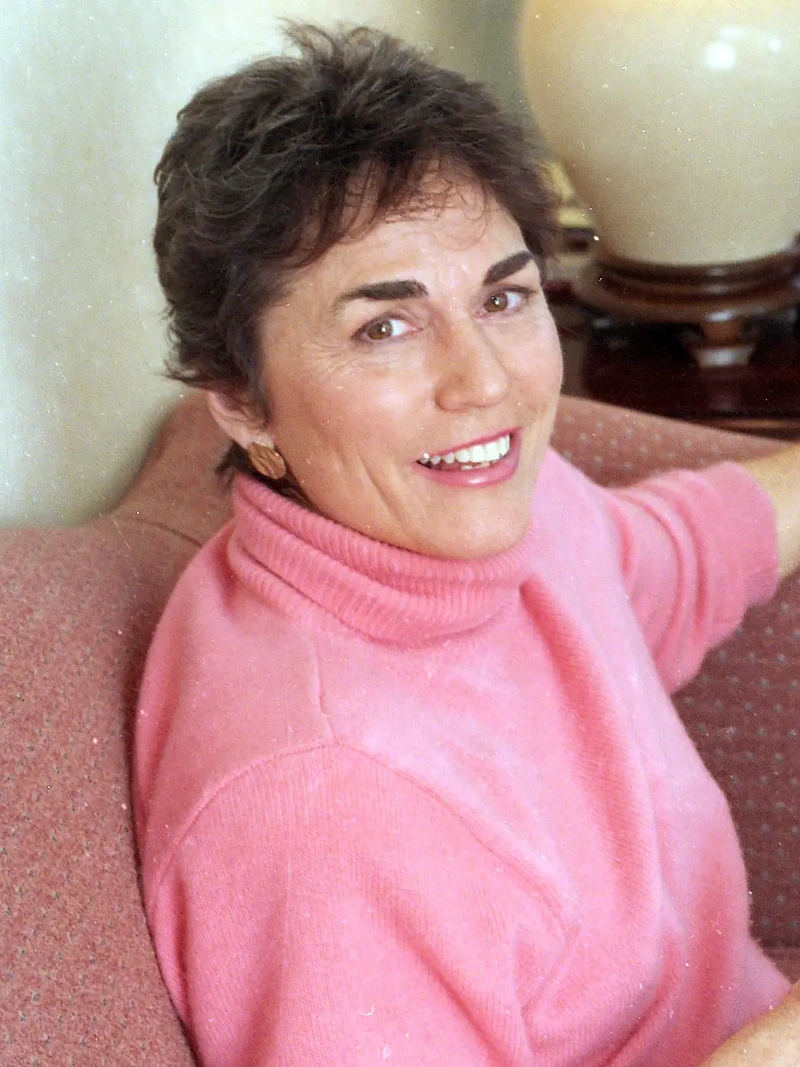
| 33 Quotes | |
| Occup. | Writer |
| From | USA |
| Born | November 28, 1944 Hanover, Pennsylvania, United States |
| Age | 81 years |
| Cite | |
Citation Formats
APA Style (7th ed.)
Rita mae brown biography, facts and quotes. (2026, February 11). FixQuotes. https://fixquotes.com/authors/rita-mae-brown/
Chicago Style
"Rita Mae Brown biography, facts and quotes." FixQuotes. February 11, 2026. https://fixquotes.com/authors/rita-mae-brown/.
MLA Style (9th ed.)
"Rita Mae Brown biography, facts and quotes." FixQuotes, 11 Feb. 2026, https://fixquotes.com/authors/rita-mae-brown/. Accessed 1 Apr. 2026.
Early Life and Background
Rita Mae Brown was born on November 28, 1944, in Hanover, Pennsylvania, and grew up in the long aftershadow of World War II in a country retooling itself into suburban prosperity and Cold War anxiety. Her earliest sense of self formed inside a tension she would later dramatize with biting wit: the promise of American openness against the policing of gender, class, and desire. She was adopted as an infant and raised in Florida by Ralph Brown and Julia Brown; the family moved through the postwar South at a moment when conformity was treated as civic virtue and difference as threat.Adoption and the hidden architecture of family shaped her inner life - an early training in doublespeak, secrecy, and the question of who gets to name whom. She discovered refuge in animals, books, and the private theater of observation, learning to read rooms the way later readers would praise her for reading institutions. Those formative years left her with two lifelong motors: anger at imposed roles and a fierce appetite for pleasure, a combination that became her signature mixture of political candor and comic velocity.
Education and Formative Influences
Brown attended the University of Florida and then Florida State University, where she was active in campus politics and began to test the costs of outspoken dissent in the early 1960s. She later studied at the New School in New York City, arriving as the city became a nerve center for civil rights organizing, antiwar agitation, and second-wave feminism. In New York she moved through activist circles including the National Organization for Women and the Gay Liberation Front, absorbing the period's debates over strategy, respectability, and the friction between personal freedom and movement discipline - lessons that sharpened her ear for power inside supposedly emancipatory spaces.Career, Major Works, and Turning Points
Her breakthrough came with the novel Rubyfruit Jungle (1973), a brash, comic coming-of-age story whose heroine Molly Bolt refuses shame and insists on her own narrative authority; it became a landmark of lesbian literature and a rare popular success that carried queer female desire into mainstream bookstores. Brown also published poetry and essays and wrote screenplays, including an uncredited role in drafting parts of the 1975 film Slaughterhouse-Five. In the 1990s she pivoted into wide-reaching series fiction: the Mrs. Murphy mysteries (beginning with Wish You Were Here, 1990) and the Sister Jane foxhunting novels, blending small-town observation with animal perspectives and a deep knowledge of Virginia horse country, where she lived and rode. The turning point was not a retreat from politics but a strategic expansion: she smuggled social commentary into page-turning forms, widening her audience without relinquishing her bite.Philosophy, Style, and Themes
Brown writes as a satirist with a populist streak: clear sentences, sharp timing, and a suspicion of sanctimony. She emerged from an era when the personal was being declared political, yet she never trusted politics that forgot pleasure or story. Her work argues that language is not decoration but a lever; she treats word-choice as a social force that can free or trap. “Language exerts hidden power, like the moon on the tides”. The line captures her psychological preoccupation with what cannot be said openly - in families, in closets, in movements - and why mastery of speech becomes a form of survival.Her humor is not a mask for seriousness but its delivery system, a way to keep moral intensity from curdling into sermon. “Moral passion without entertainment is propaganda, and entertainment without moral passion is television”. That maxim explains her tactical elegance: she stages injustice inside scenes vivid enough to delight, then lets the laughter expose the bars of the cage. And she remains allergic to systems that call themselves rational while enforcing male privilege as natural law. “If the world were a logical place, men would ride side-saddle”. The joke is a scalpel - a refusal to accept that custom equals reason, and a reminder that her feminism is rooted in the body as well as the mind, in the everyday indignities that add up to doctrine.
Legacy and Influence
Brown's enduring influence lies in how she widened the corridor of American voice: she helped make lesbian self-definition readable at mass scale without translating it into apology, and she proved that politically alert writing could also be funny, brisk, and commercially magnetic. Rubyfruit Jungle remains a touchstone for queer bildungsroman and for the art of turning defiance into charm; her mystery series extended her reach into libraries and airports where cultural change often happens quietly. Across decades of shifting attitudes toward sexuality and feminism, Brown has stood as a model of the writer as both entertainer and witness - someone who understands that social permission changes when stories make new lives feel not only possible, but irresistible.Our collection contains 33 quotes written by Rita, under the main topics: Witty One-Liners - Motivational - Ethics & Morality - Wisdom - Art.
Other people related to Rita: Martha Shelley (Activist)
Rita Mae Brown Famous Works
- 1978 Six of One (Novel)
- 1973 Rubyfruit Jungle (Novel)