
Roald Amundsen Biography Quotes 2 Report mistakes
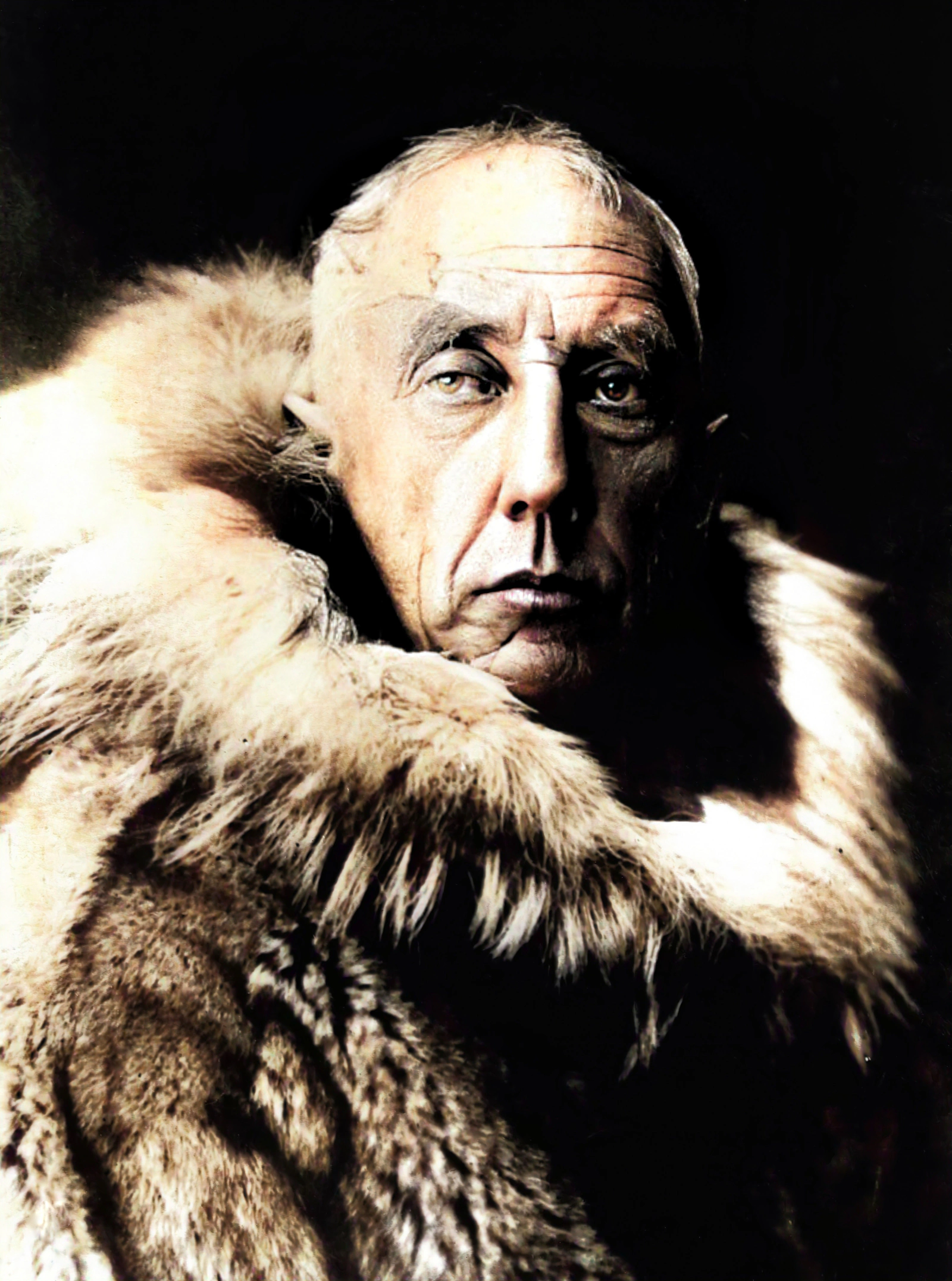
| 2 Quotes | |
| Born as | Roald Engelbregt Gravning Amundsen |
| Occup. | Explorer |
| From | Norway |
| Born | July 16, 1872 Borge, Østfold, Norway |
| Died | June 18, 1928 Tromsø, Norway |
| Cause | Plane crash |
| Aged | 55 years |
| Cite | |
Citation Formats
APA Style (7th ed.)
Roald amundsen biography, facts and quotes. (2026, February 11). FixQuotes. https://fixquotes.com/authors/roald-amundsen/
Chicago Style
"Roald Amundsen biography, facts and quotes." FixQuotes. February 11, 2026. https://fixquotes.com/authors/roald-amundsen/.
MLA Style (9th ed.)
"Roald Amundsen biography, facts and quotes." FixQuotes, 11 Feb. 2026, https://fixquotes.com/authors/roald-amundsen/. Accessed 27 Mar. 2026.
Early Life and Background
Roald Engelbregt Gravning Amundsen was born on 16 July 1872 in Borge near Fredrikstad, Norway, into a seafaring, shipowning family whose livelihood depended on the moods of the Skagerrak and the wider North Sea world. His father, Jens Amundsen, prospered in trade; the household combined rural discipline with the practical cosmopolitanism of ports. The Norway of Amundsen's boyhood was still in union with Sweden, modernizing quickly yet hungry for distinct achievement - and polar travel, reported in newspapers and shipyard talk, offered a stage where a small nation could speak in world-sized sentences.A defining early pressure came from home: his mother, Hanna Sahlqvist, wanted him to become a physician, a respectable profession that could tether a restless son to shore. Amundsen complied outwardly, but privately he trained his body and mind for endurance, absorbing accounts of John Franklin and Fridtjof Nansen and cultivating the austere self-command that later colleagues found both reassuring and chilling. Even before he chose the ice over the clinic, he seemed to live as if hardship were not a hazard but a language he intended to master.
Education and Formative Influences
He began medical studies in Christiania (Oslo), yet the university years functioned less as vocational training than as a period of deliberate self-hardening - long ski journeys, strict routines, and obsessive reading in exploration narratives and navigation. After his mother's death, he left medicine decisively for the merchant marine, earned his mate's and master's certificates, and learned the crafts that mattered in high latitudes: celestial navigation, ship handling in pack ice, and the patient logistics of provisioning. Nansen's Fram expedition and the emerging Scandinavian culture of skiing, sledging, and practical adaptation to winter shaped Amundsen more than any lecture hall, giving him a model of leadership that prized preparation over romance.Career, Major Works, and Turning Points
Amundsen's first major polar apprenticeship was the Belgian Antarctic Expedition (1897-1899) aboard Belgica under Adrien de Gerlache, where he served as first mate alongside Frederick Cook and endured the first wintering forced by sea ice in the Antarctic; the experience taught him the biological and psychological costs of confinement and scurvy, and the necessity of disciplined routine. He then led the successful navigation of the Northwest Passage (1903-1906) in the small ship Gjoa, wintering at King William Island and learning Inuit survival techniques - dog driving, clothing systems, and local geography - while making magnetic observations that strengthened his scientific credibility. His most famous turning point came in 1910-1912: quietly redirecting Fram from a planned Arctic drift to an Antarctic assault, he established a base at the Bay of Whales and on 14 December 1911 reached the South Pole with Olav Bjaaland, Helmer Hanssen, Sverre Hassel, and Oscar Wisting, beating Robert Falcon Scott by weeks through superior logistics, dogs, skis, and depot discipline. Later, he turned back north: the Maud expedition (1918-1925) sought a drift across the Arctic Ocean but achieved less than hoped, leaving him financially strained; he regained prominence through aviation, culminating in the airship Norge flight in 1926 with Umberto Nobile and Lincoln Ellsworth from Svalbard across the North Pole to Alaska, the first widely accepted transpolar crossing. He died on 18 June 1928, disappearing in the Barents Sea during a rescue mission for Nobile's crashed Italia - a final act consistent with his severe ethic of duty among explorers.Philosophy, Style, and Themes
Amundsen's inner life was marked by control: a preference for systems over sentiment, for redundancy over bravado, and for decisions made early and insulated from debate. He cultivated secrecy when he thought it operationally necessary - even with sponsors and peers - and could be brusque with those who threatened cohesion. Yet his hardness was not merely temperament; it was a moral strategy against an environment that punished improvisation. In his world, romance was a liability, and the polar field rewarded the man who could turn imagination into inventories and routines. “Adventure is just bad planning”.That maxim captures his style at the Pole: short-haul sledges, lightweight gear, trained dogs, ski travel, and carefully spaced depots built not to impress but to survive. Still, Amundsen did not see himself as a lone conqueror; he placed his work within a lineage of maritime risk and accumulated knowledge. “We must always remember with gratitude and admiration the first sailors who steered their vessels through storms and mists, and increased our knowledge of the lands of ice in the South”. The sentence reads as more than etiquette - it reveals a psychology that sought legitimacy through tradition, anchoring personal ambition in collective inheritance. He admired audacity, but only when it served method; he loved the unknown, but treated it as a problem set that demanded humility before weather, ice, and the limits of the human body.
Legacy and Influence
Amundsen endures as the exemplar of the professional explorer: not the most eloquent, not the most publicly confessional, but among the most effective. His South Pole victory permanently shifted the narrative of exploration from heroic suffering to operational excellence, influencing later polar logistics, field safety culture, and the valuation of Indigenous knowledge in Arctic travel. In Norway, his achievements fed a young nation's confidence in the years leading to and following independence (1905), while internationally his career traced the transition from sail to engines to flight, showing how technology and planning could redraw the map without erasing the old demands of endurance and leadership. His disappearance at sea, unclaimed by grave or monument, sealed a life defined by movement - a man who measured himself against horizons and accepted the cost of doing so.Our collection contains 2 quotes written by Roald, under the main topics: Legacy & Remembrance - Adventure.
Other people related to Roald: Liv Arnesen (Explorer), Lincoln Ellsworth (Explorer)
Roald Amundsen Famous Works
- 1927 My Life as an Explorer (Book)
- 1912 The South Pole (Book)
- 1908 The North West Passage (Book)
Source / external links