
Robert A. Dahl Biography Quotes 6 Report mistakes
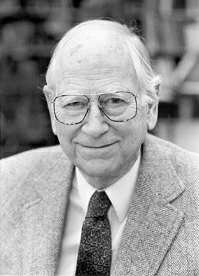
| 6 Quotes | |
| Born as | Robert Alan Dahl |
| Occup. | Professor |
| From | USA |
| Born | December 17, 1915 Inwood, Iowa |
| Age | 110 years |
| Cite | |
Citation Formats
APA Style (7th ed.)
Robert a. dahl biography, facts and quotes. (2026, February 11). FixQuotes. https://fixquotes.com/authors/robert-a-dahl/
Chicago Style
"Robert A. Dahl biography, facts and quotes." FixQuotes. February 11, 2026. https://fixquotes.com/authors/robert-a-dahl/.
MLA Style (9th ed.)
"Robert A. Dahl biography, facts and quotes." FixQuotes, 11 Feb. 2026, https://fixquotes.com/authors/robert-a-dahl/. Accessed 13 Feb. 2026.
Early Life and Background
Robert Alan Dahl was born on December 17, 1915, in the United States, into a century already testing the promises of mass politics. He came of age as the Great Depression and then World War II exposed how quickly institutions could fail when inequality hardened, parties radicalized, or executive power expanded in the name of emergency. Those early national shocks never left his work. Even when he later wrote in the cool idiom of analytic political science, his questions were moral and practical: who truly rules, by what consent, and with what safeguards for those left outside the winning coalition?Dahl's inner life, as it emerges through his scholarship, was marked less by ideological certainty than by a persistent suspicion of simple stories. He distrusted both romanticized democracy and cynical dismissal of it. The result was an unusually American blend: empirical curiosity about how cities, parties, and interest groups actually behaved, and an ethical insistence that the point of democratic design was not ritual elections but inclusion, contestation, and protection against durable domination.
Education and Formative Influences
Dahl trained during the postwar professionalization of political science, when behavioralism, survey research, and institutional analysis competed to explain power with something approaching scientific rigor. At Yale University he would spend most of his career, helping build a department that could speak both to normative theory and to data-driven research. Intellectual influences ran from classical democratic thought to modern pluralist and constitutional debates, but his formative environment was the mid-century United States: an expanding administrative state, Cold War anxieties about ideology, and the civil-rights era's insistence that democratic claims be judged by who was excluded.Career, Major Works, and Turning Points
Dahl became one of the defining democratic theorists of the twentieth century, best known for clarifying how modern large-scale democracies differ from the participatory ideals of antiquity. His early work culminated in Who Governs? (1961), a close study of decision-making in New Haven that challenged monolithic theories of elite rule while avoiding naive celebration; power, he argued, was dispersed across arenas, yet never evenly distributed. He then widened the lens with Polyarchy (1971), setting out criteria for contestation and participation and offering a pragmatic standard for evaluating real regimes rather than utopias. Later books such as Dilemmas of Pluralist Democracy (1982), Democracy and Its Critics (1989), How Democratic Is the American Constitution? (2001), and On Political Equality (2006) marked turning points from city-level power analysis to constitutional critique and, finally, to equality as democracy's unfinished business.Philosophy, Style, and Themes
Dahl's signature concept, "polyarchy", was both an empirical description and a moral yardstick. He treated democracy not as a single switch that societies flip on, but as a set of institutions and practices that expand or contract: inclusive suffrage, protected opposition, free expression, associational autonomy, and reliable elections. His prose was spare and argument-driven, built to persuade readers who might not share his politics. Yet beneath the measured tone lay a psychological realism about contingency: "Democracy, it appears, is a bit chancy. But its chances also depend on what we do ourselves". That sentence captures his enduring stance - democratic survival is never guaranteed by history, only by citizens and leaders who continuously repair its incentives and norms.He also kept antiquity close, using Athens not as a model to imitate but as a cautionary mirror for modern scale, exclusion, and institutional mismatch. "Glorious as it had been, the city-state was obsolete". For Dahl, nostalgia for direct democracy could hide the real problem: building participation in polities too large for face-to-face rule, where representation is unavoidable and therefore must be disciplined. At the same time he refused to sanitize the democratic past: "As in Athens, the right to participate was restricted to men, just as it was also in all later democracies and republics until the twentieth century". The point was not antiquarian correction, but moral diagnosis - democracy's story is also a story of boundaries, and progress is measured by who gets moved from the margin to the center.
Legacy and Influence
Dahl's influence spans empirical political science, democratic theory, and public constitutional debate. Scholars adopted his frameworks to measure regimes, map power across policy domains, and separate democratic ideals from the imperfect institutional bundles that approximate them. Just as importantly, he bequeathed a temperament: skeptical of grand determinism, impatient with slogans, and committed to judging political arrangements by their effects on participation, opposition, and equality. In an era of polarization and democratic backsliding, his work remains a rigorous reminder that democracy is not a heritage to display but a practice to defend - and that the hardest questions are still the most basic ones: who has a voice, how are rulers constrained, and what counts as equal citizenship.Our collection contains 6 quotes written by Robert, under the main topics: Freedom - Equality - Knowledge - Change.
Source / external links