
Robert Baden-Powell Biography Quotes 19 Report mistakes
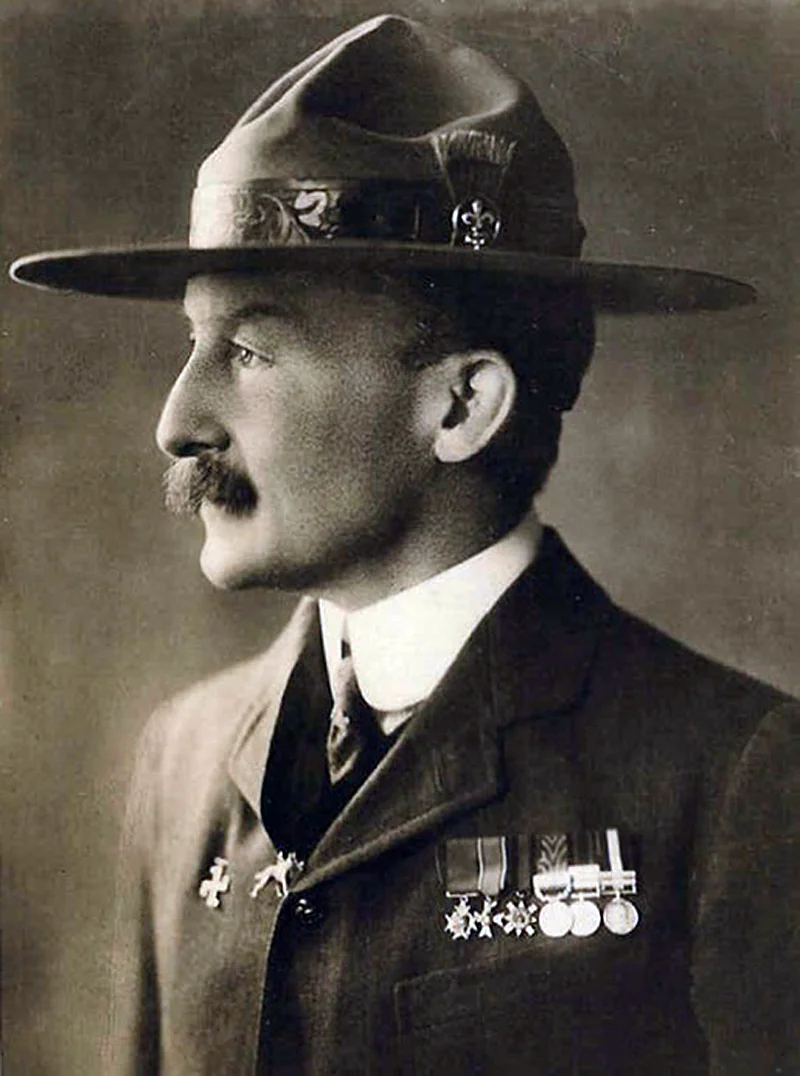
| 19 Quotes | |
| Born as | Robert Stephenson Smyth Baden-Powell |
| Known as | Lord Baden-Powell, B-P |
| Occup. | Soldier |
| From | England |
| Born | February 22, 1857 Paddington, London, England |
| Died | January 8, 1941 Nyeri, Kenya |
| Aged | 83 years |
| Cite | |
Citation Formats
APA Style (7th ed.)
Robert baden-powell biography, facts and quotes. (2026, February 2). FixQuotes. https://fixquotes.com/authors/robert-baden-powell/
Chicago Style
"Robert Baden-Powell biography, facts and quotes." FixQuotes. February 2, 2026. https://fixquotes.com/authors/robert-baden-powell/.
MLA Style (9th ed.)
"Robert Baden-Powell biography, facts and quotes." FixQuotes, 2 Feb. 2026, https://fixquotes.com/authors/robert-baden-powell/. Accessed 6 Mar. 2026.
Early Life and Background
Robert Stephenson Smyth Baden-Powell was born on 22 February 1857 in Paddington, London, into a family that mixed clerical learning with imperial service. His father, the Rev. Baden Powell, was a Savilian Professor of Geometry at Oxford who died when Robert was very young; his mother, Henrietta Grace Smyth, held the household together with formidable discipline and affection. The hyphenated surname "Baden-Powell" and the large brood of siblings made identity a project from the start, and Robert grew up alert to status, performance, and the quiet power of example.Victorian England was expanding outward and tightening inward: empire promised adventure, while class and respectability set narrow expectations at home. Baden-Powell found early freedom in woods, boats, and improvised games, learning to track, observe, and lead in small, self-organized groups. That blend of play and competence - childish improvisation hardened into method - became his lifelong pattern: take what boys already love doing, and turn it into training for character and citizenship.
Education and Formative Influences
He attended Rose Hill School at Tunbridge Wells and then Charterhouse in London, where he became famous for slipping out to the school grounds to stalk rabbits and cook over small fires without being detected, practicing the stealth and self-reliance that later read like premonitions of "scouting". He was not a conventional scholar, but he absorbed the era's muscular Christianity, public-school team loyalty, and the romance of imperial service; he also sketched constantly, developing the clear, humorous illustration style that would make his manuals unusually vivid. After failing the Oxford entrance route, he won a competitive examination and entered the British Army in 1876, converting youthful games into a profession.Career, Major Works, and Turning Points
Commissioned into the 13th Hussars, Baden-Powell served in India and Afghanistan, learning reconnaissance, mapping, and the art of training men with limited time and resources; later postings in Africa, including the Ashanti campaign (1895-1896) and the Matabeleland operations (1896), added irregular warfare and the politics of colonial power to his toolkit. His defining public moment came during the Second Boer War as commander at the Siege of Mafeking (1899-1900), where resourcefulness, propaganda, and the use of boys as messengers fed his legend at home. He had already written Aids to Scouting (1899) for soldiers; unexpectedly, British schoolboys devoured it as a gamebook. Testing these ideas at the Brownsea Island camp in 1907 with boys from different backgrounds, he wrote Scouting for Boys (1908), a serialized handbook that ignited a movement. He resigned his commission in 1910 to lead the Boy Scouts full-time, helped found the Girl Guides with his sister Agnes and later with his wife, Olave Soames (married 1912), and spent the interwar decades building an international organization, culminating in global jamborees and the 1920 formation of the World Organization of the Scout Movement. In 1929 he was created Baron Baden-Powell of Gilwell; in 1939 he retired to Nyeri, Kenya, where he died on 8 January 1941.Philosophy, Style, and Themes
Baden-Powell's inner life revolved around a tension: he was a soldier who distrusted barracks-style drill for the young. His genius was to translate military skills into a civilian ethic of readiness, service, and cheerful competence, using story, humor, and a game structure that hid the lesson inside the adventure. He insisted that courage began before crisis: “A Scout is never taken by surprise; he knows exactly what to do when anything unexpected happens”. That confidence was not bravado but rehearsed self-command - the antidote to panic, and a way to make responsibility feel like freedom rather than burden.He also understood, with a Victorian's sensitivity to class, that institutions succeed when they offer belonging without humiliation. The Scout uniform and shared rituals were designed as social technology: “The uniform makes for brotherhood, since when universally adopted it covers up all differences of class and country”. Yet his most radical claim was psychological, not organizational - that moral energy is native if someone knows how to call it out: “The spirit is there in every boy; it has to be discovered and brought to light”. In this, his style was optimistic but not naive; he built systems (patrols, badges, progressive tests) to make virtue measurable, and he demanded that adults lead by lived consistency, because he believed imitation was the deepest curriculum.
Legacy and Influence
Baden-Powell's influence is stamped on the 20th century's vocabulary of youth: "scoutcraft", patrol leadership, outdoor education, service projects, and the idea that citizenship can be trained through practiced habits rather than preached abstractions. His movement grew into one of the world's largest voluntary youth organizations, shaping civic culture across continents and surviving wars and decolonization by adapting its forms to local identities. He remains contested - inseparable from the British imperial context that supplied his opportunities and assumptions - yet enduring precisely because he offered a portable method: small groups, real responsibility, and outdoor challenge as a school for character. The lasting Baden-Powell is less the Mafeking hero than the organizational psychologist in khaki, convinced that competence plus service could turn boys into steady men and strangers into brothers.Our collection contains 19 quotes written by Robert, under the main topics: Ethics & Morality - Wisdom - Friendship - Leadership - Kindness.
Other people related to Robert: Juliette G. Low (American)