
Robert Benton Biography Quotes 7 Report mistakes
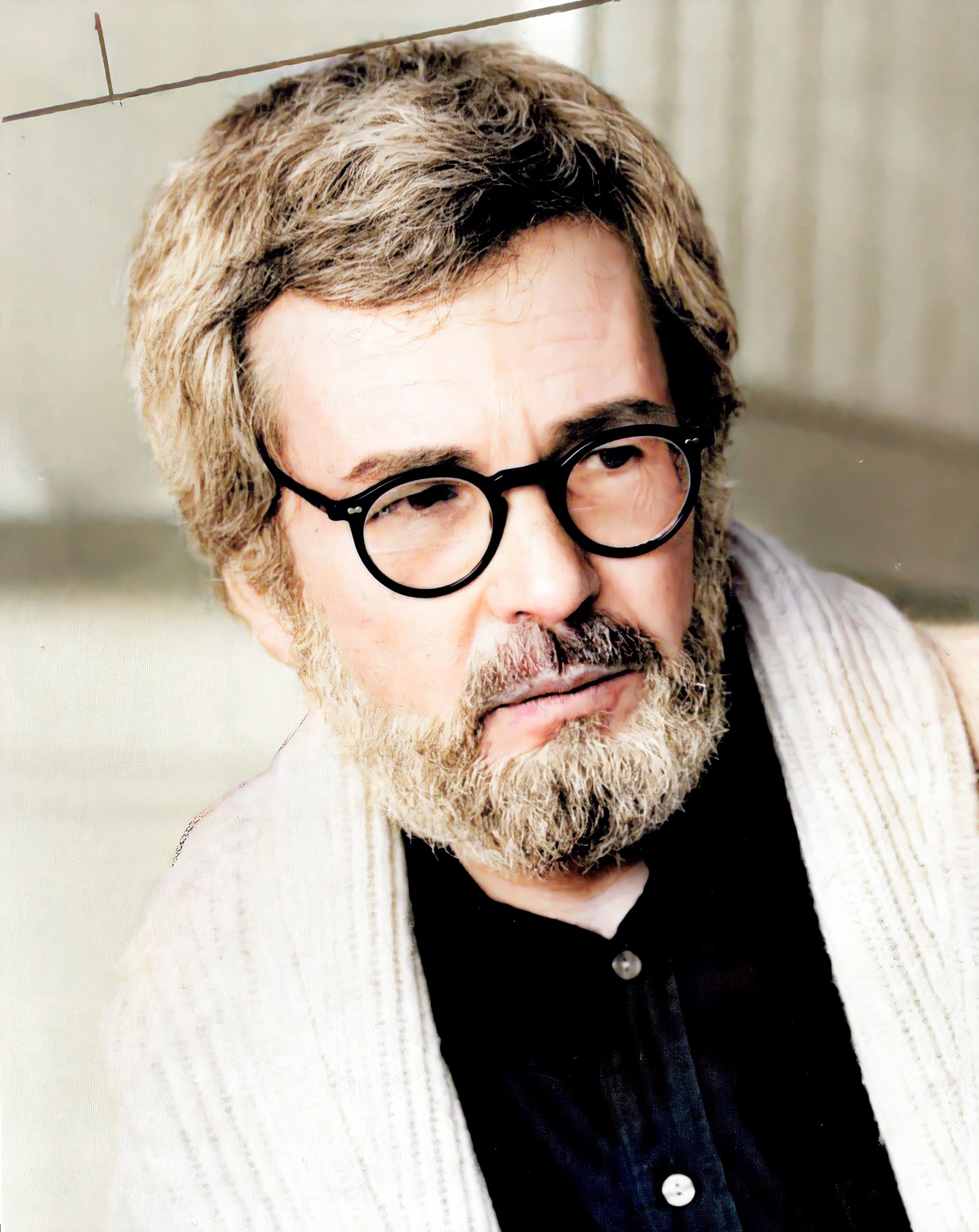
| 7 Quotes | |
| Born as | Robert Douglas Benton |
| Occup. | Director |
| From | USA |
| Born | September 29, 1932 Waxahachie, Texas, USA |
| Age | 93 years |
| Cite | |
Citation Formats
APA Style (7th ed.)
Robert benton biography, facts and quotes. (2026, February 11). FixQuotes. https://fixquotes.com/authors/robert-benton/
Chicago Style
"Robert Benton biography, facts and quotes." FixQuotes. February 11, 2026. https://fixquotes.com/authors/robert-benton/.
MLA Style (9th ed.)
"Robert Benton biography, facts and quotes." FixQuotes, 11 Feb. 2026, https://fixquotes.com/authors/robert-benton/. Accessed 7 Mar. 2026.
Early Life and Foundations
Robert Douglas Benton was born on September 29, 1932, in Waxahachie, Texas, and grew up in a small-town environment that would later inform the texture and moral clarity of some of his most celebrated films. He studied art and design before moving to New York, where he entered magazine publishing and advertising. That visual training, and a sensibility sharpened by the rhythms of everyday life in Texas, stayed with him as he learned to frame stories with both elegance and empathy.From Esquire to the Screen
In New York, Benton joined Esquire magazine, rising in its creative ranks during an era shaped by editor Harold Hayes. At Esquire he met David Newman, a partnership that became central to his emergence as a screenwriter. Together they contributed witty, satiric pieces and wrote the book for the Broadway musical It's a Bird… It's a Plane… It's Superman with composer Charles Strouse and lyricist Lee Adams. The Benton, Newman alliance soon leapt to cinema with Bonnie and Clyde, a screenplay that found an ardent champion in Warren Beatty and ultimately reached the screen under Arthur Penn's direction. Starring Beatty and Faye Dunaway (with memorable turns by Gene Hackman and Estelle Parsons), the 1967 film helped ignite the New Hollywood era and brought Benton his first Academy Award nomination for writing.Versatility as a Writer
Benton and Newman followed with There Was a Crooked Man… for director Joseph L. Mankiewicz, a sardonic western featuring Kirk Douglas and Henry Fonda. Demonstrating comic agility, Benton co-wrote What's Up, Doc? with Buck Henry and Newman for Peter Bogdanovich, a modern screwball homage led by Barbra Streisand and Ryan O'Neal. The range of those projects established Benton as a writer capable of melding classical forms with contemporary wit and social undercurrents.Directorial Debut and 1970s Work
Benton began directing with Bad Company (1972), a revisionist western starring Jeff Bridges and Barry Brown that examined youthful drift and moral choice amid the American frontier. He next wrote and directed The Late Show (1977), a wry detective story with Art Carney and Lily Tomlin that blended genre playfulness with an affectionate attention to character. By decade's end, he had forged a reputation for guiding actors to unshowy, resonant performances and for crafting stories where humor, melancholy, and ethical ambiguity coexist.Kramer vs. Kramer and International Recognition
In 1979 Benton wrote and directed Kramer vs. Kramer, adapted from Avery Corman's novel. Centering on a painful marital breakup and a father learning to raise his son, the film drew extraordinary work from Dustin Hoffman, Meryl Streep, Justin Henry, and Jane Alexander, and benefited from producer Stanley R. Jaffe's support. The picture won the Academy Awards for Best Picture, Best Director (Benton), Best Adapted Screenplay (Benton), Best Actor (Hoffman), and Best Supporting Actress (Streep). With its intimate scale and emotional specificity, Kramer vs. Kramer showcased Benton's belief that small human gestures can carry the weight of large social change.
1980s: Experiment and Autobiography
Benton's curiosity about genre led to Still of the Night (1982), a restrained, Hitchcock-inflected thriller featuring Meryl Streep, Roy Scheider, and Jessica Tandy. He then returned to Texas with Places in the Heart (1984), a deeply personal drama set in Depression-era Waxahachie. The film, starring Sally Field, John Malkovich, Danny Glover, and Ed Harris, explores community, resilience, and the ethics of care in a time of scarcity. It earned Benton the Academy Award for Best Original Screenplay and secured Field the Best Actress Oscar. Nadine (1987), with Jeff Bridges and Kim Basinger, offered a lighter, 1950s-set caper that again displayed his affection for regional detail and character-driven humor.1990s Collaborations and Adaptations
Benton continued to alternate between original stories and literary adaptations. He directed Billy Bathgate (1991), adapted from E. L. Doctorow's novel, with a cast that included Dustin Hoffman, Nicole Kidman, and Bruce Willis. He wrote and directed Nobody's Fool (1994), from Richard Russo's novel, giving Paul Newman one of his late-career signature roles and earning the star an Academy Award nomination. Twilight (1998), co-written with Russo, reunited Benton and Newman alongside Susan Sarandon and Gene Hackman in a reflective neo-noir that turned gracefully on aging, loyalty, and regret.Work in the 2000s
Benton directed The Human Stain (2003), based on Philip Roth's novel, with Anthony Hopkins and Nicole Kidman exploring themes of identity, secrecy, and reinvention. He followed with Feast of Love (2007), adapted from Charles Baxter, featuring Morgan Freeman and Greg Kinnear in an ensemble of interlinked romances. Even when working from another writer's prose, Benton emphasized actor-centered storytelling, choreography of glances and pauses, and clean visual lines that keep emotion in clear view.Style and Themes
Across genres, Benton's cinema privileges compassion over cynicism. He is drawn to intimate stakes, families dividing and recombining, small communities testing their bonds, individuals confronting the cost of their choices. Collaborations with artists as different as Arthur Penn, Peter Bogdanovich, Joseph L. Mankiewicz, Buck Henry, and Richard Russo show his ease within both collaborative and authorial frameworks. Performers such as Dustin Hoffman, Meryl Streep, Sally Field, Paul Newman, Gene Hackman, John Malkovich, Susan Sarandon, and Jeff Bridges found in his direction a quiet space for nuanced work. That trust is visible in the relaxed timing of Nobody's Fool, the aching restraint of Kramer vs. Kramer, and the communal, elegiac cadences of Places in the Heart.Recognition and Legacy
Benton's contribution to film includes three Academy Awards and multiple nominations spanning writing and directing, along with honors from critics' organizations and guilds. From the shockwaves of Bonnie and Clyde to the tender clarity of Kramer vs. Kramer and the lived-in grace of Nobody's Fool, he helped bridge classic studio storytelling with the human-scaled risks of New Hollywood. The people around him, producers like Stanley R. Jaffe; writers like David Newman, Buck Henry, and Richard Russo; directors such as Arthur Penn and Peter Bogdanovich; and ensembles led by performers including Warren Beatty, Faye Dunaway, Sally Field, and Paul Newman, formed a creative network that both challenged and amplified his voice. Benton's films endure for their humane intelligence, their belief in ordinary decency, and their faith that the most durable dramas begin at the kitchen table and end in the quiet reckoning of the heart.Our collection contains 7 quotes written by Robert, under the main topics: Love - Learning - Parenting - Movie - Aging.
Other people related to Robert: JoBeth Williams (Actress)
Source / external links