
Robert Browning Biography Quotes 31 Report mistakes
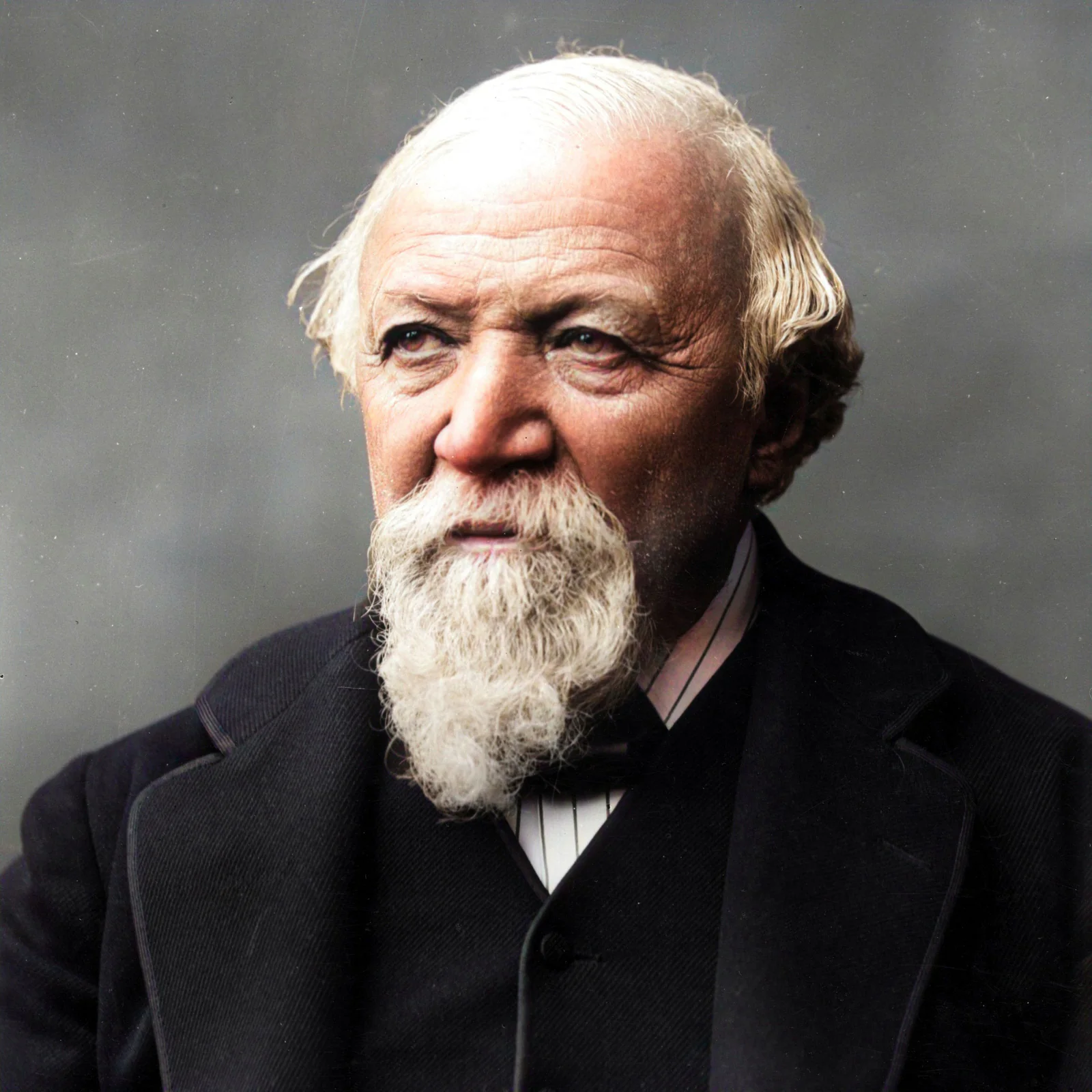
| 31 Quotes | |
| Occup. | Poet |
| From | England |
| Born | May 7, 1812 Camberwell, London, England |
| Died | December 12, 1889 Venice, Italy |
| Aged | 77 years |
| Cite | |
Citation Formats
APA Style (7th ed.)
Robert browning biography, facts and quotes. (2026, February 2). FixQuotes. https://fixquotes.com/authors/robert-browning/
Chicago Style
"Robert Browning biography, facts and quotes." FixQuotes. February 2, 2026. https://fixquotes.com/authors/robert-browning/.
MLA Style (9th ed.)
"Robert Browning biography, facts and quotes." FixQuotes, 2 Feb. 2026, https://fixquotes.com/authors/robert-browning/. Accessed 6 Mar. 2026.
Early Life and Background
Robert Browning was born on May 7, 1812, in Camberwell, south London, into a household where argument and books were daily bread. His father, Robert Browning Sr., a Bank of England clerk, quietly amassed an eclectic library and encouraged the boy's omnivorous reading; his mother, Sarah Anna Wiedemann Browning, a devout Congregationalist with a musician's temperament, gave him a sense of moral inwardness and the cadences of hymn and scripture. London was expanding, soot-dark and energetic, and Browning grew up amid the pressures and possibilities of a commercial empire - an environment that sharpened his lifelong interest in the clash between private motive and public mask.From early on he seemed less drawn to confessional lyric than to character under stress: people justifying themselves, failing, bargaining with conscience, or suddenly seeing too much. That instinct was personal as well as artistic. Family affection steadied him, but the young Browning also nursed a fierce independence that resisted institutional life and fashionable opinion. The result was a temperament both combative and curious, always testing how far a mind could push against circumstance without breaking.
Education and Formative Influences
He was largely educated at home, with some schooling, and became a teenager steeped in the Romantics, Greek drama, and the argumentative prose of the Enlightenment; Percy Bysshe Shelley mattered especially, not as a model of manner but as proof that poetry could be intellectual, radical, and musically daring. Early travel in Italy in the 1830s deepened his fascination with Renaissance art, Catholic ritual, and the theater of history - materials he would later mine for dramatic recollection and moral experiment, as if the past were a laboratory for modern psychology.Career, Major Works, and Turning Points
Browning's first major publication, "Pauline" (1833), already staged a divided self, but he soon turned outward to the dramatic voice, achieving a breakthrough with "Paracelsus" (1835) and the vigorous historical romance "Sordello" (1840), whose difficulty became notorious. He persisted with the "Bells and Pomegranates" pamphlets (1841-1846), including "Pippa Passes" and "Dramatic Lyrics", where "My Last Duchess" and "Porphyria's Lover" perfected the dramatic monologue as a form of moral entrapment. His courtship and secret marriage to the older, celebrated poet Elizabeth Barrett in 1846 - against her father Edward Moulton-Barrett's opposition - was the central emotional turning point; they settled in Florence, where their son was born in 1849 and Browning wrote "Men and Women" (1855). After Elizabeth's death in 1861 he returned to England, working through grief and reputation until "The Ring and the Book" (1868-1869), a vast verse-novel based on a Roman murder trial, made him a public figure. He continued with late collections such as "Dramatic Idylls" and "Asolando" (1889), dying in Venice on December 12, 1889, and being buried in Westminster Abbey's Poets' Corner.Philosophy, Style, and Themes
Browning's signature was the mind in motion - speech as a record of desire, rationalization, and revelation. He distrusted neat moralizing, preferring to show how people talk themselves into their ethics, and how intelligence can become a refuge for cruelty or self-deception. His meters were often knotty, his syntax deliberately pressured, because he wanted thought to feel like effort, not ornament; the reader must collaborate, as if cross-examining a witness. Under that difficulty lay a stubborn hopefulness: he treated spiritual aspiration as real even when doctrinal certainty was impossible. “Ah, but a man's reach should exceed his grasp. Or what's a heaven for?” is not just an epigram but a psychological clue - Browning admired imperfect striving because it kept the soul alive, and he suspected that comfort without risk bred smallness.Love, for him, was the great counterforce to nihilism and the one arena where the will could become generous rather than merely clever. “Take away love and our earth is a tomb”. captures the metaphysical stakes he attached to ordinary attachment: eros and charity were not sentimental add-ons but proofs that the universe was more than mechanism. Yet he also dramatized exhaustion, the temptation to disappear, and the fantasy of privacy from judgment. “I give the fight up: let there be an end, a privacy, an obscure nook for me. I want to be forgotten even by God”. exposes a fear that effort might be endless and unrewarded - the dark underside of his creed of striving, and the pressure behind his fascination with characters who speak as if pleading their case before an invisible tribunal.
Legacy and Influence
Browning helped redefine what English poetry could do: not simply sing, but interrogate, argue, and inhabit contradictory selves. The dramatic monologue became a foundational tool for later poets, and his interest in motive, unreliable narration, and moral ambiguity anticipated the psychological novel and even modern courtroom storytelling. Victorians formed "Browning Societies" to decode him, but his endurance owes less to puzzles than to his sense that inner life is dramatic and ethically consequential. In an era of faith contested by science and empire, he offered neither surrender nor easy consolation - only the bracing idea that the soul is known by how it speaks under pressure, and that striving, however flawed, remains a form of dignity.Our collection contains 31 quotes written by Robert, under the main topics: Motivational - Ethics & Morality - Wisdom - Art - Never Give Up.
Other people related to Robert: Robert Browning Hamilton (Writer), Elizabeth Barrett Browning (Poet), Edmund C. Stedman (Poet), Charles Stuart Calverley (Poet), Jean Ingelow (Poet), C. S. Calverley (Poet)
Robert Browning Famous Works
- 1868 The Ring and the Book (Epic Poem)
- 1864 Dramatis Personae (Poetry Collection)
- 1855 Men and Women (Poetry Collection)
- 1841 Pippa Passes (Dramatic poem)
- 1840 Sordello (Poem)
- 1835 Paracelsus (Poem)
- 1833 Pauline (Poem)
Source / external links