
Robert Burns Biography Quotes 15 Report mistakes
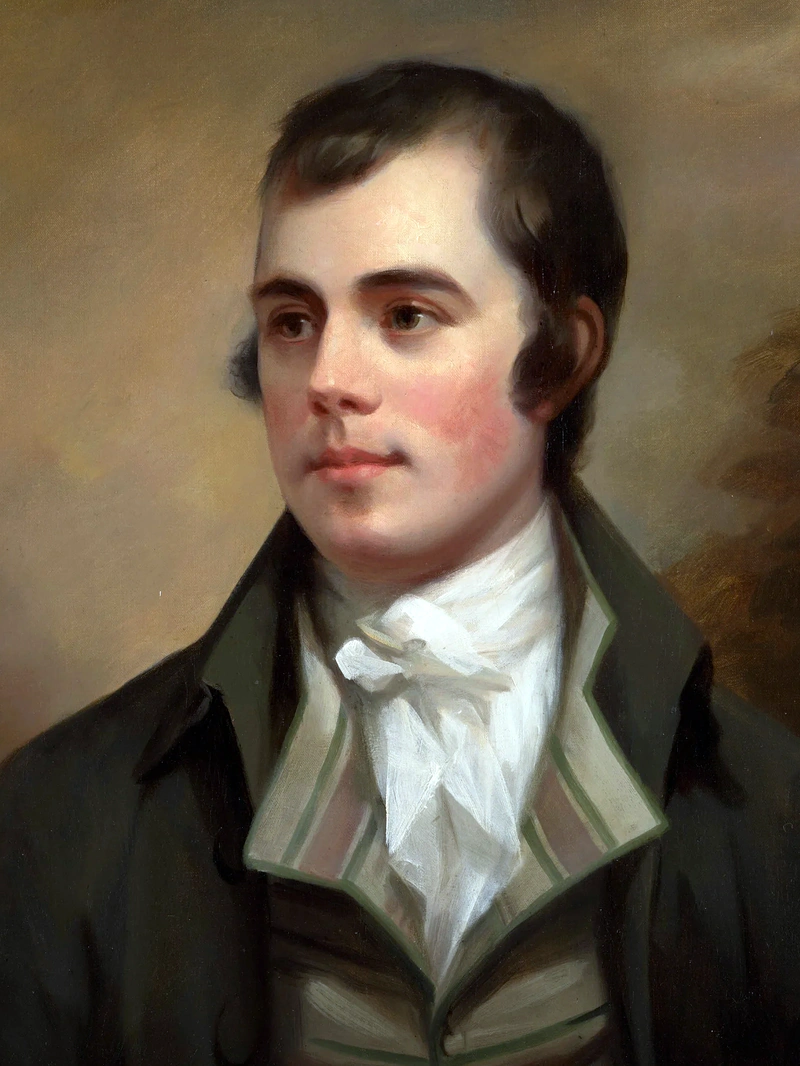
Attr: news.artnet.com
| 15 Quotes | |
| Known as | Rabbie Burns |
| Occup. | Poet |
| From | Scotland |
| Born | January 25, 1759 Alloway, Ayrshire, Scotland |
| Died | July 21, 1796 Dumfries, Scotland |
| Aged | 37 years |
| Cite | |
Citation Formats
APA Style (7th ed.)
Robert burns biography, facts and quotes. (2026, February 11). FixQuotes. https://fixquotes.com/authors/robert-burns/
Chicago Style
"Robert Burns biography, facts and quotes." FixQuotes. February 11, 2026. https://fixquotes.com/authors/robert-burns/.
MLA Style (9th ed.)
"Robert Burns biography, facts and quotes." FixQuotes, 11 Feb. 2026, https://fixquotes.com/authors/robert-burns/. Accessed 26 Mar. 2026.
Early Life and Background
Robert Burns was born 25 January 1759 in a clay-built cottage at Alloway, Ayrshire, the eldest son of William Burnes, a tenant farmer and self-made moralist, and Agnes Broun. Scotland in Burns's boyhood was a country of sharp gradations - lairds and factors, kirk discipline, and a rural poor living close to subsistence - yet also a nation newly confident after the 1707 Union, with Enlightenment debate flourishing in towns while hardship persisted in the fields. Burns grew up in that friction: a child of labor who absorbed the cadences of Scots speech and song even as he watched rent, weather, and debt govern a family's fate.The Burnes household prized literacy and conscience, but its virtue was tested by repeated removals and failing ventures, from Mount Oliphant to Lochlea, and by the punishing rhythm of farm work that helped undermine Burns's health early. The young Burns learned how easily dignity could be bruised - by poverty, by social condescension, by the surveillance of neighbors and kirk sessions - and that knowledge became emotional capital. His earliest courtships and friendships also taught him the double life expected of a gifted ploughman: public deference, private intensity, and the constant risk that appetite, gossip, or a slip of the tongue could close doors.
Education and Formative Influences
Burns received irregular schooling but unusually strong guidance: his father hired the teacher John Murdoch, who introduced English grammar and wider reading; the family also kept a manual of conduct and faith that Burns later remembered with a mixture of gratitude and rebellion. In adolescence he read widely - from Pope and Thomson to the Bible and Scottish song - while the rhetoric of the Scottish Enlightenment filtered even into Ayrshire through clubs, newspapers, and itinerant talk. His formative education was thus a braid of moral earnestness, vernacular tradition, and the new language of sensibility and rights, preparing him to speak both as a national bard and as a man who could anatomize his own contradictions.Career, Major Works, and Turning Points
By the mid-1780s, after the death of his father (1784) and a precarious tenancy at Mossgiel near Mauchline, Burns began shaping local satire, love lyrics, and narrative poems into a coherent voice; the "Kilmarnock Edition" of Poems, Chiefly in the Scottish Dialect appeared in 1786, making him famous almost overnight. The book's success averted his plan to emigrate to Jamaica and carried him to Edinburgh (1786-1788), where he was lionized by literati yet remained wary of patronage. He later settled with Jean Armour, took a government post as exciseman, and farmed at Ellisland near Dumfries (1788-1791), producing major songs and poems such as "Tam o' Shanter" and contributing relentlessly to James Johnson's Scots Musical Museum and later George Thomson's Select Collection of Original Scottish Airs. Political suspicion during the era of the French Revolution, heavy work, financial strain, and declining health shadowed his last years; he died in Dumfries on 21 July 1796, aged 37, shortly after the birth of his youngest child.Philosophy, Style, and Themes
Burns's inner life is best read as a contest between fierce self-respect and fear of social capture. He wanted steadiness and chose, again and again, exertion over self-pity, insisting, “Firmness in enduring and exertion is a character I always wish to possess. I have always despised the whining yelp of complaint and cowardly resolve”. Yet he also understood how easily virtue could curdle into performance, and how institutions could use moral language to keep the poor in their place. That tension animates his portraits of the kirk ("Holy Willie's Prayer"), his empathy for the outcast, and his refusal to let refinement monopolize intelligence. Even his celebrity years in Edinburgh read like a psychological trial: he enjoyed attention, but he measured every compliment against the unspoken rule that a ploughman should remain grateful and containable.Stylistically, Burns fused Scots vernacular with Augustan poise and folk melody, turning everyday speech into a vehicle for ethical argument and lyrical tenderness. His themes circle power and pity: erotic desire, friendship, the dignity of labor, and the injuries inflicted by hierarchy - crystallized in the line “Man's inhumanity to man makes countless thousands mourn!” At the same time, he kept a sensuous, seasonal eye, letting landscape carry emotion without sentimentality: “The snowdrop and primrose our woodlands adorn, and violets bathe in the wet o' the morn”. Burns could be comic, coarse, or devotional, but the through-line is a democratizing imagination that insists feeling and moral worth are not the property of rank, and that a nation lives as much in its songs as in its statutes.
Legacy and Influence
Burns became Scotland's defining poet not by polishing away his origins but by making them authoritative, turning the speech of farms, taverns, and kirkyards into national literature. His songs - from "Auld Lang Syne" to "A Red, Red Rose" - travel globally, while poems like "To a Mouse", "The Cotter's Saturday Night", and "Tam o' Shanter" remain touchstones for empathy, satire, and narrative energy. Commemorated in Burns Suppers since the early 19th century and invoked by reformers, romantics, and modern songwriters alike, he endures as a writer who proved that culture can be both learned and local, and that the moral imagination of an ordinary life can speak with extraordinary authority.Our collection contains 15 quotes written by Robert, under the main topics: Witty One-Liners - Wisdom - Friendship - Sarcastic - Honesty & Integrity.
Other people related to Robert: John Greenleaf Whittier (Poet), Allan Cunningham (Poet), David Allan (Artist)