
Robert Capa Biography Quotes 12 Report mistakes
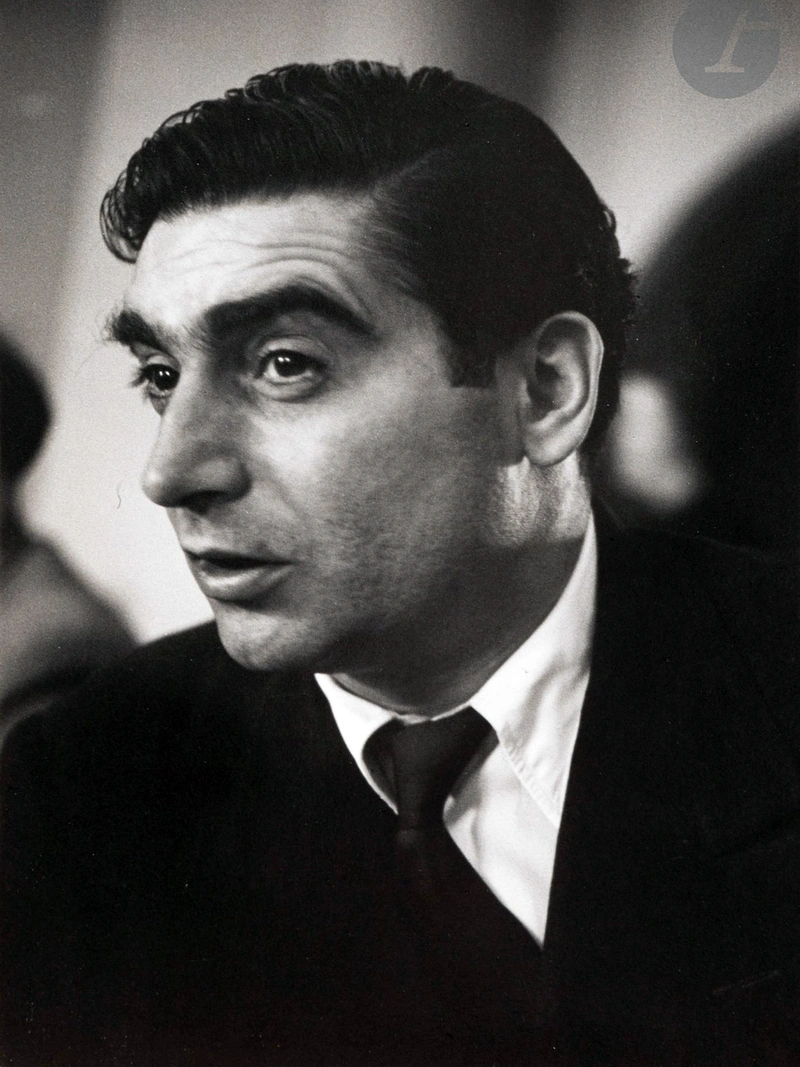
| 12 Quotes | |
| Born as | Endre Erno Friedmann |
| Occup. | Photographer |
| From | USA |
| Born | October 22, 1913 Budapest, Hungary |
| Died | May 25, 1954 Thai Binh, Vietnam |
| Cause | Killed by landmine |
| Aged | 40 years |
| Cite | |
Citation Formats
APA Style (7th ed.)
Robert capa biography, facts and quotes. (2026, February 11). FixQuotes. https://fixquotes.com/authors/robert-capa/
Chicago Style
"Robert Capa biography, facts and quotes." FixQuotes. February 11, 2026. https://fixquotes.com/authors/robert-capa/.
MLA Style (9th ed.)
"Robert Capa biography, facts and quotes." FixQuotes, 11 Feb. 2026, https://fixquotes.com/authors/robert-capa/. Accessed 26 Mar. 2026.
Early Life and Background
Endre Erno Friedmann was born on 1913-10-22 in Budapest, then in the uneasy aftershadow of the Austro-Hungarian Empire and the political whiplash that followed World War I. He grew up Jewish in a city where nationalism, street politics, and anti-Semitic pressure could shift from background noise to immediate danger. Even before he held a camera with professional intent, he absorbed a lesson that would later define his images: history did not happen politely at a distance - it arrived in crowds, uniforms, and sudden decrees.As a teenager he drifted into left-leaning circles and learned how quickly a state can turn a private life into a public problem. After a brief arrest in Hungary, he left in 1931, part of a generation for whom exile was not romance but strategy. In Berlin he encountered both modernity and menace - mass rallies, propaganda, and economic collapse - and by the time he fled again, after the Nazi rise in 1933, he had already lived the central Capa paradox: the outsider who becomes the era's most intimate witness.
Education and Formative Influences
Friedmann had no tidy academic formation; his education was practical, urban, and hurried. In Berlin he found work as a darkroom assistant and learned the new speed of 35mm photography, then carried those skills to Paris, where photo agencies, illustrated magazines, and political refugees formed a single ecosystem. In Paris he partnered with Gerta Pohorylle - Gerda Taro - and together they invented "Robert Capa", a marketable persona designed to outwit prejudice and editors alike; the reinvention was also psychological, a way to turn a stateless young man into someone who could walk into history and be paid to look.Career, Major Works, and Turning Points
Capa's defining apprenticeship came in the Spanish Civil War (1936-1939), where his access and nerve produced the work that made his name, including the disputed but epoch-making "The Falling Soldier" (1936) and a larger body of frontline images published in Vu and Life. Taro's death in 1937 - crushed by a tank during the retreat from Brunete - marked a private turning point that hardened his public persona; afterward he moved as if intimacy were temporary and the next assignment might be a way to outrun grief. During World War II he photographed the Allied campaigns for Life, from North Africa and Sicily to the most famous gamble of his career: D-Day at Omaha Beach on 1944-06-06, where lab mishandling destroyed most of his negatives, leaving a handful of blurred frames that paradoxically became the era's visual shorthand for chaos. After the war he co-founded Magnum Photos in 1947 with Henri Cartier-Bresson, David "Chim" Seymour, George Rodger, and others, betting on photographer control in a market that treated pictures as disposable. He later covered the 1948 Arab-Israeli war and, in 1954, accepted an assignment in French Indochina; on 1954-05-25, near Thai Binh, he stepped on a land mine and died at 40, the risk finally catching the man who had made risk his method.Philosophy, Style, and Themes
Capa's pictures are built from proximity - ethical, physical, and emotional - and his famous credo, “If your pictures aren't good enough, you aren't close enough”. , was less bravado than a working theory of truth. Closeness for him did not mean spectacle for its own sake; it meant allowing fear, confusion, and tenderness to enter the frame so the viewer could not pretend the event was abstract. His best war photographs refuse the clean geometry of propaganda: soldiers look small inside machinery and weather; civilians carry their lives in bundles; victory and loss share the same exhausted faces.Under that style sat a gambler's psychology, sharpened by exile and by the knowledge that a correspondent chooses danger while others are drafted into it. “The war correspondent has his stake - his life - in his own hands, and he can put it on this horse or that horse, or he can put it back in his pocket at the very last minute”. The sentence exposes both his freedom and his self-reproach: he understood that choosing the "spot" was privilege, yet he also recognized the torture of having to decide, over and over, whether to advance or retreat. His insistence that “The truth is the best picture, the best propaganda”. is the hinge between his romance and his realism - he believed the camera could serve a cause, but only by refusing the cheap simplifications that cause-makers prefer. That tension, between commitment and honesty, is why his work still feels morally alive.
Legacy and Influence
Capa helped define modern conflict photography: handheld, immediate, human-scaled, and willing to accept technical imperfection as the price of presence. The D-Day frames - half-lost, half-saved - became a visual argument that authenticity can look like blur, and that fear can be part of the record rather than a flaw. Magnum institutionalized his belief that photographers should own their work and shape the narrative context, a model that continues to influence documentary practice. Yet his legacy is also a warning: the romance of the frontline can become a habit, even an identity, and the cost is often paid in private. His life - Hungarian-born, American by adoption, perpetually in motion - remains a biographical key to his pictures: a man who turned displacement into access, and risk into a language the 20th century could not ignore.Our collection contains 12 quotes written by Robert, under the main topics: Witty One-Liners - Truth - Art - War - Peace.
Other people related to Robert: Ernst Haas (Photographer), W. Eugene Smith (Photographer)
Robert Capa Famous Works
- 1947 Slightly Out of Focus (Memoir)
- 1938 Death in the Making (Book)