
Robert Cecil Biography Quotes 6 Report mistakes
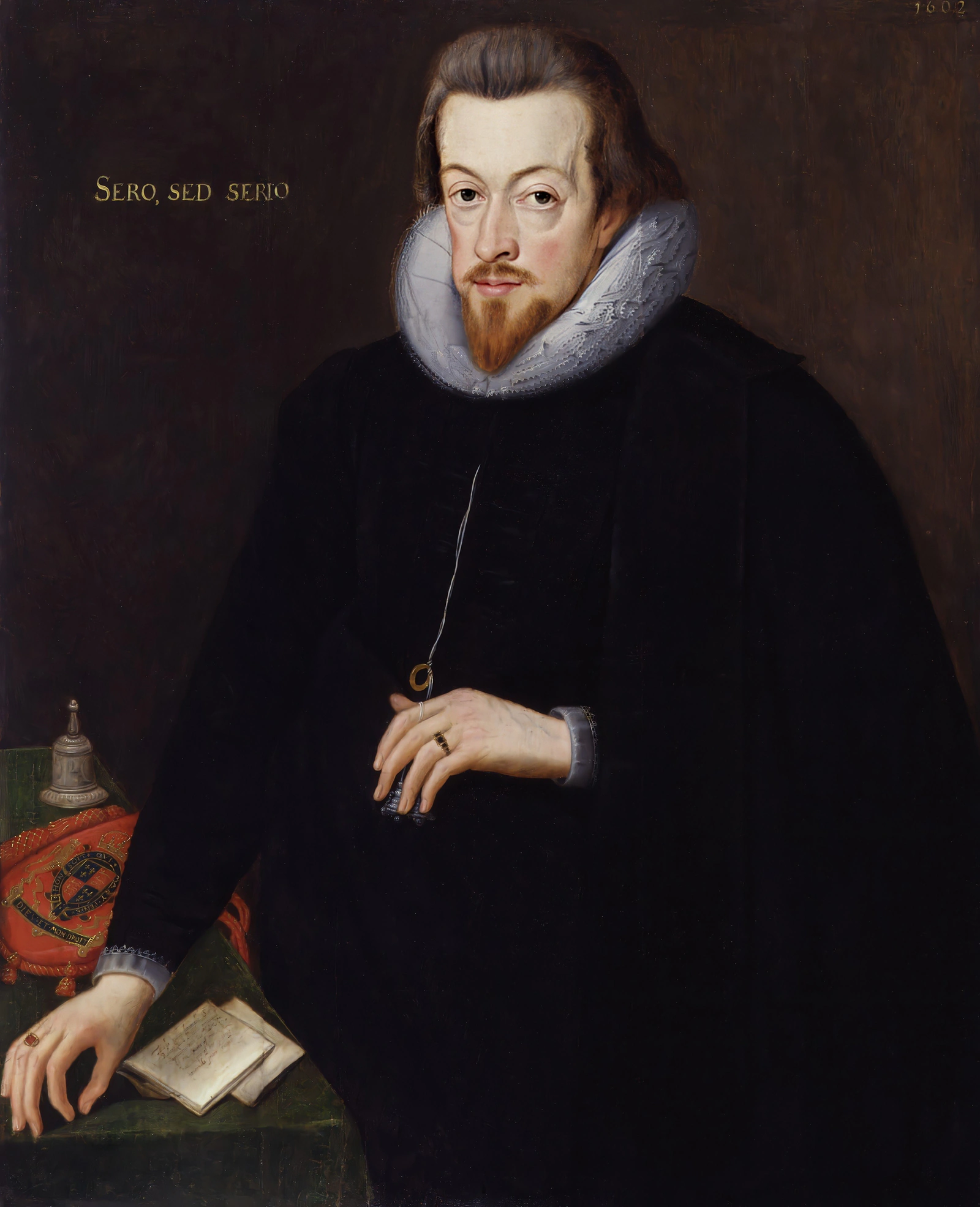
Attr: After John de Critz
| 6 Quotes | |
| Known as | 1st Earl of Salisbury |
| Occup. | Public Servant |
| From | United Kingdom |
| Born | June 1, 1563 Westminster, London, England |
| Died | May 24, 1612 Cranborne, Dorset, England |
| Cause | Natural Causes |
| Aged | 48 years |
| Cite | |
Citation Formats
APA Style (7th ed.)
Robert cecil biography, facts and quotes. (2026, February 11). FixQuotes. https://fixquotes.com/authors/robert-cecil/
Chicago Style
"Robert Cecil biography, facts and quotes." FixQuotes. February 11, 2026. https://fixquotes.com/authors/robert-cecil/.
MLA Style (9th ed.)
"Robert Cecil biography, facts and quotes." FixQuotes, 11 Feb. 2026, https://fixquotes.com/authors/robert-cecil/. Accessed 5 Mar. 2026.
Early Life and Background
Robert Cecil was born on June 1, 1563, into the calculating heart of Elizabethan power. He was the younger son of William Cecil, Lord Burghley - Elizabeth I's principal minister - and Mildred Cooke, among the most learned women of her generation. The Cecils were not merely courtiers; they were administrators of a Protestant state still anxious about Catholic plots, foreign invasion, and the legitimacy of a queen without an heir. Cecil grew up at Theobalds in Hertfordshire and in the orbit of Whitehall and Westminster, where policy was made in council chambers and in the margins of letters.His physical slightness and a pronounced spinal curvature shaped how others read him and how he learned to move through authority: not by martial display, but by paperwork, memory, and networks. From early on he absorbed the family craft of governance - the disciplined use of patronage, intelligence, and legal forms to turn royal will into policy. This was a world where a minister survived by anticipating crises, never appearing indispensable, and keeping the state solvent enough to keep armies, ships, and informers paid.
Education and Formative Influences
Cecil studied at St John's College, Cambridge, then entered Gray's Inn, acquiring the legal and rhetorical tools of government even if he did not become a practicing lawyer. His most formative education, however, was apprenticeship under Burghley: learning how to read dispatches, manage Parliament, and negotiate with foreign ambassadors. The long war with Spain, the propaganda battles of the Reformation, and the shadow of Mary, Queen of Scots taught him that the Tudor state ran on information - and that moral certainty in public must be balanced by private prudence.Career, Major Works, and Turning Points
He entered Parliament in the 1580s and rose through the secretarial machinery until he became Secretary of State in 1596, effectively inheriting much of his father's working portfolio. Cecil was central to late-Elizabethan intelligence and to the prosecution of the Earl of Essex after Essex's 1601 rebellion, a turning point that removed a charismatic rival and hardened Cecil's reputation as cool and relentless. The greatest gamble of his life came before Elizabeth died: he quietly secured James VI of Scotland's succession, smoothing the transition in 1603 and avoiding civil conflict. Under James I he became the king's indispensable manager - first Secretary of State, then Master of the Court of Wards, and in 1608 Lord High Treasurer. He concluded peace with Spain in the Treaty of London (1604), tried to rationalize royal finance, and built Hatfield House (begun 1607) as both a statement of permanence and a retreat for a man who lived by paper. He died on May 24, 1612, worn down by the relentless strain of office.Philosophy, Style, and Themes
Cecil's governing philosophy was less a doctrine than a method: keep the realm quiet, keep the succession secure, keep the crown supplied with money, and keep the channels of information open. His temperament favored leverage over spectacle; he preferred committees, memoranda, and controlled access to the monarch. The inward man seems to have been wary of crowds and faction, sensing that politics was a theater in which identity changed with circumstance. The line “Solitude shows us what should be; society shows us what we are”. fits a minister who cultivated private clarity while accepting that public life reveals compromise, vanity, and fear. He used society as an instrument, but he did not romanticize it.His style in power was managerial and watchful, built on the belief that governance is judged by habit, not sermon. “Examples is more forcible than precept. People look at my six days in the week to see what I mean on the seventh”. Cecil knew that Protestant statecraft required credibility: the court, Parliament, and the counties watched whether the center practiced the discipline it preached. Yet his realism about human motivation could turn chilly: he treated status as a tool, not an essence, in the spirit of “A wise man looks upon men as he does on horses; all their comparisons of title, wealth, and place, he consider but as harness”. That psychological distance helped him negotiate with grandees and foreign powers alike - but it also fed the suspicion that he reduced persons to uses, and conscience to calculation.
Legacy and Influence
Cecil's enduring influence lies in how he professionalized Jacobean government at a moment when dynastic change could have shattered it. He helped turn the succession of 1603 into administrative continuity, normalized peace with Spain to buy fiscal breathing room, and strengthened the culture of the privy council, written policy, and intelligence-led security. His failures were structural: the crown's finances remained chronically inadequate, and the bargains between king and Parliament that later exploded were not resolved in his lifetime. Still, later ministers inherited a Cecil model of power - discreet, document-driven, and succession-minded - and Hatfield endures as the architectural emblem of a public servant who built permanence out of uncertainty.Our collection contains 6 quotes written by Robert, under the main topics: Ethics & Morality - Wisdom - Leadership - Faith.
Other people related to Robert: Arthur Balfour (Statesman), Edward Dyer (Poet), Lord Edward Cecil (Soldier), Walter Raleigh (Explorer)
Source / external links