
Robert E. Lee Biography Quotes 27 Report mistakes
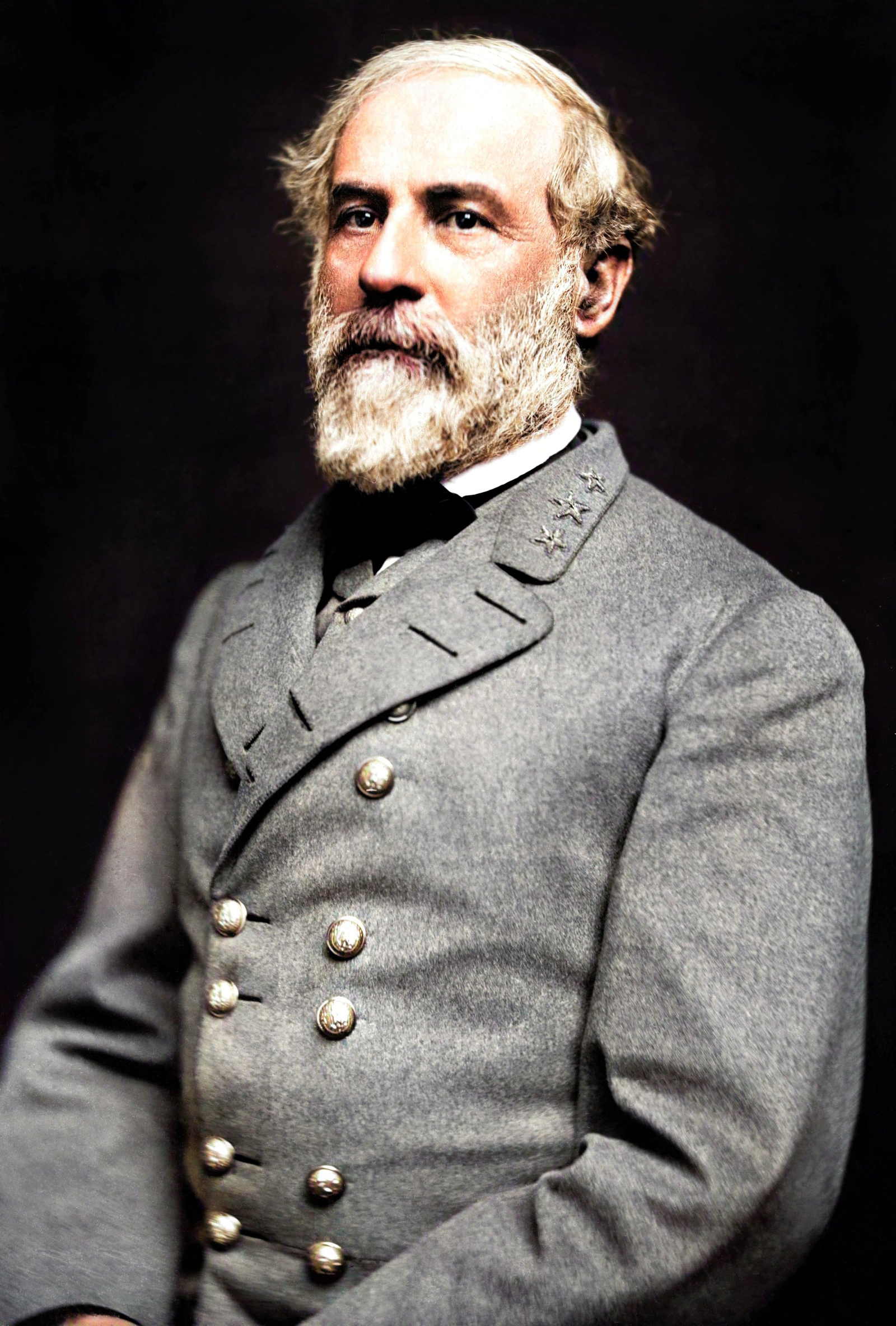
Attr: Julian Vannerson, Public domain
| 27 Quotes | |
| Born as | Robert Edward Lee |
| Occup. | General |
| From | USA |
| Spouse | Mary Anna Custis Lee |
| Born | January 19, 1807 Stratford, Virginia, USA |
| Died | October 12, 1870 Lexington, Virginia, USA |
| Cause | Heart failure |
| Aged | 63 years |
| Cite | |
Citation Formats
APA Style (7th ed.)
Robert e. lee biography, facts and quotes. (2026, February 11). FixQuotes. https://fixquotes.com/authors/robert-e-lee/
Chicago Style
"Robert E. Lee biography, facts and quotes." FixQuotes. February 11, 2026. https://fixquotes.com/authors/robert-e-lee/.
MLA Style (9th ed.)
"Robert E. Lee biography, facts and quotes." FixQuotes, 11 Feb. 2026, https://fixquotes.com/authors/robert-e-lee/. Accessed 12 Feb. 2026.
Early Life and Background
Robert Edward Lee was born on January 19, 1807, at Stratford Hall in Westmoreland County, Virginia, into the storied but financially frayed Lee family. His father, Henry "Light-Horse Harry" Lee, had been a celebrated Revolutionary cavalryman and governor, yet debt and scandal shadowed his later years and fractured the household. The contrast between inherited honor and lived insecurity helped form in the young Lee a lifelong sensitivity to reputation, order, and the quiet discipline of meeting obligations without display.Raised largely by his mother, Ann Hill Carter Lee, Lee grew up amid the Tidewater gentry's codes while watching their foundations weaken in the early republic. The family moved to Alexandria, closer to Washington's expanding orbit and the hard arithmetic of commerce and politics. From adolescence he showed a restrained temperament - courteous, methodical, and inwardly governed - traits that would later read as both steadiness under pressure and emotional distance, depending on the observer.
Education and Formative Influences
Lee entered the United States Military Academy at West Point and graduated in 1829, second in his class, notably without a demerit - a record that became part of his legend and a clue to his psychology: achievement through control. Commissioned into the Corps of Engineers, he learned to think in terrain, logistics, and the friction of weather and time, and he absorbed an officerly ethic that prized duty and hierarchy. In 1831 he married Mary Anna Randolph Custis, linking his life to George Washington's symbolic afterlife through the Custis estate at Arlington, a connection that deepened his sense of living inside a national story even as the nation split over it.Career, Major Works, and Turning Points
In the antebellum Army, Lee distinguished himself as a gifted engineer and staff officer, earning praise in the Mexican-American War (1846-1848) for reconnaissance and daring movement under Winfield Scott, experiences that sharpened his operational imagination. After serving as superintendent of West Point (1852-1855) and later leading the 2nd U.S. Cavalry in Texas, he was summoned in 1859 to suppress John Brown's raid at Harpers Ferry - a grim rehearsal for the coming catastrophe. In April 1861, offered high command in the U.S. Army, Lee declined and resigned after Virginia seceded, choosing state over Union. As commander of the Army of Northern Virginia from 1862, he mastered audacity at Second Manassas and Chancellorsville, yet his invasions of the North ended in costly defeat at Antietam and Gettysburg, and his army was slowly ground down by attrition and blockade. In April 1865 he surrendered to Ulysses S. Grant at Appomattox Court House, then served as president of Washington College in Lexington, Virginia, until his death on October 12, 1870.Philosophy, Style, and Themes
Lee's inner life reads as a negotiation between ardent feeling and strict self-command. He cultivated an ideal of character that treated self-mastery as the prerequisite for command and, by extension, legitimacy: "I cannot trust a man to control others who cannot control himself". That maxim helps explain his preference for calm, almost formal bearing even when he was privately anxious, physically strained, or grieving the staggering casualties his choices produced. To admirers, this restraint signaled moral seriousness; to critics, it could seem like insulation from consequences.His public language leaned on conscience and obligation, a vocabulary that could elevate courage while narrowing moral vision. "Duty, then is the sublimest word in our language. Do your duty in all things. You cannot do more; you should never wish to do less". In Lee, duty was both compass and refuge - a way to render the war intelligible as sacrifice rather than politics, and a way to subordinate doubt to action. Yet he also possessed a sobering realism about violence itself: "It is well that war is so terrible. We should grow too fond of it". That sentence captures the paradox of his style: operational boldness paired with a chastened awareness that war seduces men into worshiping what destroys them. The tension between conscience, loyalty, and the brutal calculus of command runs through his letters and decisions, and it partly explains why his legacy became a battleground over meaning as much as fact.
Legacy and Influence
After 1865 Lee became, in life and especially in death, a potent symbol onto which Americans projected competing needs: reconciliation, vindication, mourning, and myth. His presidency at Washington College emphasized institutional repair and education for a shattered region, feeding a postwar image of sober leadership; at the same time, the "Lost Cause" tradition recast him as a near-saintly figure, often minimizing slavery and the Confederacy's aims while elevating personal honor and battlefield genius. Modern scholarship has worked to re-anchor Lee in the full context of secession, slavery, and Confederate nationalism, while still recognizing his genuine gifts as an organizer and strategist and his profound influence on military memory. Few American lives show more clearly how character can be both real and rhetorically weaponized - and how the stories nations tell about their generals can outlast the reasons those generals fought.Our collection contains 27 quotes written by Robert, under the main topics: Witty One-Liners - Ethics & Morality - Friendship - Leadership - Meaning of Life.
Other people related to Robert: Jerome Lawrence (Playwright), Bea Arthur (Actress), Joshua Chamberlain (Soldier), Shelby Foote (Author), Rosalind Russell (Actress), James Longstreet (Soldier), John Gibbon (Soldier), Daniel H. Hill (Soldier), John Brown Gordon (Soldier), John B. Hood (Soldier)
Source / external links