
Robert H. Schuller Biography Quotes 36 Report mistakes
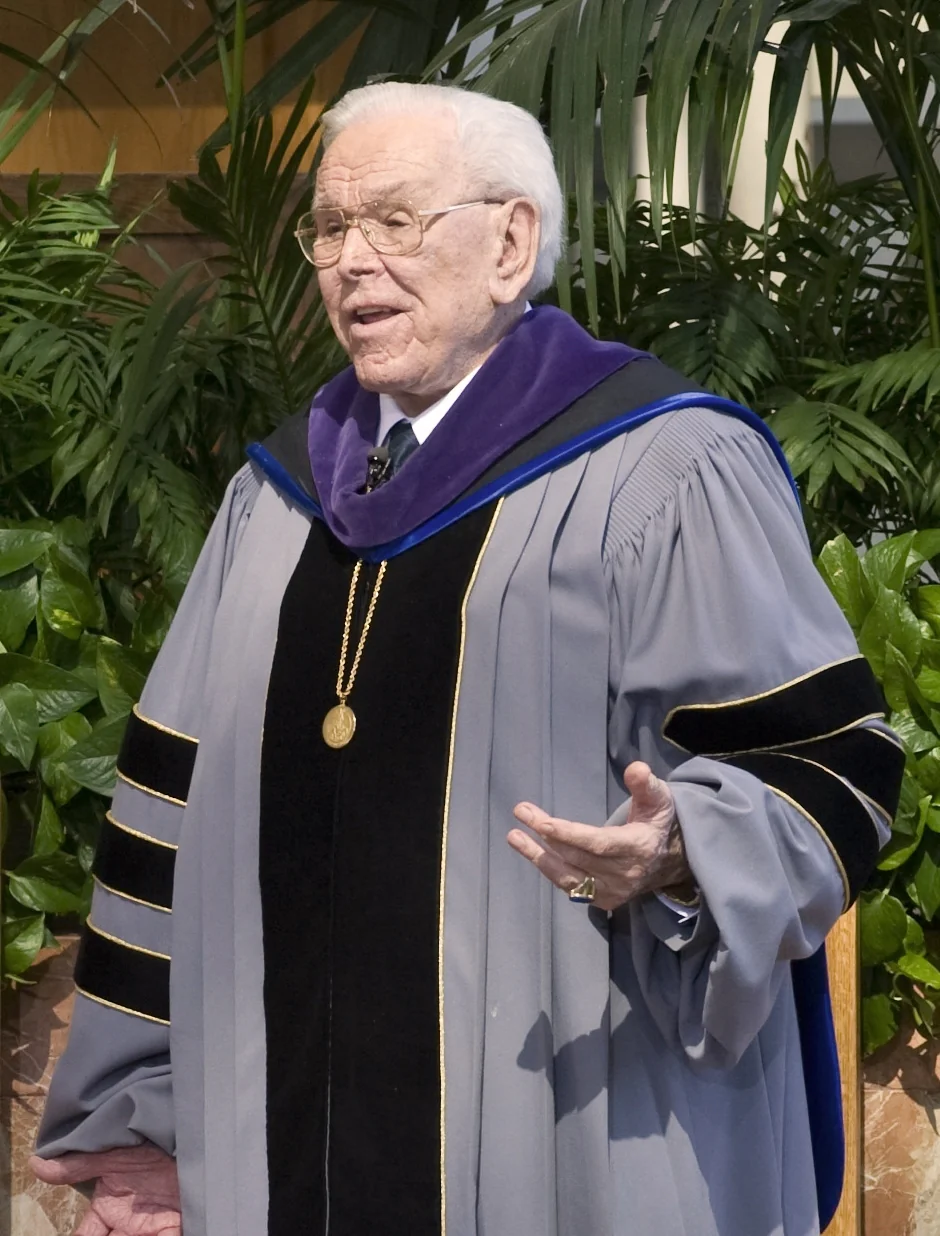
| 36 Quotes | |
| Occup. | Clergyman |
| From | USA |
| Born | September 16, 1926 |
| Age | 99 years |
| Cite | |
Citation Formats
APA Style (7th ed.)
Robert h. schuller biography, facts and quotes. (2026, February 2). FixQuotes. https://fixquotes.com/authors/robert-h-schuller/
Chicago Style
"Robert H. Schuller biography, facts and quotes." FixQuotes. February 2, 2026. https://fixquotes.com/authors/robert-h-schuller/.
MLA Style (9th ed.)
"Robert H. Schuller biography, facts and quotes." FixQuotes, 2 Feb. 2026, https://fixquotes.com/authors/robert-h-schuller/. Accessed 5 Mar. 2026.
Early Life and Background
Robert Harold Schuller was born on September 16, 1926, in Alton, Iowa, into the thickly worked rhythms of Midwestern Dutch Reformed life. The world that formed him was one of thrift, church-centered identity, and an agrarian certainty that hardship was not a surprise but a season. The Great Depression and then the Second World War passed over his youth as moral weather - teaching restraint, duty, and the idea that endurance could be preached as much as practiced.That background mattered because Schuller never shed the farmer's habit of scanning for yield: a sermon, like a field, should produce. Even when he later adopted television lights and glass architecture, his sensibility remained rooted in small-town Protestant pragmatism. He carried forward the Reformed emphasis on calling, but he refashioned it into an American confidence that faith should lift the shoulders and widen the horizon, a tone that would resonate in postwar suburbs hungry for optimism.
Education and Formative Influences
After serving in the U.S. Army near the end of World War II, Schuller pursued ministry in the Reformed Church in America, studying at Hope College in Holland, Michigan, and then at Western Theological Seminary (Holland), where he was ordained in 1950. Those years immersed him in classical preaching and pastoral care, but they also exposed a tension he never stopped negotiating: inherited theological seriousness versus the evangelistic imperative to speak in the idiom of ordinary Americans. He absorbed the era's church-growth instincts and the emerging language of positive thinking, developing a conviction that shame and spiritual defeatism were pastoral problems as real as doctrinal confusion.Career, Major Works, and Turning Points
Schuller began as a traditional pastor in Illinois, but his decisive turning point came in 1955, when he moved to Garden Grove, California, to plant a new congregation aimed at the unchurched in booming Orange County. He famously held early services at a drive-in theater, preaching to worshipers in their cars, and built the "Garden Grove Community Church" into a national ministry through the television program "Hour of Power" (first aired in 1970). His message, often framed as "possibility thinking", reached millions and culminated architecturally in the Crystal Cathedral, an iconic glass sanctuary designed by Philip Johnson and John Burgee and opened in 1980. Schuller also became a prolific author, with "Move Ahead with Possibility Thinking" (1967) and later books such as "Tough Times Never Last, but Tough People Do!" (1983) reinforcing his signature blend of pastoral encouragement and motivational urgency. In the 2000s, succession conflicts and heavy debt destabilized the ministry; after years of strain, the Crystal Cathedral campus was sold in 2012 to the Roman Catholic Diocese of Orange, a striking coda for a project meant to symbolize Protestant confidence in modern America.Philosophy, Style, and Themes
Schuller's central psychological insight was that many people do not reject God so much as they cannot bear themselves - and that preaching must address the inner narrative of failure, fear, and stalled desire. His rhetoric treated the self not as an idol to enthrone but as a soul to reawaken, and he translated sin and grace into the language of paralysis and possibility. In that sense, his most characteristic counsel was action-oriented rather than contemplative: “Better to do something imperfectly than to do nothing perfectly”. The line reveals a pastoral impatience with perfectionism, a belief that hesitating to act can become a disguised form of despair.Yet Schuller was not simply selling cheerfulness. His sermons repeatedly reframed adversity as material for moral agency, a mental move that functioned as both comfort and provocation: “Problems are not stop signs, they are guidelines”. That maxim, and the expansive metaphor “Anyone can count the seeds in an apple, but only God can count the number of apples in a seed”. point to a theology of scale - a conviction that God works through small beginnings and that the believer's task is to refuse the tyranny of present appearances. Stylistically, he favored clear, quotable sentences, personal anecdotes, and public-facing faith that felt at home in suburban living rooms. Critics argued that his approach risked thinning the tragic dimensions of Christianity; admirers countered that he spoke directly to the bruised interior lives of ordinary people and made church emotionally accessible without abandoning reverence.
Legacy and Influence
Schuller died in 2015, but his imprint remains visible in the architecture of American religious media and in the rhetorical DNA of optimism-centered preaching. He helped normalize the idea that a pastor could be both theologian and broadcaster, that a sanctuary could be a civic landmark, and that evangelism could be designed around the felt needs of those wary of church culture. Even the ministry's later financial unraveling underscored the risks of building spiritual movements on large institutions and charismatic succession. Still, Schuller's larger legacy is his reshaping of postwar Protestant public speech: he made encouragement a serious pastoral tool, recast faith as forward motion, and left a vocabulary of possibility that continues to echo - for better and for worse - across American pulpits and screens.Our collection contains 36 quotes written by Robert, under the main topics: Motivational - Ethics & Morality - Never Give Up - Mortality - Victory.
Source / external links