
Robert Jarvik Biography Quotes 1 Report mistakes
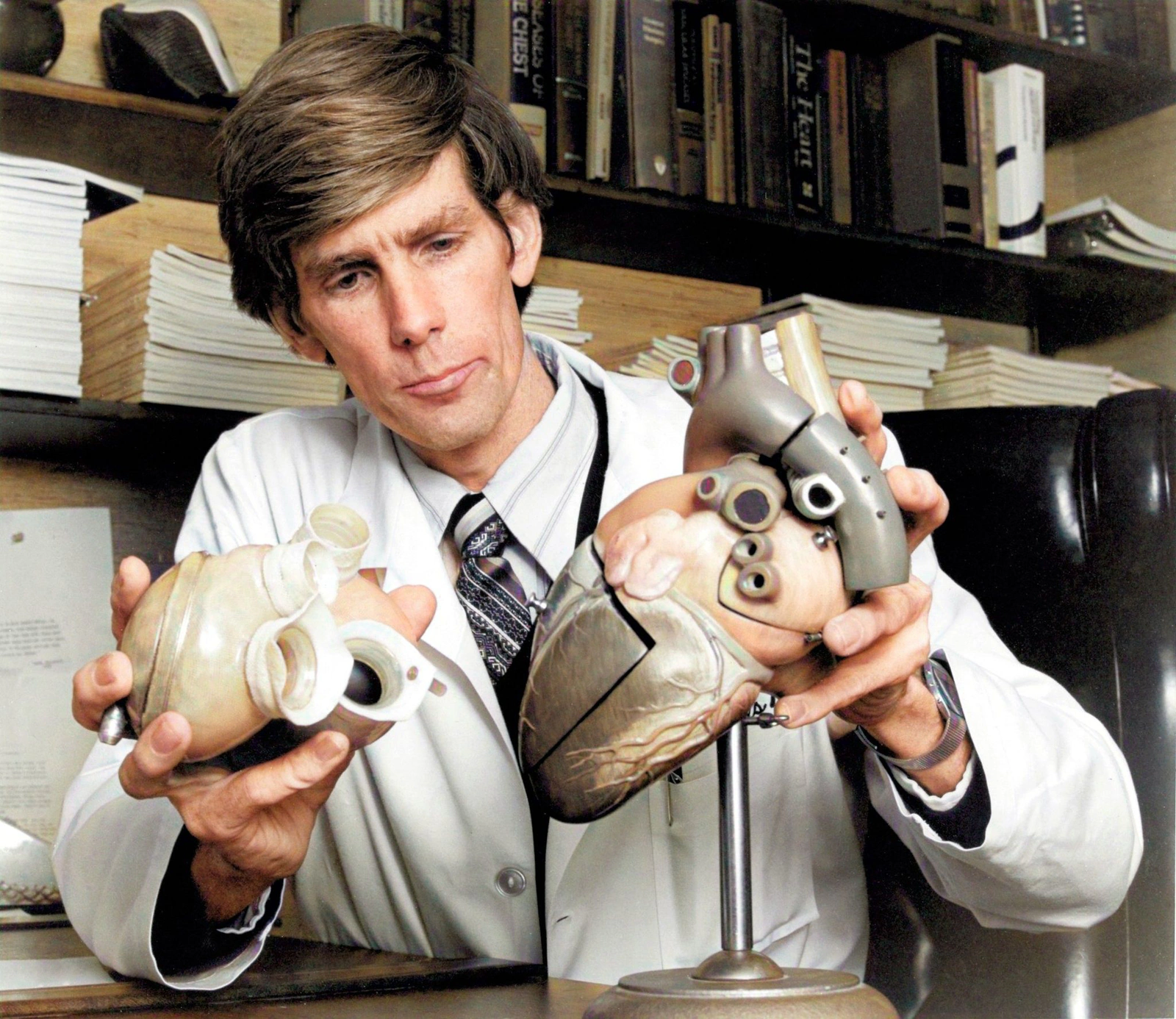
| 1 Quotes | |
| Born as | Robert Koffler Jarvik |
| Occup. | Inventor |
| From | USA |
| Spouses | Elaine Levin (1968-1985) Marilyn vos Savant (1987) |
| Born | May 11, 1946 Midland, Michigan, USA |
| Age | 79 years |
| Cite | |
Citation Formats
APA Style (7th ed.)
Robert jarvik biography, facts and quotes. (2026, February 11). FixQuotes. https://fixquotes.com/authors/robert-jarvik/
Chicago Style
"Robert Jarvik biography, facts and quotes." FixQuotes. February 11, 2026. https://fixquotes.com/authors/robert-jarvik/.
MLA Style (9th ed.)
"Robert Jarvik biography, facts and quotes." FixQuotes, 11 Feb. 2026, https://fixquotes.com/authors/robert-jarvik/. Accessed 28 Mar. 2026.
Early Life and Background
Robert Koffler Jarvik was born on May 11, 1946, in Midland, Michigan, into a mid-century America intoxicated by engineering feats, televised medicine, and the moonshot mentality that made laboratories feel like frontiers. His childhood unfolded in the long shadow of World War II and the early Cold War, when public confidence in science was high and the ethical questions of modern biomedicine were only beginning to take recognizable shape.He grew up alert to the intimate stakes of technology: the human body as both a marvel and a fragile machine. That tension between aspiration and limitation became central to his later work. The period also trained him in a particular American habit of mind - an assumption that practical problems, even life-and-death ones, could be attacked with design, iteration, and the right team.
Education and Formative Influences
Jarvik studied engineering and medicine, eventually earning an MD from the University of Utah, where an unusually interdisciplinary environment encouraged hybrid identities: physician-engineers, surgeon-inventors, and bench researchers in constant conversation. At Utah he encountered the emerging field of artificial organs and the legacy of pioneers such as Willem Johan Kolff, whose earlier work on dialysis and artificial heart concepts helped define the idea that machines could temporarily - or permanently - stand in for failed organs. Jarvik absorbed not only techniques and theory but also a mindset: treat biology as a system whose failure modes can be mapped, then design around them.Career, Major Works, and Turning Points
Jarvik became internationally known for work that led to the Jarvik-7 artificial heart, developed at the University of Utah as a pneumatic total artificial heart. The device entered public consciousness with the December 1982 implantation in Seattle dentist Barney Clark at the University of Utah Medical Center under surgeon William DeVries, followed by additional implantations in 1984. The Jarvik-7 did not deliver a simple triumphal narrative - Clark lived 112 days amid complications and intense scrutiny - but it permanently shifted the boundaries of what medicine could attempt, forcing the public, regulators, and clinicians to confront questions about quality of life, informed consent, and what it means to extend life with machines. Later versions and descendants of the technology, through corporate and clinical evolution, fed into the eventual use of the device line as a bridge-to-transplant tool and helped set the stage for modern ventricular assist devices.Philosophy, Style, and Themes
Jarvik's work sits at the intersection of audacity and calculation: the artificial heart is an engineering object placed inside the most symbolically loaded organ in the body. His public image often centered on invention, but the deeper story is a psychological one - a comfort with high-stakes uncertainty. “Leaders are visionaries with a poorly developed sense of fear and no concept of the odds against them”. Read biographically, the line captures the emotional equipment required to pursue an artificial heart in an era when biomaterials, infection control, and long-term anticoagulation were far less mature than today; one had to tolerate being told, repeatedly, that the goal was unrealistic or premature.His style was iterative and systems-minded, less a single flash of inspiration than an ongoing willingness to rework valves, diaphragms, power requirements, and failure points under relentless clinical feedback. Yet the same fearlessness that fuels breakthrough engineering can also sharpen controversy: the Jarvik-7 era revealed how quickly an invention can become a cultural spectacle, and how the inventor's identity can be simplified into hero or villain depending on outcomes. Jarvik's core theme, visible across his career, is the insistence that the body is not sacred in a way that forbids repair - it is sacred in the sense that it demands the best tools human craft can provide.
Legacy and Influence
Jarvik's enduring influence is less about a single device than about legitimacy: he helped make the artificial heart a serious clinical ambition rather than science fiction, catalyzing investment, regulation, and ethical debate that shaped modern mechanical circulatory support. The Jarvik-7 story also became a template for how breakthrough medical technologies enter public life - through a mix of hope, media, suffering, and incremental improvement - and it left later innovators with both a technical roadmap and a cautionary one: engineering alone is never enough; the patient experience, the clinical ecosystem, and society's tolerance for risk are part of the machine.Our collection contains 1 quotes written by Robert, under the main topics: Vision & Strategy.
Source / external links