
Robert Louis Stevenson Biography Quotes 84 Report mistakes
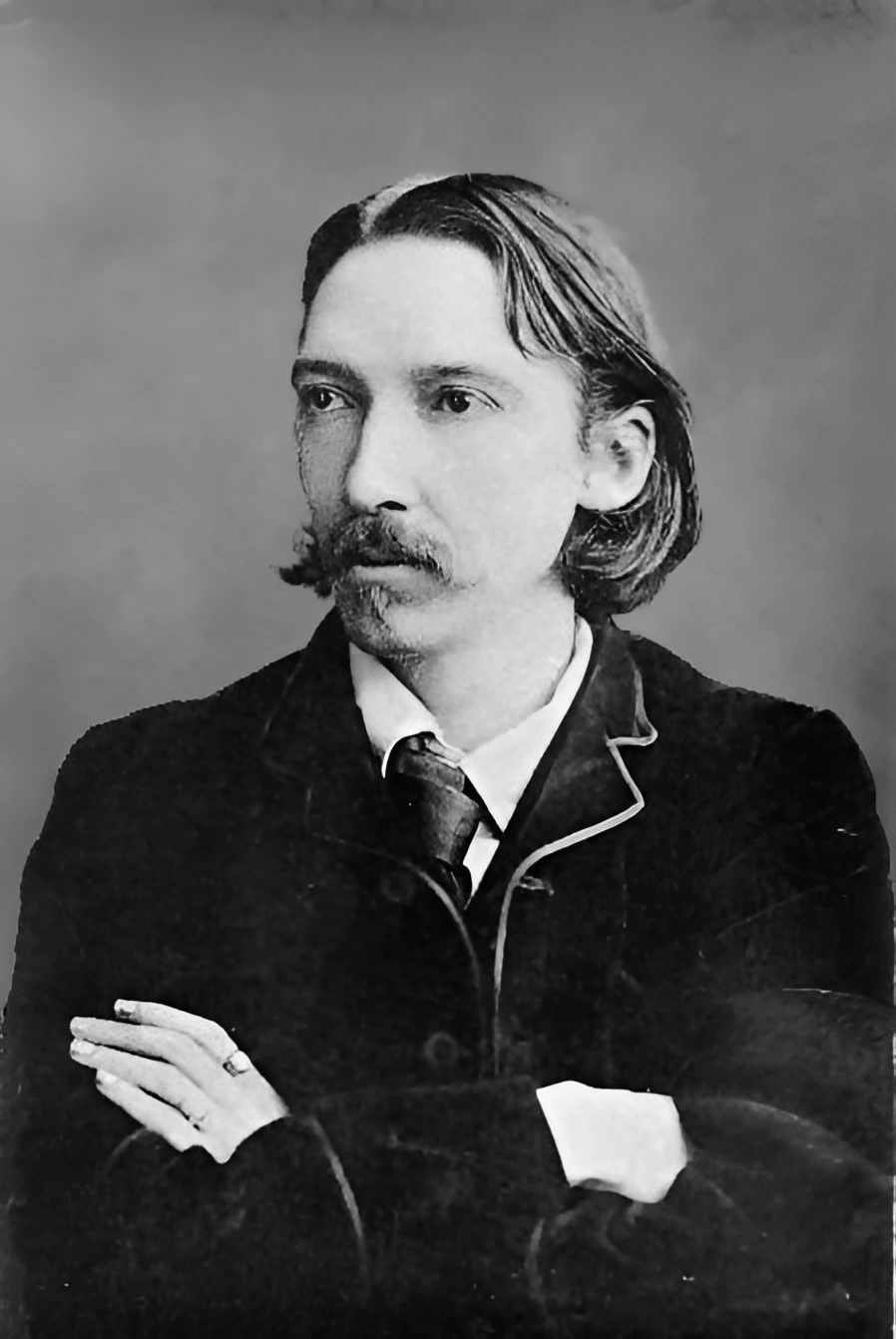
| 84 Quotes | |
| Occup. | Writer |
| From | Scotland |
| Born | November 13, 1850 |
| Died | December 3, 1894 |
| Aged | 44 years |
| Cite | |
Citation Formats
APA Style (7th ed.)
Robert louis stevenson biography, facts and quotes. (2026, February 11). FixQuotes. https://fixquotes.com/authors/robert-louis-stevenson/
Chicago Style
"Robert Louis Stevenson biography, facts and quotes." FixQuotes. February 11, 2026. https://fixquotes.com/authors/robert-louis-stevenson/.
MLA Style (9th ed.)
"Robert Louis Stevenson biography, facts and quotes." FixQuotes, 11 Feb. 2026, https://fixquotes.com/authors/robert-louis-stevenson/. Accessed 12 Feb. 2026.
Early Life and Background
Robert Louis Stevenson was born on 1850-11-13 in Edinburgh, Scotland, into a respected middle-class family whose identity was welded to engineering, Presbyterian conscience, and the hard weather of the Firth of Forth. His father, Thomas Stevenson, and his grandfather were famed lighthouse engineers; the family expected the delicate boy to inherit that practical vocation. Instead, he grew up in a city of sharp divisions - Old Town closes and New Town respectability - absorbing the doubleness that later became literary method as much as subject.Chronic illness shaped his inner life early. Long periods in bed made him a fierce reader and a maker of stories, rehearsed to nurses and parents with a performer's instinct. The conflict between the family's moral seriousness and his own appetite for sensation - theater, taverns, bohemian friendships - began as a domestic drama. It also gave him a lifelong knowledge of vulnerability: how a body can become a border, and how imagination can become a form of travel before one ever leaves home.
Education and Formative Influences
Stevenson studied at the University of Edinburgh, first drifting through engineering to satisfy his father, then turning to law and being called to the Scottish bar in 1875, though he never practiced. Edinburgh offered him both rigorous skepticism and a haunted past; he read widely, from Bunyan to the French realists, and sought out the city's writers and talkers. Long walking tours and an attraction to France drew him toward a cosmopolitan identity, while his private rebellion against inherited faith matured into a more humane, secular ethics - one that kept the cadence of prayer even when it abandoned dogma.Career, Major Works, and Turning Points
In the late 1870s he fashioned himself as an essayist and travel writer, publishing "An Inland Voyage" (1878) and "Travels with a Donkey in the Cevennes" (1879), works that turned motion into introspection. A decisive turning point came with his love for the American Fanny Van de Grift Osbourne; he followed her to California in 1879-1880, nearly dying en route, then married her in 1880. Settled for periods in Scotland and England, he produced the adventure classic "Treasure Island" (1883), the historical romance "Kidnapped" (1886), and the psychologically charged "Strange Case of Dr Jekyll and Mr Hyde" (1886), as well as "A Child's Garden of Verses" (1885). Seeking health and a survivable climate, he traveled through the United States and the Pacific, finally making a home at Vailima in Samoa (from 1890), where he wrote "The Master of Ballantrae" (1889) and worked on "Weir of Hermiston" (unfinished). He died suddenly on 1894-12-03 at Vailima, mourned locally as "Tusitala" - teller of tales.Philosophy, Style, and Themes
Stevenson's style marries narrative velocity to moral ambiguity: clean sentences, vivid surfaces, and a constant pressure of conscience underneath. He distrusted solemnity that forgets joy, insisting that ethical life includes the cultivation of spirit as well as restraint. "There is no duty we so much underrate as the duty of being happy. By being happy we sow anonymous benefits upon the world". That is not naive cheerfulness in his work but a hard-won discipline, the stance of someone who knew pain intimately and still refused to let suffering be his only authority.His fiction returns obsessively to divided selves, bargains, and the aftertaste of choice. Jekyll's experiment turns into a parable of appetite and repression, while "Kidnapped" and "The Master of Ballantrae" anatomize loyalty, rivalry, and the violence inside family myths. The era around him - late-Victorian capitalism, empire, and professional respectability - becomes a theater where desire must dress itself as duty, and where every freedom seems to have a cost. "Everybody, soon or late, sits down to a banquet of consequences". Yet he also wrote against pure cynicism, holding friendship and mutual care as practical salvation: "No man is useless while he has a friend". In Stevenson, companionship is not decoration - it is a moral technology that keeps characters from dissolving into their worst impulses.
Legacy and Influence
Stevenson endures as a rare writer who is canonical and popular for the same reason: he understood suspense as a way to think. Adventure stories after him - from boys' books to modern genre fiction - inherit his pacing and his appetite for moral stakes, while psychological horror repeatedly circles back to the structure he perfected in "Jekyll and Hyde". In Scotland, he became both a prodigal and a native genius, his Edinburgh still read as a map of doubled identities; in the Pacific, his last years left a reputation for political sympathy and personal generosity that complicated the stereotype of the imperial traveler. Across essays, poems, and novels, he bequeathed a model of courage without swagger: a writer who turned illness into attentiveness, wandering into method, and storytelling into a serious instrument for examining the self.Our collection contains 84 quotes written by Robert, under the main topics: Witty One-Liners - Motivational - Ethics & Morality - Wisdom - Truth.
Other people related to Robert: William Ernest Henley (Poet), Hugo Pratt (Cartoonist), Joshua Slocum (Explorer), Mervyn Peake (Writer), Joshua A. Norton (Celebrity), Andrew Lang (Poet)
Robert Louis Stevenson Famous Works
- 1889 The Master of Ballantrae (Novel)
- 1888 The Black Arrow (Novel)
- 1886 Kidnapped (Novel)
- 1886 Strange Case of Dr. Jekyll and Mr. Hyde (Novella)
- 1883 Treasure Island (Novel)
Source / external links