
Robert Mapplethorpe Biography Quotes 35 Report mistakes
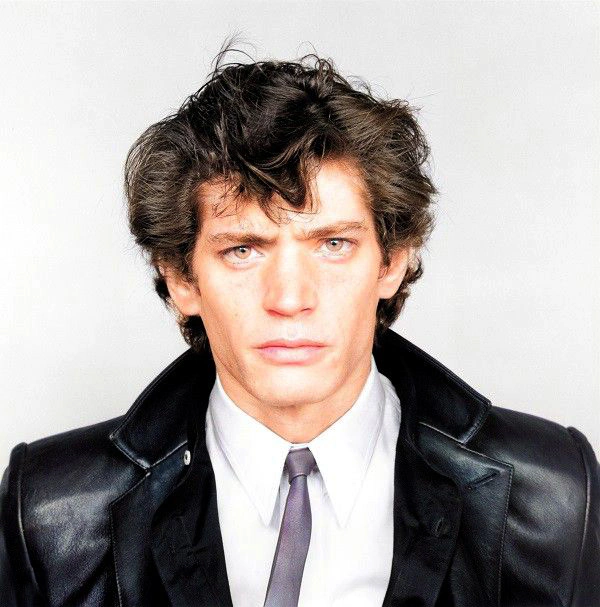
| 35 Quotes | |
| Born as | Robert Michael Mapplethorpe |
| Occup. | Photographer |
| From | USA |
| Born | November 4, 1946 Queens, New York City, USA |
| Died | March 9, 1989 Boston, Massachusetts, USA |
| Aged | 42 years |
| Cite | |
Citation Formats
APA Style (7th ed.)
Robert mapplethorpe biography, facts and quotes. (2026, February 21). FixQuotes. https://fixquotes.com/authors/robert-mapplethorpe/
Chicago Style
"Robert Mapplethorpe biography, facts and quotes." FixQuotes. February 21, 2026. https://fixquotes.com/authors/robert-mapplethorpe/.
MLA Style (9th ed.)
"Robert Mapplethorpe biography, facts and quotes." FixQuotes, 21 Feb. 2026, https://fixquotes.com/authors/robert-mapplethorpe/. Accessed 30 Mar. 2026.
Early Life and Background
Robert Michael Mapplethorpe was born on November 4, 1946, in Floral Park, Queens, New York, and raised in a large Irish Catholic family on Long Island. The postwar suburbs that shaped him prized conformity, and his early life was marked by the quiet pressure to fit a respectable template of masculinity, work, and faith. That tension - between the polished surface of American normalcy and the private intensity of desire - would later become one of the engines of his art.In the 1960s, as New York City thickened with counterculture, psychedelia, and sexual liberation, Mapplethorpe moved toward the citys gravitational pull. The conflict with family expectations never disappeared; he later distilled it into a blunt emotional fact: “My father wants me to be like my brother, but I can't be”. That sense of being fundamentally miscast in the role assigned to him sharpened his appetite for self-invention and for communities where transgression could be lived as a form of truth.
Education and Formative Influences
Mapplethorpe attended the Pratt Institute in Brooklyn (mid-1960s), initially studying drawing, painting, and graphic arts. Pratt placed him inside a ferment of conceptual art, collage, and the downtown New York scene, where the line between fine art and life was dissolving. In 1967 he met Patti Smith, and their relationship - romantic, creative, and later fraternal - became a crucial early shelter as they lived at the Chelsea Hotel and watched each other build artistic identities; Smiths later memoir Just Kids would memorialize this period as a crucible of hunger and ambition.Career, Major Works, and Turning Points
Mapplethorpe turned decisively to photography in the early 1970s, first using a Polaroid camera and then, after acquiring a Hasselblad, constructing the crisp studio aesthetic that became his signature: frontal composition, sculptural lighting, and an almost classical regard for the body. He made portraits of artists, musicians, and patrons (including Andy Warhol, Debbie Harry, and later self-portraits that tracked his metamorphoses), as well as flower still lifes whose elegance doubled as an argument for photography as high art. His work also documented and staged the sexual underground of New York - especially S and M subculture - culminating in the late-1970s and 1980s with images of explicit acts and with the celebrated Black Book (1986), a series of male nudes that simultaneously exalted and provoked. Patronage and influence mattered: his relationship with collector Sam Wagstaff accelerated museum access and market legitimacy. After Mapplethorpe was diagnosed with AIDS in the mid-1980s, he worked with heightened urgency, founded the Robert Mapplethorpe Foundation (1988), and prepared the ground for his work to outlive him; he died in Boston on March 9, 1989. The year after his death, the traveling exhibition The Perfect Moment triggered obscenity prosecutions and political backlash, making his name a flashpoint in the US culture wars over public funding for the arts.Philosophy, Style, and Themes
Mapplethorpes inner life was ruled by discipline as much as desire. His photographs argue that beauty is not the opposite of the forbidden but a method for seeing it clearly: bodies, flowers, and leather are treated with the same ceremonial attention, as if the studio were a chapel for erotic fact. The psychological drama lies in control - the need to turn volatility into form. He understood provocation not as chaos but as choreography, insisting, “One must ease the public into it - that's an art in itself”. Even his most explicit pictures are rarely casual; they are staged with the cool exactness of still life, forcing viewers to confront how quickly they moralize what they cannot domesticate.His portraits also expose a social intelligence that contradicts the stereotype of the voyeur. “If I am at a party, I want to be at the party. Too many photographers use the camera to avoid participating in things. They become professional observers”. This is a key to his method: he photographed from inside scenes - the downtown art world, gay sexual subcultures, the patronage networks that funded his studio - and then refined that proximity into an iconography of poise. His candor about motivation could be abrasive but clarifying: “I am selfish, but that's an attribute that all artists possess”. In Mapplethorpe, selfishness meant fidelity to a private standard of beauty and risk, even when it collided with family, politics, or the fragile etiquette of public culture.
Legacy and Influence
Mapplethorpes legacy is twofold: an aesthetic template and a cultural argument. Formally, his high-contrast precision and classical posing reshaped portraiture and fashion photography, influencing generations from gallery artists to magazine stylists who borrowed his lighting, symmetry, and confrontational calm. Historically, his work became a hinge moment in late-20th-century American debates about sexuality, censorship, and the National Endowment for the Arts, with The Perfect Moment serving as a test case for whether museums could present queer erotic art as art. The Robert Mapplethorpe Foundation continues to support photography and AIDS-related causes, extending the meaning of his career beyond scandal into stewardship - a reminder that his real provocation was not shock, but the demand that beauty include what society prefers not to see.Our collection contains 35 quotes written by Robert, under the main topics: Truth - Art - Love - Deep - Life.
Robert Mapplethorpe Famous Works
- 1992 Mapplethorpe (Book)
- 1988 Robert Mapplethorpe (Book)
- 1986 The Black Book (Book)
- 1986 50 New York Artists (Book)
- 1985 Certain People: A Book of Portraits (Book)
Source / external links