
Robert Rauschenberg Biography Quotes 30 Report mistakes
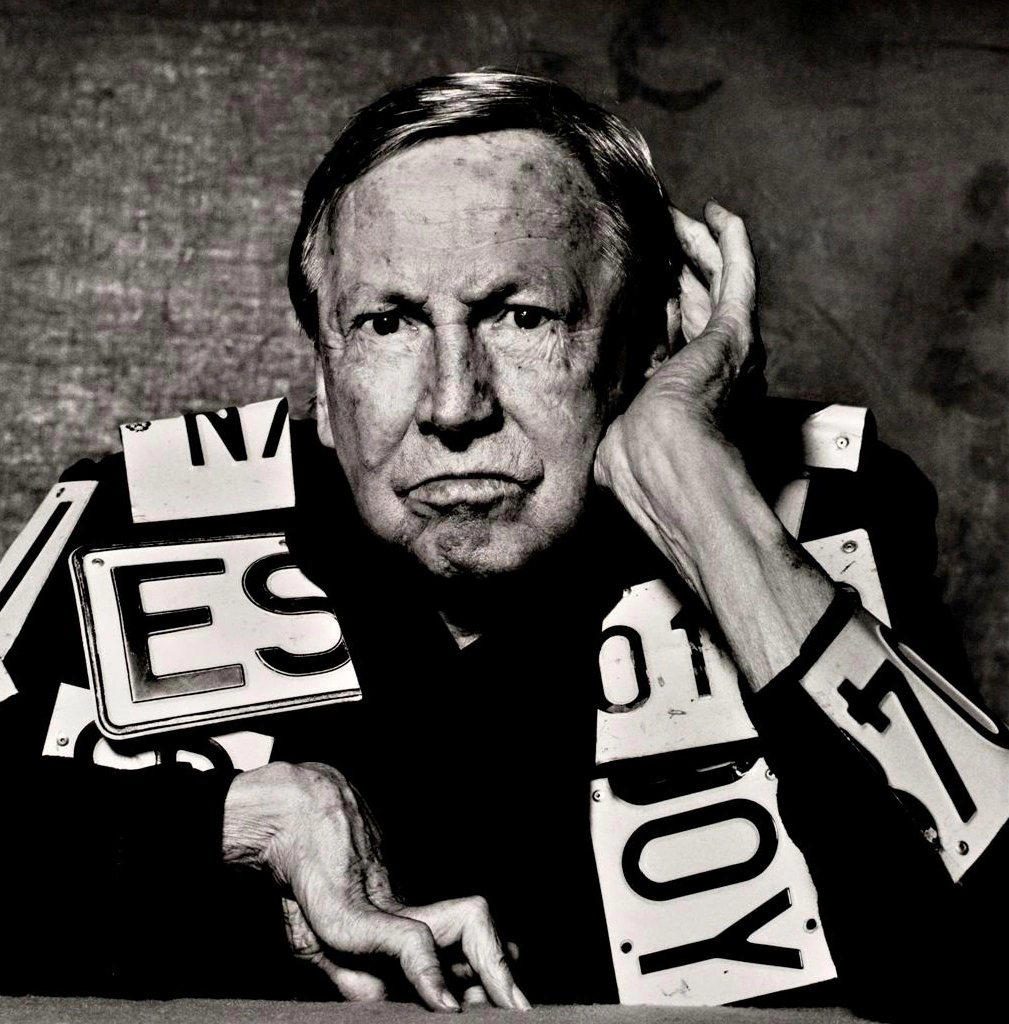
| 30 Quotes | |
| Born as | Milton Ernest Rauschenberg |
| Occup. | Artist |
| From | USA |
| Born | October 22, 1925 Port Arthur, Texas, U.S. |
| Died | May 12, 2008 Captiva, Florida, U.S. |
| Cause | Heart Failure |
| Aged | 82 years |
| Cite | |
Citation Formats
APA Style (7th ed.)
Robert rauschenberg biography, facts and quotes. (2026, February 11). FixQuotes. https://fixquotes.com/authors/robert-rauschenberg/
Chicago Style
"Robert Rauschenberg biography, facts and quotes." FixQuotes. February 11, 2026. https://fixquotes.com/authors/robert-rauschenberg/.
MLA Style (9th ed.)
"Robert Rauschenberg biography, facts and quotes." FixQuotes, 11 Feb. 2026, https://fixquotes.com/authors/robert-rauschenberg/. Accessed 25 Mar. 2026.
Early Life and Background
Robert Rauschenberg was born Milton Ernest Rauschenberg on October 22, 1925, in Port Arthur, Texas, a refinery town on the Gulf Coast where industry, evangelical restraint, and working-class improvisation shaped daily life. His father, Ernest, worked as a lineman and later for the Gulf oil economy; his mother, Dora, was a devout Christian. The future artist grew up amid heat, grit, and the visual noise of signage, scrap, and shipping - a vernacular environment that would later reappear, transformed, in his art.Shy, dyslexic, and intensely observant, he learned early to read the world through touch and accumulation rather than through smooth narratives. After graduating from high school, he entered the U.S. Navy in 1943 as a neuropsychiatric technician during World War II, an experience that exposed him to institutional systems and human fragility. The war did not so much politicize him as it widened his sense that reality is already collaged - bodies, machines, commodities, and images pressed together without permission.
Education and Formative Influences
After the war he briefly studied pharmacy at the University of Texas at Austin, then turned decisively toward art, studying at the Kansas City Art Institute and the Academie Julian in Paris. His real formation came at Black Mountain College in North Carolina (late 1940s-early 1950s), where he encountered Josef Albers discipline, John Cage's aesthetics of attention, Merce Cunningham's radical choreography, and a community that treated art as a way of living. There he forged friendships and collaborations that would define his method - art made with others, in time, in the open air of experiment - even as he began to resist modernism's demand for purity.Career, Major Works, and Turning Points
In the early 1950s Rauschenberg settled in New York, moving through bohemian downtown networks and a marriage to Susan Weil that produced his son Christopher. Against Abstract Expressionism's heroic isolation, he made the "White Paintings" (1951), "Black Paintings", and "Red Paintings", then pushed into the "Combines" - hybrid works that fused painting with found objects and urban detritus. "Erased de Kooning Drawing" (1953) turned negation into authorship; "Bed" (1955) stapled private life onto the wall; "Monogram" (1955-59) tethered a taxidermied goat to a painted base; and "Canyon" (1959) braided paint, photographs, and an eagle into a defiant American relic. His 1964 Venice Biennale Grand Prize announced Pop's ascendancy while his own practice remained stubbornly unclassifiable. Later, he expanded into silkscreened photo-paintings, performance and stage work with Cunningham, and global projects such as ROCI (Rauschenberg Overseas Culture Interchange, 1984-91), before living and working for decades on Captiva Island, Florida. He died on May 12, 2008, after years of health complications.Philosophy, Style, and Themes
Rauschenberg's inner life was defined by a battle between control and permeability: the desire to make, and the desire to let the world make itself through him. His most consistent credo was material empathy - “You begin with the possibilities of the material”. That sentence is not a slogan but a psychological map: uncertainty becomes method, and method becomes a way to tolerate contingency. The Combine is a portrait of attention under pressure, where a pillow, a newspaper, a brushstroke, and a street sign are granted equal ontological weight.He also insisted on ethical proximity to the everyday: “I think a painting is more like the real world if it's made out the real world”. In practice, that meant refusing the pristine distance of the museum and admitting stain, noise, and accident as truth-bearing. Yet he distrusted tidy composition, guarding the work against his own impulse to over-explain: “I always have a good reason for taking something out but I never have one for putting something in. And I don't want to, because that means that the picture is being painted predigested”. The hunger here is for unprocessed experience - for images to arrive with their contradictions intact, forcing the viewer into the role of co-editor, witness, and accomplice.
Legacy and Influence
Rauschenberg helped reroute postwar art from the myth of the solitary genius toward a culture of sampling, collaboration, and porous media. He is a hinge figure between Abstract Expressionism and Pop, but also a precursor to installation, assemblage, appropriation, and the networked sensibility of contemporary image-making. His work normalized the idea that a painting can behave like a room, a stage, or a city block; that meaning can be built from circulation rather than confession; and that the artist's responsibility is not to purify experience but to keep it available. Institutions, artists, and audiences still live in the expanded field he opened - where the world is not depicted from afar, but allowed to stick.Our collection contains 30 quotes written by Robert, under the main topics: Ethics & Morality - Wisdom - Art - Music - Sarcastic.
Other people related to Robert: Jasper Johns (Artist), Willem de Kooning (Artist), David Tudor (Musician), Dan Flavin (Sculptor), Marcel Duchamp (Artist), Paul Taylor (Dancer)
Source / external links