
Robert Wilson Lynd Biography Quotes 6 Report mistakes
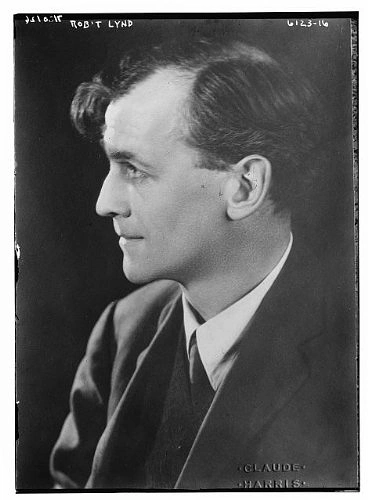
Attr: Amazon.com
| 6 Quotes | |
| Occup. | Writer |
| From | Ireland |
| Born | April 20, 1879 Belfast, Ireland |
| Died | October 6, 1949 London, England |
| Aged | 70 years |
| Cite | |
Citation Formats
APA Style (7th ed.)
Robert wilson lynd biography, facts and quotes. (2026, March 16). FixQuotes. https://fixquotes.com/authors/robert-wilson-lynd/
Chicago Style
"Robert Wilson Lynd biography, facts and quotes." FixQuotes. March 16, 2026. https://fixquotes.com/authors/robert-wilson-lynd/.
MLA Style (9th ed.)
"Robert Wilson Lynd biography, facts and quotes." FixQuotes, 16 Mar. 2026, https://fixquotes.com/authors/robert-wilson-lynd/. Accessed 23 Mar. 2026.
Early Life and Background
Robert Wilson Lynd was born on April 20, 1879, in Belfast, then a fast-growing industrial city inside a politically tense Ireland. He grew up in the late-Victorian North where shipyards, linen mills, and chapel culture sat alongside an emerging labor politics and the sharpening debate over Home Rule. That atmosphere - brisk, argumentative, civic-minded - helped form the habits that later made him one of the best-read newspaper essayists in the English-speaking world: alert to public affairs, skeptical of slogans, and attentive to the moral weather of ordinary life.His family background was middle-class and Protestant, and he came of age in a province where identity was often defined by what one feared or opposed. Yet Lynds mature writing is notable for its refusal to live permanently in the posture of siege. Belfast gave him a lifelong sensitivity to the costs of sectarian certainty, and it also gave him his early love of the street-level detail that would later animate his essays - the small pleasures, social rituals, and private absurdities that reveal a nations character more honestly than its manifestos.
Education and Formative Influences
Lynd studied at Queen's College, Belfast (later Queen's University Belfast), where he absorbed the classical and literary training then expected of a serious man of letters while also encountering the newer currents of social criticism and the professionalizing world of journalism. He married the Irish writer and critic Helen (H.L.) Lynd, herself an acute observer of politics and culture, and the partnership sharpened his sense that criticism could be simultaneously humane and intellectually strict. The Edwardian period offered him models for the familiar essay - Hazlitt, Lamb, and the best of Victorian periodical prose - but also the pressure of a modern mass public, where a columnist had to speak weekly yet avoid becoming merely topical.Career, Major Works, and Turning Points
Leaving Belfast for London, Lynd established himself as a journalist and essayist, writing for major papers and magazines and becoming widely known for his column "Back Numbers" in the New Statesman, whose tone mixed wit, moral seriousness, and a quiet delight in daily life. He also published books of essays and literary criticism, including Rambles in Ireland (1912) and later collections such as The Blue Lion (1923), which extended his newspaper voice into a more durable form. The First World War and its aftermath marked a turning point: he wrote as a liberal conscience in an era of propaganda, political violence in Ireland, and social upheaval in Britain, insisting on clear language and ethical proportion when public speech became overheated. His reputation rested less on a single "masterwork" than on the cumulative authority of a mind returning, week after week, to the question of how to live decently in modernity.Philosophy, Style, and Themes
Lynds style is the cultivated conversational essay at peak efficiency - brisk openings, concrete scenes, and a closing turn that reveals a moral angle without preaching. He distrusted the intoxication of grand plans and the romance of catastrophe, and he used humor as a solvent against collective delusion. “The belief in the possibility of a short decisive war appears to be one of the most ancient and dangerous of human illusions”. In that sentence is his psychological signature: an impatience with wishful thinking, and a determination to puncture the stories people tell themselves to make cruelty feel temporary or necessary. He had lived through the age when empires promised quick victories and delivered mass graves, and his prose keeps returning to the human habit of confusing desire with prediction.At the same time, he understood how easily comfort edits memory. “It is almost impossible to remember how tragic a place the world is when one is playing golf”. The line is not merely comic; it exposes his fascination with the minds ability to partition reality, to step into pastime and forget the political and personal suffering beyond the hedge. Yet Lynd was no simple cynic about society. His essays often revolve around the deep curiosity of the moral observer, distinguishing the passing distraction from the patient attention that makes a person wiser: “There are two sorts of curiosity - the momentary and the permanent. The momentary is concerned with the odd appearance on the surface of things. The permanent is attracted by the amazing and consecutive life that flows on beneath the surface of things”. That distinction is also an ethic of writing - he aimed to treat public events and private habits as part of one continuous human story.
Legacy and Influence
Lynd died on October 6, 1949, after a career that made the newspaper essay a vehicle for sustained intelligence rather than disposable opinion. In an age that rewarded noise, he modeled a quieter authority: an Irish-born, London-based writer who could be political without becoming partisan and humorous without surrendering seriousness. His influence persists in the best modern columnists and essayists who treat the everyday as morally charged, who distrust rhetoric that promises purity or quick salvation, and who keep faith with the permanent curiosity that looks beneath the surface of things.Our collection contains 6 quotes written by Robert, under the main topics: Witty One-Liners - Sarcastic - Nature - Deep - Sports.
Source / external links