
Roberto Bolano Biography Quotes 4 Report mistakes
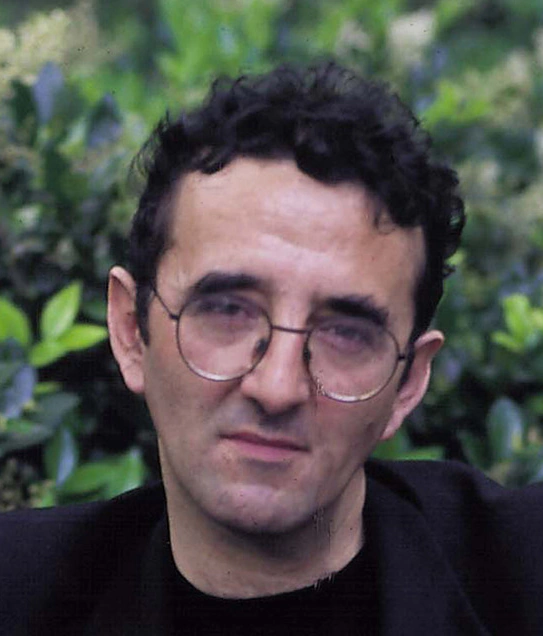
| 4 Quotes | |
| Born as | Roberto Bolaño Ávalos |
| Occup. | Novelist |
| From | Chile |
| Spouse | Carolina López |
| Born | April 28, 1953 Santiago, Chile |
| Died | July 15, 2003 Blanes, Spain |
| Cause | Liver failure |
| Aged | 50 years |
| Cite | |
Citation Formats
APA Style (7th ed.)
Roberto bolano biography, facts and quotes. (2026, February 11). FixQuotes. https://fixquotes.com/authors/roberto-bolano/
Chicago Style
"Roberto Bolano biography, facts and quotes." FixQuotes. February 11, 2026. https://fixquotes.com/authors/roberto-bolano/.
MLA Style (9th ed.)
"Roberto Bolano biography, facts and quotes." FixQuotes, 11 Feb. 2026, https://fixquotes.com/authors/roberto-bolano/. Accessed 6 Mar. 2026.
Early Life and Background
Roberto Bolano Avalos was born on 1953-04-28 in Santiago, Chile, and grew up between provincial Chile and Mexico in a household shaped more by restlessness than by stability. His father drove a truck and boxed; his mother worked as a teacher. The family moved often, and Bolano later recast that itinerancy as a moral education: a child learning to read cities and social codes quickly, and to distrust the official stories nations tell about themselves.In the 1960s the Bolanos settled in Mexico City, a metropolis whose bookstores, street politics, and youth countercultures offered him a second homeland. Chile remained an obsession at a distance - the country of origin and of impending catastrophe - while Mexico became the laboratory of his sensibility: bohemian, suspicious of authority, and hungry for literary comradeship. From early on he cultivated the stance that would mark his fiction: the writer as witness and fugitive, attached to the real but allergic to pieties.
Education and Formative Influences
Bolano left formal schooling early, describing himself as a voracious, mostly self-taught reader; his education came through libraries, cheap editions, and the oral curriculum of cafes. He absorbed Latin American modernism and the European avant-gardes (surrealism, the Beats, Borges), but also crime novels and science fiction, training his imagination to move between high literary ambition and pulp velocity. The 1968 massacre at Tlatelolco and Mexico's student movements formed a political backdrop, while poetry - not the novel - was his first vocation and his first community.Career, Major Works, and Turning Points
In 1973 Bolano returned to Chile as Salvador Allende's government fell and Augusto Pinochet's dictatorship began; he later said he was detained briefly, an experience that hardened his suspicion of state violence and the fragility of biography under terror. Back in Mexico he co-founded the Infrarealist movement (mid-1970s), an anti-establishment poetic insurgency dramatized decades later in The Savage Detectives (1998). In 1977 he moved to Spain, drifting through Catalonia and then settling in Blanes, supporting himself with odd jobs while writing at night, and gradually pivoting from poetry to prose as financial pressures and a widening narrative ambition converged. Recognition came with Nazi Literature in the Americas (1996) and Distant Star (1996), followed by the breakthrough of The Savage Detectives, a polyphonic road novel of friendship, obsession, and literary mythmaking. In his final years, increasingly ill from liver disease, he wrote with urgency: By Night in Chile (2000), Amulet (1999), and the vast, posthumously published 2666 (2004), a work that fused noir, war memory, and the feminicide horrors of the border city he fictionalized as Santa Teresa.Philosophy, Style, and Themes
Bolano's inner life - anxious, combative, tender toward the defeated - appears in his conviction that literature is not a salon activity but a form of exposure. He treated writers as people who stake their lives on sentences, yet he mistrusted any pose of mastery. “The secret story is the one we'll never know, although we're living it from day to day, thinking we're alive, thinking we've got it all under control and the stuff we overlook doesn't matter”. This is not merely plot theory; it is psychology. His narrators circle around missing persons, lost poems, vanished women, and unrecoverable facts because he believed the self is built from blind spots - and that history, especially under dictatorship and migration, is mostly what escapes the archive.His style pairs speed with moral afterburn: plainspoken surfaces, sudden lyric heat, and a documentary appetite for lists, testimonies, and rumors. The signature Bolano mood is camaraderie under threat - young poets joking as the world darkens - and the recurring claim that art cannot be insulated from consequence. “But every single damn thing matters! Only we don't realize. We just tell ourselves that art runs on one track and life, our lives, on another, and we don't realize that's a lie”. That insistence powers his major themes: the complicity of intellectuals (By Night in Chile), the seductions of fascist aesthetics (Distant Star), the afterlife of 1960s idealism (The Savage Detectives), and the convergence of global culture with localized atrocity (2666). Underneath is a bleak, almost comic awareness of censorship and self-censorship as conditions of modern life: “If I were to say what I really think I would be arrested or shut away in a lunatic asylum. Come on, I am sure that it would be the same for everyone”. - a sentence that captures his belief that truth-telling is both necessary and socially punished.
Legacy and Influence
Bolano died on 2003-07-15 in Barcelona at 50, leaving behind a body of work that reshaped Spanish-language fiction and, after the international success of translations, altered the global idea of what a late-20th-century novel could do. His influence runs through contemporary noir-inflected literary realism, the revival of the maximalist novel, and a renewed seriousness about writing after political trauma without turning it into monument or sermon. He made the figure of the drifting writer - immigrant, precarious laborer, obsessive reader - into a modern archetype, and he gave subsequent generations a model of ethical narration: to follow mystery to the edge of what can be known, and to refuse consolations when the record of violence is still unfinished.Our collection contains 4 quotes written by Roberto, under the main topics: Mortality - Freedom - Meaning of Life.
Roberto Bolano Famous Works
- 2004 2666 (Novel)
- 2000 By Night in Chile (Novel)
- 1999 Amulet (Novel)
- 1998 The Savage Detectives (Novel)
- 1996 Nazi Literature in the Americas (Novel)
- 1996 Distant Star (Novel)
- 1993 The Skating Rink (Novel)
Source / external links