
Roberto Bolano Biography Quotes 4 Report mistakes
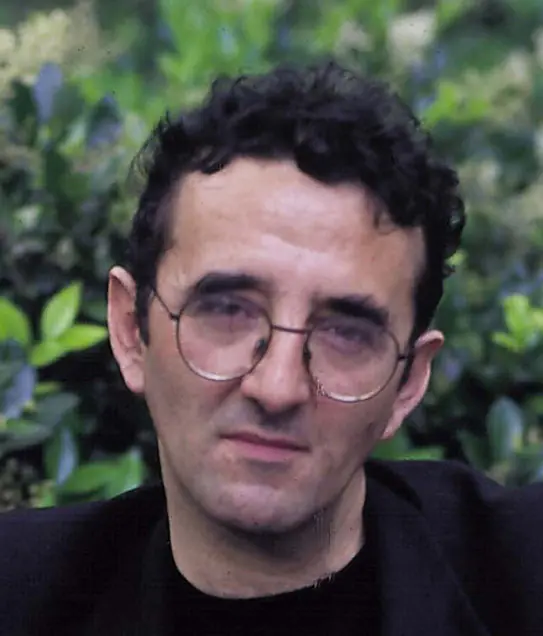
| 4 Quotes | |
| Born as | Roberto Bolaño Ávalos |
| Occup. | Novelist |
| From | Chile |
| Spouse | Carolina López |
| Born | April 28, 1953 Santiago, Chile |
| Died | July 15, 2003 Blanes, Spain |
| Cause | Liver failure |
| Aged | 50 years |
Roberto Bolano Avalos was born in 1953 in Santiago, Chile, and grew up in a family that moved frequently. His father worked as a truck driver and amateur boxer, and his mother taught in schools. From a young age he read voraciously and imagined himself first as a poet. In the late 1960s his family relocated to Mexico, and Mexico City became the crucible of his formative years. The vast libraries, newspaper kiosks, and cafes of the capital, together with the political turbulence of the era, shaped the sensibility he would later distill into fiction.
Mexico City and Infrarealism
In Mexico City, Bolano befriended a circle of young poets who embraced a fierce, anti-establishment aesthetic. With Mario Santiago Papasquiaro, Bruno Montane, and Ruben Medina, among others, he helped found the Infrarealist movement in the mid-1970s. Their manifestos called for a poetry alive to street life, risk, and freedom, and their tactics included interrupting readings and challenging the cultural prestige of established figures such as Octavio Paz. The movement was small, precarious, and chaotic, but it gave Bolano enduring friends, a sense of literary mission, and the model for the bohemian, migratory poets who populate his major novels. The figure of Arturo Belano, his recurring alter ego, and the wanderer Ulises Lima were both rooted in this period and in his friendship with Mario Santiago.
Return to Chile and the Shadow of Politics
In 1973, after the coup that toppled Salvador Allende and brought Augusto Pinochet to power, Bolano returned to Chile, intending to support the left. He later recounted that he was briefly detained, then released thanks to the intervention of former schoolmates. Some details of this episode have been questioned by biographers and critics, but all agree that the violence of the era left a deep impression on him. Whether through direct experience or collective memory, the trauma of repression and the complicity of cultural elites under dictatorship became a central moral question in his writing.
Europe, Apprenticeship, and Survival
By the late 1970s Bolano had left Latin America for Europe, eventually settling on the Catalan coast in Spain, in the town of Blanes after a time in Girona and Barcelona. He lived frugally, working odd jobs and writing at night. During these years he remained primarily a poet, and he formed an important friendship with the Catalan writer A. G. Porta. Together they published early short novels and cultivated a shared literary laboratory of form and voice. Though few readers noticed these books at the time, the apprenticeship forged his distinctive approach: a hybrid of essay, confession, and investigation, mixing invention with historical shards.
Marriage and Fatherhood
In Spain Bolano married Carolina Lopez, and they had two children, Lautaro and Alexandra. The responsibilities of family life sharpened his resolve to reach a wider readership. While he never abandoned poetry, he increasingly turned to narrative fiction in order to make a living. The pressure of time and money, together with a mounting awareness of his fragile health, intensified his productivity through the 1990s.
Breakthrough as a Novelist
Bolano found an indispensable advocate in Jorge Herralde, publisher at Anagrama in Barcelona. With Herralde's support he released a rapid succession of books that defined his mature voice. Nazi Literature in the Americas (1996) presented a fictional encyclopedia of reactionary writers, combining satire with an unsettling study of literature's seductions. Distant Star (1996) reworked one entry from that encyclopedia into a concise, haunting tale of art under terror. Amulet (1999) and By Night in Chile (2000) probed, from intimate and compromised viewpoints, the moral ambiguities of writers confronting violence.
His major breakthrough, The Savage Detectives (1998), won the Premio Herralde and later the Romulo Gallegos Prize. It chronicles three decades in the lives of two drifter poets, Arturo Belano and Ulises Lima, pursued across continents by a chorus of witnesses. The book blends the detective plot with a picaresque of literary bohemia, and it made Bolano a central figure in Spanish-language literature. He followed it with story collections such as Llamadas telefonicas and Putas asesinas (translated as Last Evenings on Earth, among other selections), which extended his motifs of exile, friendship, and artistic obsession.
Illness and the Drive to Finish
By the late 1990s Bolano suffered from serious liver disease. He was placed on a transplant list and wrote with extraordinary urgency, often describing literature as a last territory of freedom and solidarity. During these years he composed 2666, an enormous novel conceived in five interlocking parts. He considered publishing the parts separately to secure long-term financial support for his children, a plan discussed with friends and advisers including the critic Ignacio Echevarria. After his death, his publisher issued the book as a single volume, establishing it as a posthumous landmark.
Death
Bolano died in 2003 in Catalonia while awaiting a liver transplant. He was 50. His death ended a decade of astonishing creativity but also initiated a complex afterlife for his manuscripts and notebooks. Carolina Lopez and the family oversaw his literary estate, and editors associated with Anagrama and others prepared unpublished work for readers, including essays (Entre parentesis), poetry (The Romantic Dogs and The Unknown University), and fiction written or reworked earlier in his life.
Style, Themes, and Method
Bolano's writing is marked by restless structures, polyphonic testimony, and a fascination with the borderlands between life and literature. He drew deeply on the examples of Jorge Luis Borges and Julio Cortazar, on the desacralizing humor of Nicanor Parra, and on the dark freedoms of the European avant-garde. His narrators often assume the role of chroniclers or detectives, piecing together the traces of disappeared friends, lost poets, and crimes that seep from the margins into the center of the story. The violence of the 20th century, especially in Latin America, is never distant; yet his books insist that literature entails both courage and risk, and that the pursuit of beauty may coexist with moral danger. The persona of Arturo Belano allowed him to fold autobiography into fiction without confessional closure, transforming lived experience into an open archive for further search.
Collaborators, Peers, and Publishers
Beyond Mario Santiago and A. G. Porta, significant figures included the editor Jorge Herralde, who not only published but curated the sequence through which Bolano reached his public. In Spain and Latin America he conversed with contemporaries such as Enrique Vila-Matas and Javier Cercas; he praised some of their work in essays, and they in turn reflected on his. After his death the translators Chris Andrews and Natasha Wimmer were crucial in bringing his books to English-language readers, shaping his international reception. The critic Ignacio Echevarria became an important interpreter of his oeuvre and advised on editorial matters related to manuscripts, even as debates emerged about how to present unfinished texts. These networks of friends, editors, and translators reveal Bolano's career as a collaborative passage through institutions and friendships rather than a solitary myth.
Legacy
Bolano's influence has been profound among writers in the Americas and Europe. He expanded the possibilities of the novel of ideas without sacrificing storytelling, and he recast the image of the Latin American writer after the Boom generation. Younger authors in Chile, Mexico, Argentina, and Spain have engaged with his itinerant protagonists, his documentary impulse, and his ethical insistence that literature's freedom must confront history's terror. 2666, with its panoramic catalog of evil and its stubborn attention to the lives of the forgotten, and The Savage Detectives, with its celebration of friendship and quest, stand as twin pillars of his achievement. The continued circulation of his poetry and essays reminds readers that, to the end, he considered himself a poet first, a novelist by necessity, and a lifelong participant in a community of writers whose stories he refused to let disappear.
Our collection contains 4 quotes who is written by Roberto, under the main topics: Meaning of Life - Freedom - Mortality.
Other people realated to Roberto: Jorge Luis Borges (Poet)
Roberto Bolano Famous Works
- 2004 2666 (Novel)
- 2000 By Night in Chile (Novel)
- 1999 Amulet (Novel)
- 1998 The Savage Detectives (Novel)
- 1996 Nazi Literature in the Americas (Novel)
- 1996 Distant Star (Novel)
- 1993 The Skating Rink (Novel)
Source / external links