
Roberto Clemente Biography Quotes 8 Report mistakes
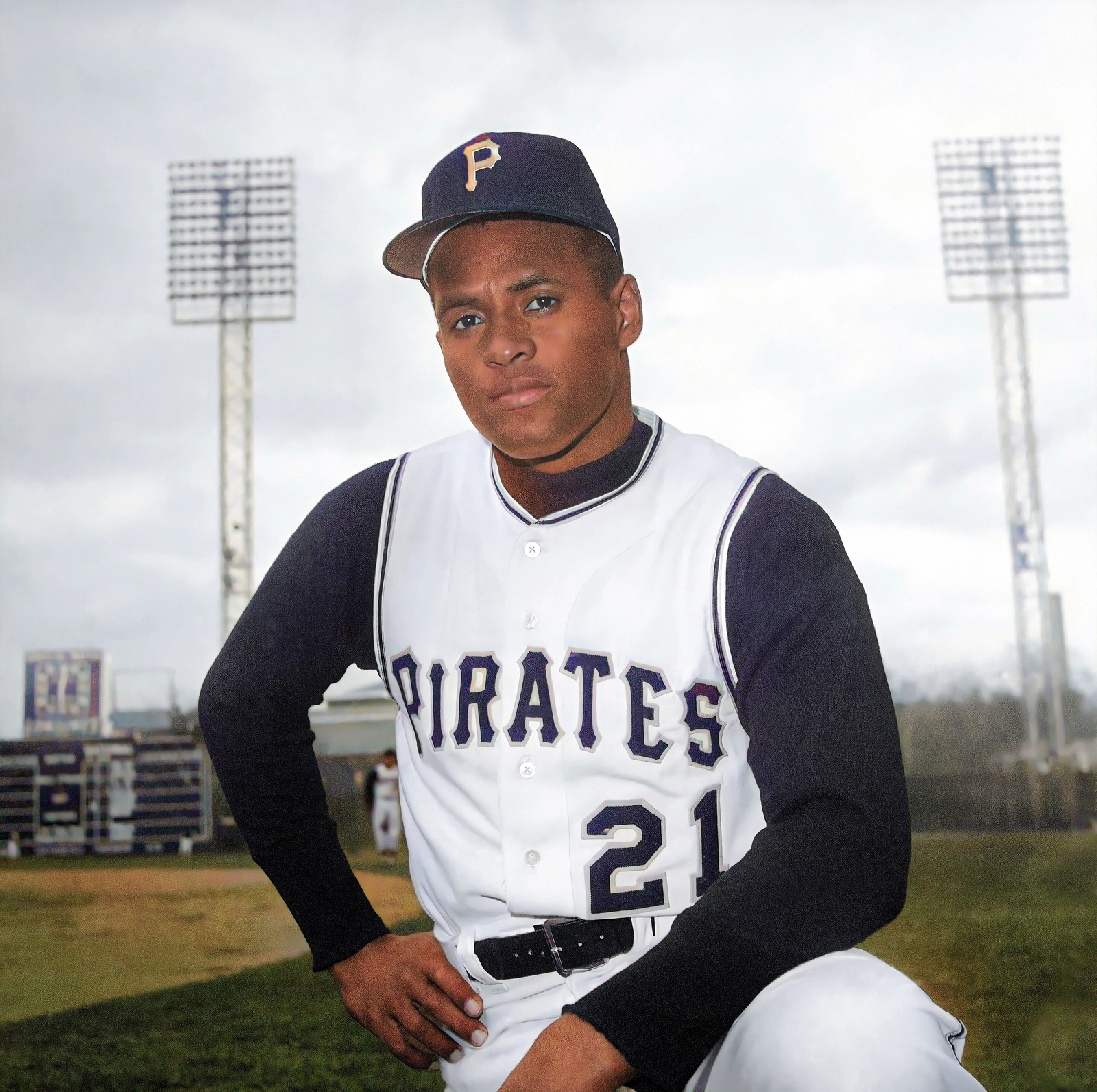
| 8 Quotes | |
| Born as | Roberto Clemente Walker |
| Occup. | Athlete |
| From | Puerto Rico |
| Spouse | Verónica Zabala |
| Born | August 18, 1934 Carolina, Puerto Rico |
| Died | December 31, 1972 San Juan, Puerto Rico |
| Cause | Plane Crash |
| Aged | 38 years |
| Cite | |
Citation Formats
APA Style (7th ed.)
Roberto clemente biography, facts and quotes. (2026, February 17). FixQuotes. https://fixquotes.com/authors/roberto-clemente/
Chicago Style
"Roberto Clemente biography, facts and quotes." FixQuotes. February 17, 2026. https://fixquotes.com/authors/roberto-clemente/.
MLA Style (9th ed.)
"Roberto Clemente biography, facts and quotes." FixQuotes, 17 Feb. 2026, https://fixquotes.com/authors/roberto-clemente/. Accessed 28 Mar. 2026.
Early Life and Background
Roberto Clemente Walker was born on August 18, 1934, in Barrio San Anton, Carolina, Puerto Rico, a coastal town where sugar and shipping shaped daily life and where baseball functioned as both pastime and ladder. He grew up in a working-class household with a strong sense of duty: his father, Don Melchor Clemente, worked as a foreman in the sugar-cane fields, and his mother, Luisa Walker, held the family together with disciplined warmth. In a society marked by colonial tension and economic migration, Clemente learned early that dignity was not granted automatically - it was carried, defended, and proven.Athletically gifted from childhood, he excelled across sports, but baseball quickly became the language through which he expressed pride and ambition. Friends and coaches remembered his arm strength and speed before they remembered his statistics, and they remembered his seriousness - a young man who played as if every inning mattered, and who noticed slights that others ignored. Puerto Rico in the 1940s and early 1950s offered limited avenues to global recognition; Clemente treated baseball as the rare craft that could lift both an individual and a whole island into view.
Education and Formative Influences
Clemente attended local schools in Carolina and matured within Puerto Rico's robust baseball culture, including the island's winter league, where stars and prospects mixed with veteran professionals and where style was measured as much by courage as by results. He signed his first professional contract as a teenager with Santurce (Cangrejeros de Santurce), and the experience hardened his understanding of professionalism: the game was beautiful, but it was also business, politics, and reputation. As he moved between Puerto Rico and the U.S. minor leagues, language barriers and stereotypes sharpened his sense of identity, turning him into a man who would not merely assimilate, but insist on respect.Career, Major Works, and Turning Points
Signed originally by the Brooklyn Dodgers organization, Clemente was selected by the Pittsburgh Pirates in the Rule 5 draft and debuted in 1955, beginning an 18-season career that fused artistry with relentless effort. He became the signature right fielder of his era: 3, 000 hits (achieved in 1972), 12 Gold Gloves, four National League batting titles, an NL MVP (1966), and a World Series MVP (1971), with championships in 1960 and 1971. His throwing arm became a myth with receipts - runners learned not to test it - while his aggressive baserunning and line-drive precision made him a complete player rather than a one-tool attraction. Turning points were often cultural as much as athletic: confronting racism on the road, resisting caricature in the press, and demanding correct pronunciation of his name. The final turning point came off the field: on December 31, 1972, he died in a plane crash near San Juan while attempting to deliver emergency aid to earthquake-stricken Nicaragua, an end consistent with the life he was already choosing.Philosophy, Style, and Themes
Clemente's inner life was powered by equal parts faith, pride, and a restless sensitivity to injustice. He understood that greatness in America required negotiating outsider status; he voiced it plainly: “To the people here, we are outsiders, foreigners”. That awareness did not make him smaller - it made him vigilant. When reporters reduced him to broken-English comedy or exotic background, he fought back, because for him public respect was not vanity; it was proof that a Puerto Rican ballplayer could stand in the center of the story without apology.On the field, his style was pragmatic, disciplined, and intensely physical: hard turns, fearless dives, throws made without flourish yet impossible to ignore. He framed baseball as vocation rather than mere employment, linking his talent to providence and responsibility: “I am convinced that God wanted me to be a baseball player”. At the same time, his competitive ethos was never abstract - it was effort made visible, the daily refusal to coast. The line he wanted to leave behind was not about celebrity but about exertion and moral accounting: “I want to be remembered as a ballplayer who gave all I had to give”. The psychology beneath these statements is revealing: faith gave him purpose, marginalization gave him edge, and a severe personal standard turned baseball into a kind of witness stand where character had to be proven again and again.
Legacy and Influence
Clemente became a permanent symbol of excellence with conscience, the rare athlete whose humanitarian death did not eclipse his work but clarified it. He was inducted into the National Baseball Hall of Fame in 1973 via a special election, and MLB later established the Roberto Clemente Award to honor players who combine performance with service. In Puerto Rico and across Latin America, his career helped reframe what a "foreign" player could be: not a curiosity, but a leader, champion, and cultural equal. His legacy endures in right-field highlight reels, in the standard he set for two-way play and defensive pride, and in the moral insistence that talent is incomplete unless it is used for others.Our collection contains 8 quotes written by Roberto, under the main topics: Sports - Equality - Human Rights - God - Legacy & Remembrance.
Source / external links