
Roland Barthes Biography Quotes 20 Report mistakes
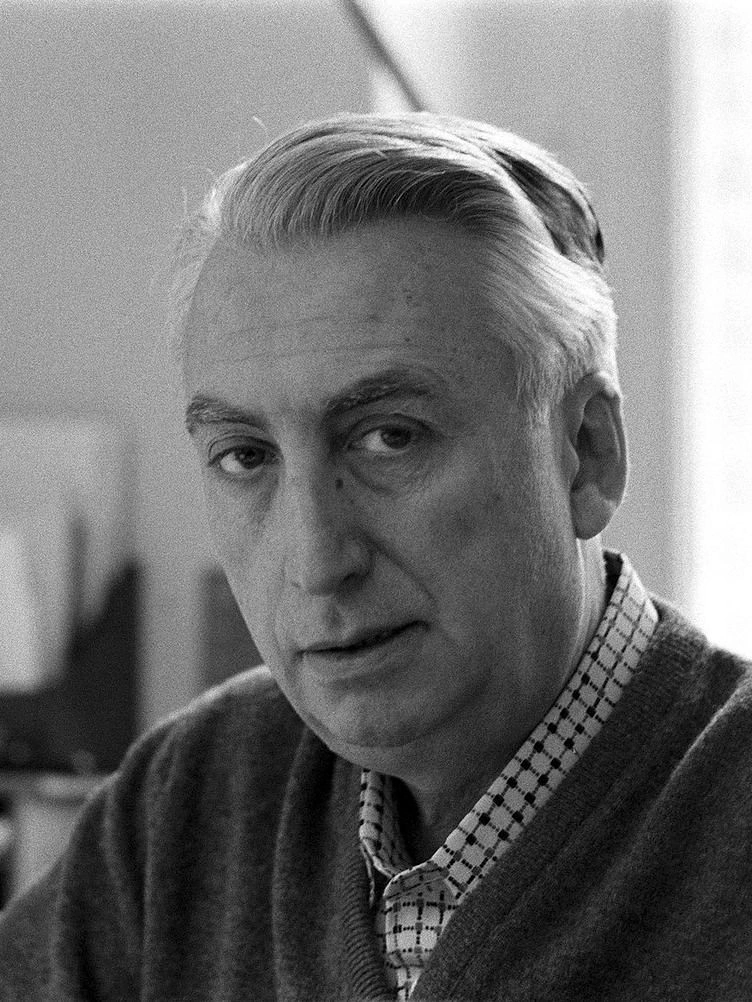
Attr: LensCulture
| 20 Quotes | |
| Born as | Roland Gerard Barthes |
| Occup. | Critic |
| From | France |
| Born | November 12, 1915 Cherbourg, France |
| Died | March 25, 1980 Paris, France |
| Cause | Struck by a laundry van |
| Aged | 64 years |
| Cite | |
Citation Formats
APA Style (7th ed.)
Roland barthes biography, facts and quotes. (2026, February 11). FixQuotes. https://fixquotes.com/authors/roland-barthes/
Chicago Style
"Roland Barthes biography, facts and quotes." FixQuotes. February 11, 2026. https://fixquotes.com/authors/roland-barthes/.
MLA Style (9th ed.)
"Roland Barthes biography, facts and quotes." FixQuotes, 11 Feb. 2026, https://fixquotes.com/authors/roland-barthes/. Accessed 5 Mar. 2026.
Early Life and Background
Roland Gerard Barthes was born on 1915-11-12 in Cherbourg, Normandy, at the edge of a France still defined by the aftershocks of World War I and the fraying prestige of the Third Republic. His father, a naval officer, died in the war when Barthes was an infant, leaving an absence that quietly organized his imagination around loss, signs, and substitutions. Raised largely by his mother, Henriette, Barthes grew up in a household where attachment and language braided together; the maternal bond became both refuge and lifelong subject, later returning with unusual force in his late work on mourning.The family moved to Paris, and Barthes came of age amid the interwar tensions that sharpened questions of nation, ideology, and culture. Illness marked him early: recurrent tuberculosis and long periods of convalescence removed him from ordinary career tracks and from the heroic narratives of action that dominated mid-century French intellectual life. The forced slowness of sanatorium time trained him in a particular attentiveness - to reading as a bodily practice, to the social codes of everyday life, and to the fragile authority of institutions that decide who is "fit" to participate.
Education and Formative Influences
Barthes studied at the Sorbonne, focusing on classical literature and philology, and absorbed the rigor of close reading alongside a growing impatience with inherited pieties. Prevented by illness from taking the conventional path of the agregation, he assembled an education through detours: teaching posts, theatre work, and voracious engagement with contemporary thought, especially linguistics (Saussure) and later anthropology and semiology. The Occupation and Liberation formed the moral weather of his generation, and Barthes emerged skeptical of grand certainties - a sensibility that aligned him with postwar left intellectual culture while keeping him wary of doctrinal speech.Career, Major Works, and Turning Points
After the war Barthes taught abroad and in France, then joined research institutions that suited his independent temperament, including the CNRS. His early books announced a critic who treated culture as a system of signs: Writing Degree Zero (1953) mapped modern "writing" as an ethical and historical choice, while Mythologies (1957) dissected mass culture, from wrestling to advertisements, as the everyday rhetoric of bourgeois ideology. In the 1960s he became a central figure in French structuralism and its afterlives, championing semiology and clashing with more traditional critics in debates that crystallized around Sur Racine (1963) and the wider "new criticism" controversies. The 1970s brought a decisive turn from system to texture: S/Z (1970) offered a granular reading of Balzac that multiplied codes rather than enforcing a single meaning; The Pleasure of the Text (1973) foregrounded erotic reading and the body; and his late works, including Roland Barthes by Roland Barthes (1975) and Camera Lucida (1980), fused theory with autobiography. In 1977 he was elected to the College de France, and in 1980, after being struck by a vehicle in Paris, he died on 1980-03-25, leaving final projects unfinished and his intellectual persona newly vulnerable, newly human.Philosophy, Style, and Themes
Barthes built his criticism on a disciplined suspicion: that what feels "natural" is often manufactured, and that power hides in the ease of recognition. In Mythologies he treated popular signs as political operations, insisting that “Myth is neither a lie nor a confession: it is an inflexion”. The line is psychologically revealing: he was less interested in exposing villains than in tracking the subtle bends by which language converts history into common sense. His method was not denunciation alone but a kind of tonal diagnostics, attentive to the small rhetorical tilts that make ideology feel like air.Yet Barthes was never only a demystifier; he was also an anatomist of desire, and his prose increasingly staged criticism as an intimate encounter. “Language is a skin: I rub my language against the other... My language trembles with desire”. Here the critic confesses the sensuality of interpretation - reading as contact, theory as touch - and it explains his move from structural grids toward pleasures, puncta, fragments, and the grain of the voice. That tension between analytic severity and voluptuous attention shapes his most enduring stance: “Literature is the question minus the answer”. He returned, again and again, to forms that keep meaning in play, because he distrusted closures that soothe the reader into obedience; the open question protected both freedom and tenderness.
Legacy and Influence
Barthes helped remake criticism into a central art of the modern humanities: a practice that reads advertisements and photographs with the seriousness once reserved for epics, and reads canonical texts with a new awareness of codes, bodies, and institutions. His influence runs through semiotics, cultural studies, narrative theory, and the study of photography, while his late autobiographical turn gave later critics permission to write from situated experience without abandoning rigor. In an era that swung between political certitude and consumer repetition, Barthes modeled a third posture - lucid, playful, and scrupulously attentive to how signs shape life - and his work remains a toolkit for anyone trying to hear, beneath public speech, the private tremor of meaning.Our collection contains 20 quotes written by Roland, under the main topics: Ethics & Morality - Truth - Art - Justice - Sarcastic.
Other people related to Roland: Terry Eagleton (Critic), Philippe Sollers (Writer)