
Ronald Biggs Biography Quotes 13 Report mistakes
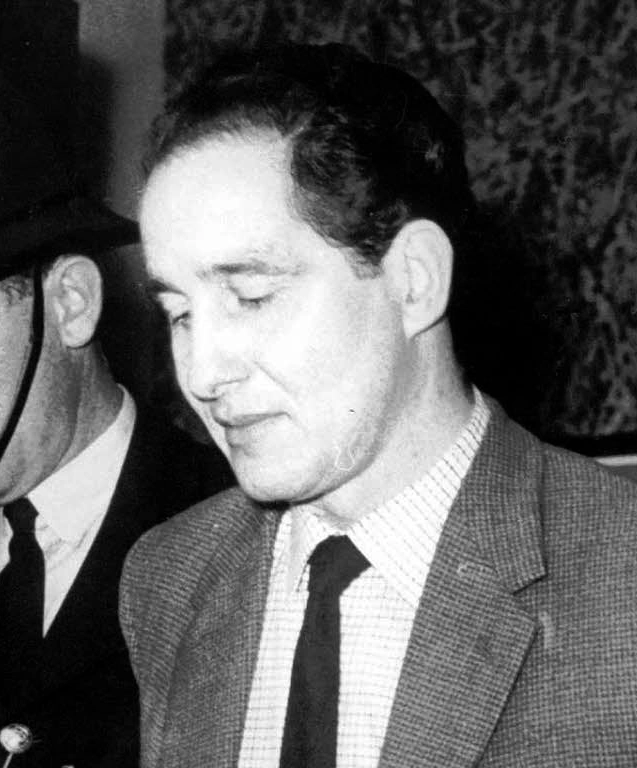
| 13 Quotes | |
| Occup. | Celebrity |
| From | United Kingdom |
| Born | August 8, 1929 |
| Age | 96 years |
| Cite | |
Citation Formats
APA Style (7th ed.)
Ronald biggs biography, facts and quotes. (2026, March 3). FixQuotes. https://fixquotes.com/authors/ronald-biggs/
Chicago Style
"Ronald Biggs biography, facts and quotes." FixQuotes. March 3, 2026. https://fixquotes.com/authors/ronald-biggs/.
MLA Style (9th ed.)
"Ronald Biggs biography, facts and quotes." FixQuotes, 3 Mar. 2026, https://fixquotes.com/authors/ronald-biggs/. Accessed 28 Mar. 2026.
Early Life and Background
Ronald Arthur Biggs was born on August 8, 1929, in London, England, into a working-class, interwar Britain that promised stability but delivered rationing, austerity, and a harsh social ladder. His childhood unfolded in the long shadow of the Depression and the Second World War, when evacuation, bombing, and the everyday presence of uniforms made authority feel both omnipresent and brittle.In adolescence and early adulthood, Biggs drifted between ordinary employment and petty crime, drawn to the quick rewards of London street life. The postwar city offered fresh consumer temptations and black-market habits, and his early brushes with theft and fraud hardened into a pattern. What later made him infamous was not simply criminality but a particular kind of notoriety - the tabloid-ready outlaw whose private instincts for performance would become inseparable from his public identity.
Education and Formative Influences
Biggs left school without a settled profession and later described a near-miss with respectability: “I won a scholarship with the Brixton School of Building. I screwed around, not putting in a proper attendance”. That confession captures a recurring rhythm in his life - opportunities approached, then undermined by restlessness, resentment toward discipline, and an appetite for risk. In postwar London, where vocational training offered a route into steady trades, his failure to commit deepened the sense that he belonged to the margins, fluent in improvisation but unwilling to submit.Career, Major Works, and Turning Points
Biggs became globally known for his part in the Great Train Robbery of August 8, 1963, when a gang stopped the Royal Mail train from Glasgow to London and stole a then-record sum. His specific role, by his own later account, centered on operational support rather than masterminding, and he was arrested, tried, and sentenced to a lengthy term. In 1965 he escaped from Wandsworth Prison, a turning point that transformed him from convicted robber into fugitive celebrity. He lived abroad for decades, first in Europe and then for many years in Brazil, exploiting jurisdictions and public fascination, while his name circulated through newspapers, documentaries, and a growing folklore of British crime. In 2001, ill and financially strained, he returned to the United Kingdom, where he was eventually re-imprisoned; in 2009 he was released on compassionate grounds due to poor health, and he died in 2013.Philosophy, Style, and Themes
Biggs consistently tried to seize authorship of his own legend, arguing that journalism had made him a caricature. “There has been so much rubbish written up in the papers over the years”. The complaint is revealing: he did not merely fear punishment; he feared being reduced. For Biggs, reputation was a contested property, and the fugitive years became a prolonged negotiation between self-myth and public myth, with him insisting on detail, correction, and the right to narrate.His self-portrait also leans on pragmatism and role-minimization, a way to claim agency while dodging the crown of genius or infamy. “I was involved in the robbery for a purpose, and that was because I knew somebody who could drive a diesel train. I was responsible to take along this old guy who could drive the train”. The sentence reads like a man insisting he was a specialist, not an architect - a psychological move that frames crime as logistics, not grand design. He similarly rejected both extremes of the story told about him: “It has been rumoured that I was the brains of the robbery, but that was totally incorrect. I've been described as the tea boy, which is also incorrect”. Between "brains" and "tea boy" sits the image he preferred - competent, useful, and unromantic, a participant who resented sensationalism yet understood how attention could shield and sustain him.
Legacy and Influence
Biggs endures less as a planner of a single robbery than as a case study in modern celebrity criminality: the outlaw as media product, and the media product as survival strategy. His decades on the run, especially in Brazil, helped turn the Great Train Robbery into an exportable myth of Swinging London-era audacity, later reinforced by books, films, and true-crime television that mined the event for style and nostalgia as much as for moral lesson. The enduring influence is uneasy: Biggs became a cultural shorthand for escape, reinvention, and the blurry line between notoriety and fame, forcing Britain to confront how readily it can convert serious crime into entertainment, and how a man can spend a lifetime arguing with the story told about him while living inside it.Our collection contains 13 quotes written by Ronald, under the main topics: Witty One-Liners - Funny - Dark Humor - Justice - Writing.
Source / external links