
Ronald Fisher Biography Quotes 9 Report mistakes
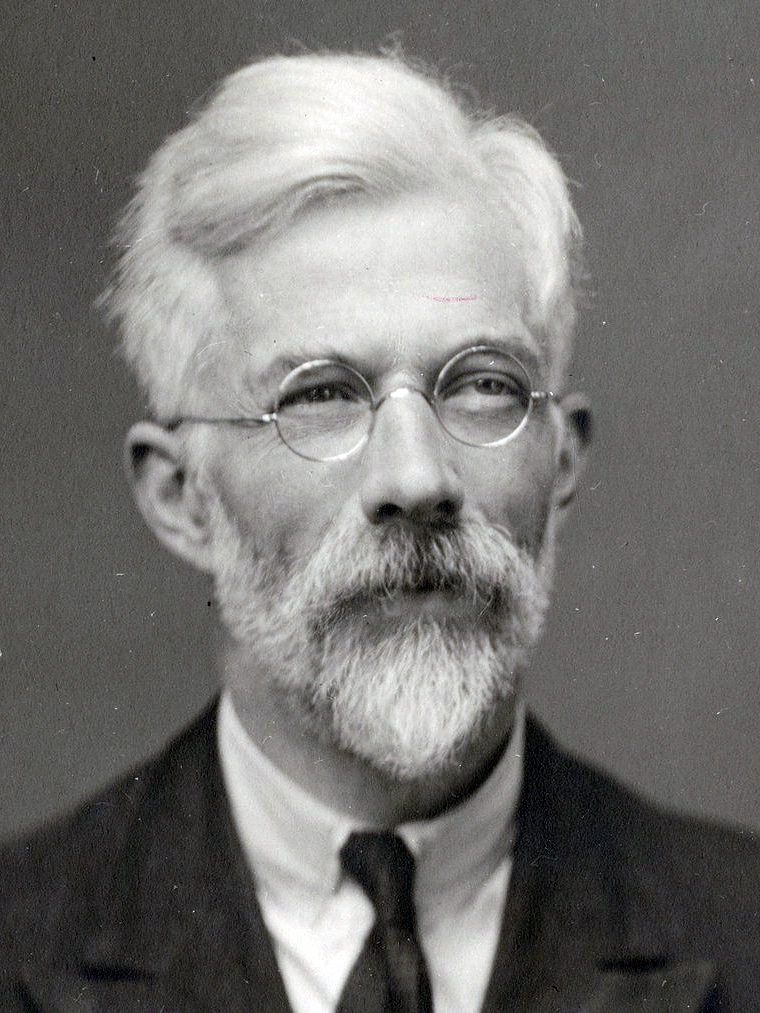
Attr: Photo Source
| 9 Quotes | |
| Born as | Ronald Aylmer Fisher |
| Known as | R. A. Fisher |
| Occup. | Mathematician |
| From | England |
| Born | February 17, 1890 East Finchley, London, England |
| Died | July 29, 1962 Adelaide, South Australia, Australia |
| Aged | 72 years |
| Cite | |
Citation Formats
APA Style (7th ed.)
Ronald fisher biography, facts and quotes. (2026, February 11). FixQuotes. https://fixquotes.com/authors/ronald-fisher/
Chicago Style
"Ronald Fisher biography, facts and quotes." FixQuotes. February 11, 2026. https://fixquotes.com/authors/ronald-fisher/.
MLA Style (9th ed.)
"Ronald Fisher biography, facts and quotes." FixQuotes, 11 Feb. 2026, https://fixquotes.com/authors/ronald-fisher/. Accessed 27 Mar. 2026.
Early Life and Background
Ronald Aylmer Fisher was born on 17 February 1890 in East Finchley, then on the northern edge of London, the son of George and Katie Fisher. Raised in late-Victorian and Edwardian England, he came of age in a culture that venerated measurement - in schools, in imperial administration, and increasingly in laboratories. Fisher grew up with severe myopia, a constraint that pushed him away from visually intensive work and toward mental calculation and geometric imagination; it also gave him an inward, exacting cast, as if the world had to be rebuilt in the mind before it could be trusted on paper.Family life was comfortable but not immune to disruption, and Fisher early learned the precariousness behind middle-class security. The upheavals of the early 20th century - the prestige of German science, the shock of the Great War, the acceleration of industrial research - formed the background to his belief that rigor was not mere pedantry but a civic necessity. From the start he was both intensely ambitious and curiously moralistic: a man who could argue about probabilities with ferocity while insisting that scientific conclusions carried obligations to others.
Education and Formative Influences
Fisher studied mathematics at Gonville and Caius College, Cambridge, graduating in 1912, and was drawn to the biometric and Mendelian debates then reshaping British biology. Cambridge exposed him to the power and the limits of mathematical formalism at a time when Karl Pearson's Biometric School dominated statistical practice and when genetics was still sorting out how inheritance and variation fit together. War service was cut short by eyesight, and in the 1910s he lived on the margins of academic life, teaching and working on problems that seemed, to many contemporaries, too abstract or too biological to belong to any single discipline - the liminal position that would later make him a founder of several.Career, Major Works, and Turning Points
Fisher's decisive institutional turning point came in 1919 when he became statistician at Rothamsted Experimental Station in Harpenden, where agricultural field trials forced theory to meet mud, weather, and imperfect data. There he forged modern experimental design - randomization, blocking, replication - and the analysis of variance, along with maximum likelihood and the conceptual backbone of statistical inference. His books and papers remade the field: Statistical Methods for Research Workers (1925) taught scientists how to think with data; The Genetical Theory of Natural Selection (1930) fused Mendelian genetics with Darwinian selection and propelled the modern evolutionary synthesis. In 1933 he moved to University College London, then to Cambridge as Balfour Professor of Genetics (1943), continuing contentious debates with Pearsonian and later Neyman-Pearson approaches, while training generations of statisticians and geneticists. His later years included work in Australia at the University of Adelaide, and he died there on 29 July 1962, an Englishman whose intellectual map had grown larger than any single country or discipline.Philosophy, Style, and Themes
Fisher's inner life was marked by an almost combative reverence for principles: he wanted methods that could survive contact with real experiments, and he distrusted authority untested by discovery. His impatience with after-the-fact rationalization was not merely methodological but psychological - a refusal to let narrative replace design. “To consult the statistician after an experiment is finished is often merely to ask him to conduct a post mortem examination. He can perhaps say what the experiment died of”. Behind the quip is a moral demand: take responsibility in advance for what you will claim later, and build uncertainty into the plan rather than smuggling certainty into the conclusion.He also fought what he saw as the creeping scholasticism of modern science, where technical detail accumulates and obscures first principles. “The tendency of modern scientific teaching is to neglect the great books, to lay far too much stress upon relatively unimportant modern work, and to present masses of detail of doubtful truth and questionable weight in such a way as to obscure principles”. That stance helps explain both his brilliance as an expositor and his tendency toward polemic: he wrote as if clarity were a kind of rescue mission. Yet his ideal of clarity was not simplification; it was communication that preserved freedom. “We have the duty of formulating, of summarizing, and of communicating our conclusions, in intelligible form, in recognition of the right of other free minds to utilize them in making their own decisions”. The sentence reveals the ethical core of his statistics: inference as disciplined persuasion, not coercion.
Legacy and Influence
Fisher remains a central architect of 20th-century quantitative thought: maximum likelihood, sufficient statistics, Fisher information, the Fisher exact test, experimental design, and ANOVA are embedded in disciplines from agronomy to psychology, economics, and machine learning. In evolutionary biology, he helped make selection mathematically intelligible and population genetics analytically tractable, shaping how scientists speak about adaptation, variance, and inheritance. His legacy is also complicated: admired for genius and criticized for combative controversies and political views that jar with later sensibilities, he exemplifies how intellectual revolutions can be both emancipating and abrasive. Still, his enduring influence lies in the same conviction that drove his best work - that careful design, principled reasoning, and intelligible reporting are not technical preferences but the conditions under which knowledge can be shared and trusted.Our collection contains 9 quotes written by Ronald, under the main topics: Knowledge - Science - Teaching.
Other people related to Ronald: George C. Williams (Scientist)
Ronald Fisher Famous Works
- 1956 Statistical Methods and Scientific Inference (Book)
- 1935 The Design of Experiments (Book)
- 1930 The Genetical Theory of Natural Selection (Book)
- 1925 Statistical Methods for Research Workers (Book)
- 1922 On the Mathematical Foundations of Theoretical Statistics (Essay)
- 1918 The Correlation Between Relatives on the Supposition of Mendelian Inheritance (Essay)