
Ronald Reagan Biography Quotes 94 Report mistakes
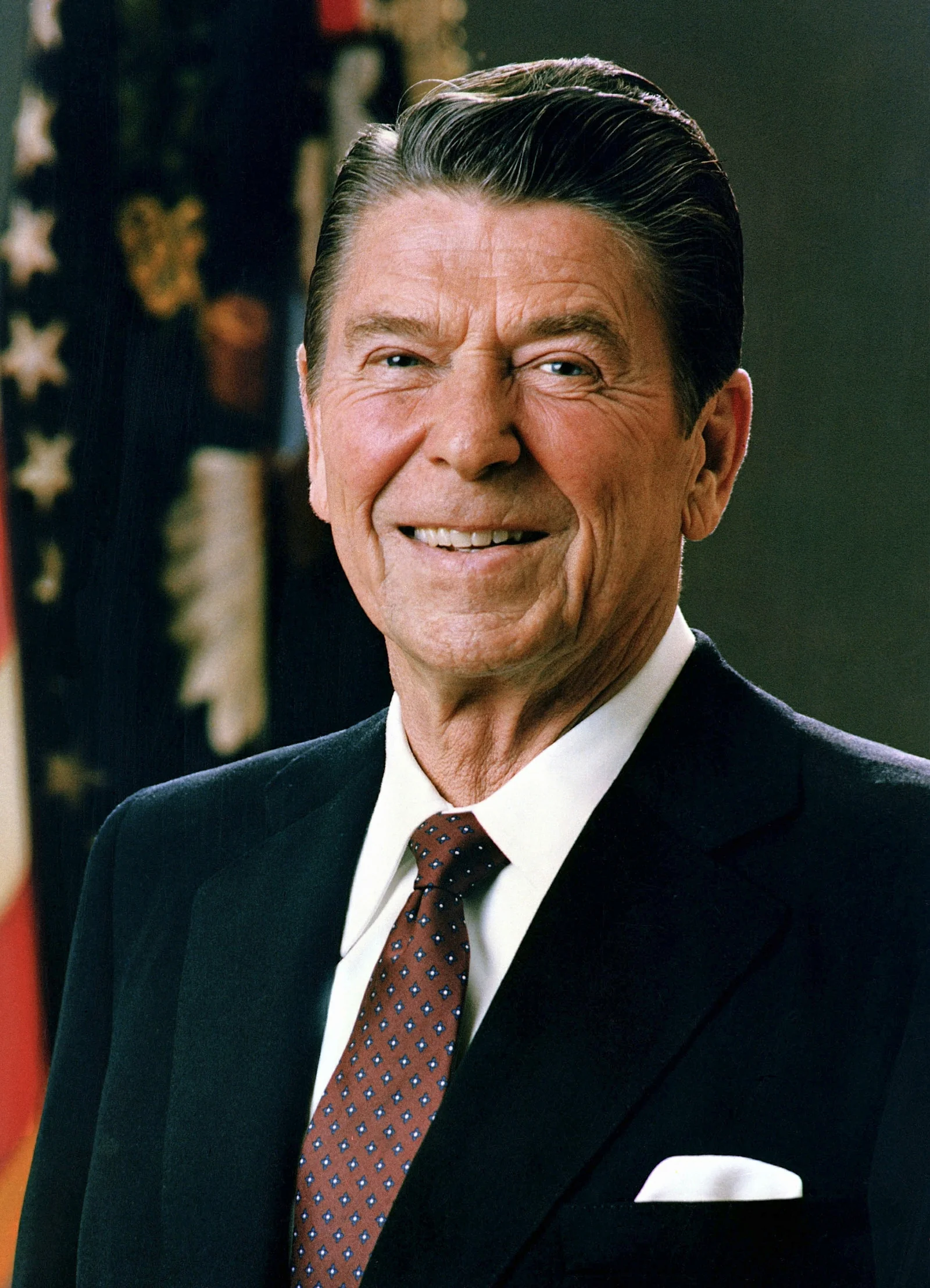
| 94 Quotes | |
| Occup. | President |
| From | USA |
| Born | February 6, 1911 |
| Died | June 5, 2004 |
| Aged | 93 years |
| Cite | |
Citation Formats
APA Style (7th ed.)
Ronald reagan biography, facts and quotes. (2026, February 2). FixQuotes. https://fixquotes.com/authors/ronald-reagan/
Chicago Style
"Ronald Reagan biography, facts and quotes." FixQuotes. February 2, 2026. https://fixquotes.com/authors/ronald-reagan/.
MLA Style (9th ed.)
"Ronald Reagan biography, facts and quotes." FixQuotes, 2 Feb. 2026, https://fixquotes.com/authors/ronald-reagan/. Accessed 26 Mar. 2026.
Early Life and Background
Ronald Wilson Reagan was born on February 6, 1911, in Tampico, Illinois, and grew up largely in Dixon during a period when small-town Midwestern life still carried the moral authority of church, lodge, and school. His father, Jack Reagan, was a shoe salesman whose charm and alcoholism made the household alternately convivial and precarious; his mother, Nelle, a devout Disciples of Christ member, offered a steadier inheritance - Biblical cadence, faith in redemption, and the habit of seeing public life as a theater of moral choice. The tension between Jack's volatility and Nelle's providential optimism helped form Reagan's later blend of sunny certainty and controlled distance.The Great Depression pressed his generation into improvisation, and Reagan met it not with private despair but with performative competence: as a lifeguard on the Rock River he claimed dozens of rescues, a story he repeated as proof that character reveals itself under pressure. That early impulse to narrate life as a series of tests - with clear villains, clear virtues, and a rescuable public - would later fit the emerging mass-media age. Even before politics, he practiced leadership as reassurance, using humor and confidence to tamp down fear in others and, perhaps, in himself.
Education and Formative Influences
Reagan attended Eureka College in Illinois, graduating in 1932 with broad interests rather than a specialized calling: economics and sociology coursework, campus drama, football, and student leadership. He absorbed a Midwestern tradition of civic religion and a belief in self-making, then honed the mechanics of persuasion in radio, first in Iowa as a sports announcer where he learned to narrate events vividly and calmly, even when relying on scant facts. The radio booth trained his signature skill: turning complexity into a story ordinary listeners could inhabit, a habit that would later serve both his ideology and his political resilience.Career, Major Works, and Turning Points
In 1937 Reagan moved to Hollywood, becoming a contract actor and later a recognizable leading man in films such as "Knute Rockne, All American" (1940) and "Kings Row" (1942), while wartime service placed him in the Army Air Forces' First Motion Picture Unit making training and propaganda films. His leadership at the Screen Actors Guild - including the bruising late-1940s fights over Communist influence and labor strife - fused personal ambition with a hardening anti-Communism and a suspicion that institutions could be captured from within. A second marriage, to Nancy Davis in 1952, reinforced his taste for loyalty and message discipline. His political conversion from New Deal Democrat to conservative Republican crystallized during his years as General Electric spokesperson and TV host (1954-1962), when he toured plants, absorbed corporate arguments about regulation and taxes, and developed a sermon-like rhetoric about freedom. After the catalytic 1964 "A Time for Choosing" speech, he won the California governorship (1966), navigated unrest and budget fights, then captured the presidency in 1980 amid inflation, hostage humiliation in Iran, and a renewed Cold War.Philosophy, Style, and Themes
Reagan's inner life was a marriage of conviction and performance. He prized the moral clarity of a script not because he was superficial, but because he believed clarity itself could reorder reality - a psychological need shaped by early household instability and later perfected in mass media. He joked, “How can a president not be an actor?” The line was not a dodge; it was a confession that modern power is inseparable from staging, tone, and timing. For Reagan, leadership meant lowering the nation's pulse, then raising its confidence - often by speaking as if America were already the country he wanted it to be.Substantively, his themes clustered around individual dignity, limited government, and a confident nationalism that framed the Cold War as a moral contest rather than a mere balance-of-power puzzle. He cast government as instrument, not guardian: “Protecting the rights of even the least individual among us is basically the only excuse the government has for even existing”. This was the emotional center of his conservatism - less a technocratic program than a moral boundary that made coercion feel like betrayal. Yet he also treated conflict as permanent, requiring steadiness rather than utopian endings: “Peace is not absence of conflict, it is the ability to handle conflict by peaceful means”. In practice that stance underwrote both his military buildup and his later readiness to negotiate with Mikhail Gorbachev, allowing him to be simultaneously hawkish in posture and pragmatic in outcome.
Legacy and Influence
Reagan left office in 1989 having reshaped the Republican Party around supply-side economics, deregulation, social conservatism, and an optimistic, values-driven nationalism; his appointments and administrative priorities accelerated a long conservative turn in American jurisprudence and political language. His tenure also carried enduring controversies: widening inequality, rising deficits despite anti-tax vows, the AIDS crisis' slow federal response, and the Iran-Contra scandal, which revealed the dangers of delegating operational zeal beneath a leader devoted to broad narrative. Internationally, his pressure-and-dialogue approach helped set conditions for the Cold War's end, though historians still debate the balance between structural Soviet decline and Reagan-era policy. Diagnosed with Alzheimer's disease in the 1990s and dying on June 5, 2004, he became a symbol as much as a man - the "Great Communicator" whose greatest achievement was not any single law, but a persuasive story about America that remains a template, and a battleground, for political identity.Our collection contains 94 quotes written by Ronald, under the main topics: Witty One-Liners - Motivational - Ethics & Morality - Truth - Wisdom.
Other people related to Ronald: William J. Casey (Director), Colin Powell (Statesman), George H. W. Bush (President), Whittaker Chambers (Writer), Peggy Noonan (Writer), John Mica (Politician), Richard Perle (Public Servant), Lyn Nofziger (American), Martin Feldstein (Economist), Mike Pence (Politician)
Ronald Reagan Famous Works
- 2007 The Reagan Diaries (Diary)
- 2003 Reagan: A Life In Letters (Letters)
- 1990 An American Life: The Autobiography (Autobiography)
- 1989 Speaking My Mind: Selected Speeches (Speech Collection)
- 1984 Abortion and the Conscience of the Nation (Essay)
Source / external links