
Ronnie Coleman Biography Quotes 25 Report mistakes
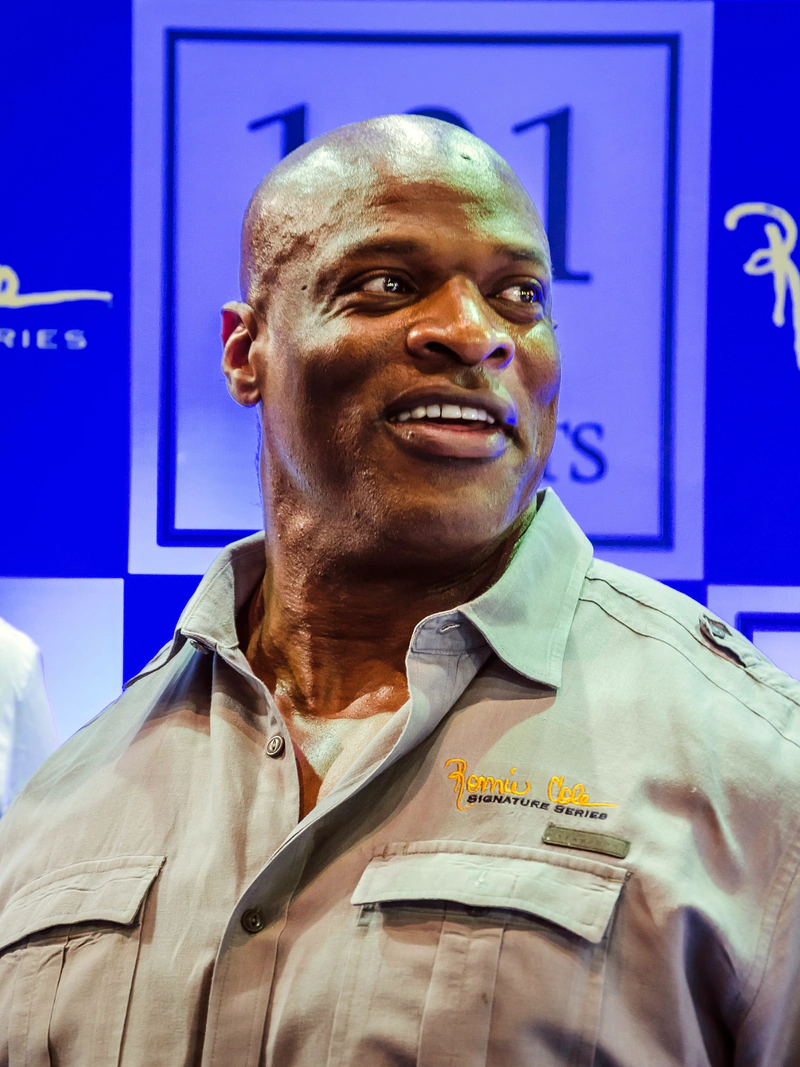
| 25 Quotes | |
| Born as | Ronald Dean Coleman |
| Occup. | Athlete |
| From | USA |
| Born | May 13, 1964 Monroe, Louisiana, USA |
| Age | 61 years |
| Cite | |
Citation Formats
APA Style (7th ed.)
Ronnie coleman biography, facts and quotes. (2026, February 11). FixQuotes. https://fixquotes.com/authors/ronnie-coleman/
Chicago Style
"Ronnie Coleman biography, facts and quotes." FixQuotes. February 11, 2026. https://fixquotes.com/authors/ronnie-coleman/.
MLA Style (9th ed.)
"Ronnie Coleman biography, facts and quotes." FixQuotes, 11 Feb. 2026, https://fixquotes.com/authors/ronnie-coleman/. Accessed 12 Feb. 2026.
Early Life and Background
Ronald Dean "Ronnie" Coleman was born May 13, 1964, in Monroe, Louisiana, and came of age in the practical, church-and-football culture of the American South. His early identity was not built around aesthetics but around utility - strength used for work, sport, and belonging. Friends and coaches remembered a broad-shouldered kid who could absorb hard training without theatrics, more comfortable doing than explaining. That temperament would later make him a rare phenomenon in bodybuilding: a superstar who still sounded like the guy next door.The 1970s and early 1980s in rural Louisiana offered limited paths to national visibility, and Coleman initially followed the most legible one: athletics through school. The region valued toughness and consistency over self-promotion, and those values stayed welded to him even after fame arrived. His later catchphrases and grinning intensity were not marketing inventions so much as a release valve - humor and simplicity used to survive the grind he demanded of himself.
Education and Formative Influences
Coleman attended Grambling State University, where he played football as a defensive lineman and earned a degree in accounting. The combination mattered: football taught him how to suffer inside a team structure, while accounting trained a methodical mind that could log inputs and outputs without romance. In the late 1980s he moved to Texas, a state whose gym culture and growing physique scene offered opportunity, and he joined the Arlington Police Department - a steady job that also reinforced his self-concept as disciplined, service-oriented, and durable under pressure.Career, Major Works, and Turning Points
Coleman began competing seriously after training at Metroflex Gym in Arlington, a hard-edged warehouse temple run by Brian Dobson; Dobson encouraged him to enter the 1990 Mr. Texas, which Coleman won, setting him on a professional track. After earning IFBB pro status and slowly climbing the ranks, his defining turning point arrived in 1998 when he won Mr. Olympia, unseating Dorian Yates's successor era and inaugurating an eight-year reign (1998-2005) that tied the all-time record. His signature "mass with condition" look - dense back, dominant legs, and relentless fullness - helped define the early 2000s standard. Later competition losses did not erase the scale of his peak; instead they framed a second act marked by surgeries, rehabilitation, and a new role as an ambassador whose training footage, seminars, and public appearances kept the mythos circulating long after he left the Olympia stage.Philosophy, Style, and Themes
Coleman's psychology as an athlete was built on an almost blunt refusal to negotiate with discomfort. He treated effort as a moral category: if you wanted the result, you paid for it in weight and repetition. "Everybody wants to be a bodybuilder, but don't nobody wanna lift no heavy ass weight". The line is funny, but it also reveals his worldview - desire is common; willingness is rare - and it explains why he trained with public, verifiable heaviness that removed ambiguity. His era was one of escalating size, and he met it with a style that looked less like choreography than labor: brutal compound lifts, high loads, and an attitude that success was earned in the ugliest part of the set.At the same time, his optimism was not naïve; it functioned as a technique. The catchphrase "Aint nuttin' but a peanut". was a self-hypnosis that shrank danger to something manageable, a way to walk into intimidation and come out smiling. He was equally clear about the cost, refusing to sentimentalize the damage that elite bodybuilding can inflict: "I have had quite a few injuries during my time and if you are not injured in this sport [bodybuilding], you are not doing anything". That statement is controversial, yet psychologically consistent - he framed pain not as tragedy but as proof of earnestness, the scar tissue of ambition. In Coleman, the themes converge: blue-collar grit, competitive extremity, and a disarming cheerfulness that made the extreme feel, for a moment, doable.
Legacy and Influence
Coleman's enduring influence sits at the intersection of performance and persona. He helped cement the modern expectation that a champion could be both monstrously muscular and sharply conditioned, and his training videos became a global template for "hardcore" culture - equal parts inspiration and warning. As later generations debated longevity, injury, and pharmacology, Coleman remained a living case study: the triumph of relentless work and the price it can demand. Yet the lasting memory is not only the trophies; it is the voice of a man who made suffering sound simple, turning private willpower into a public language that still pulls people under a barbell.Our collection contains 25 quotes written by Ronnie, under the main topics: Witty One-Liners - Motivational - Work Ethic - God - Training & Practice.
Other people related to Ronnie: Lee Haney (Athlete)
Source / external links