
Rosa Parks Biography Quotes 13 Report mistakes
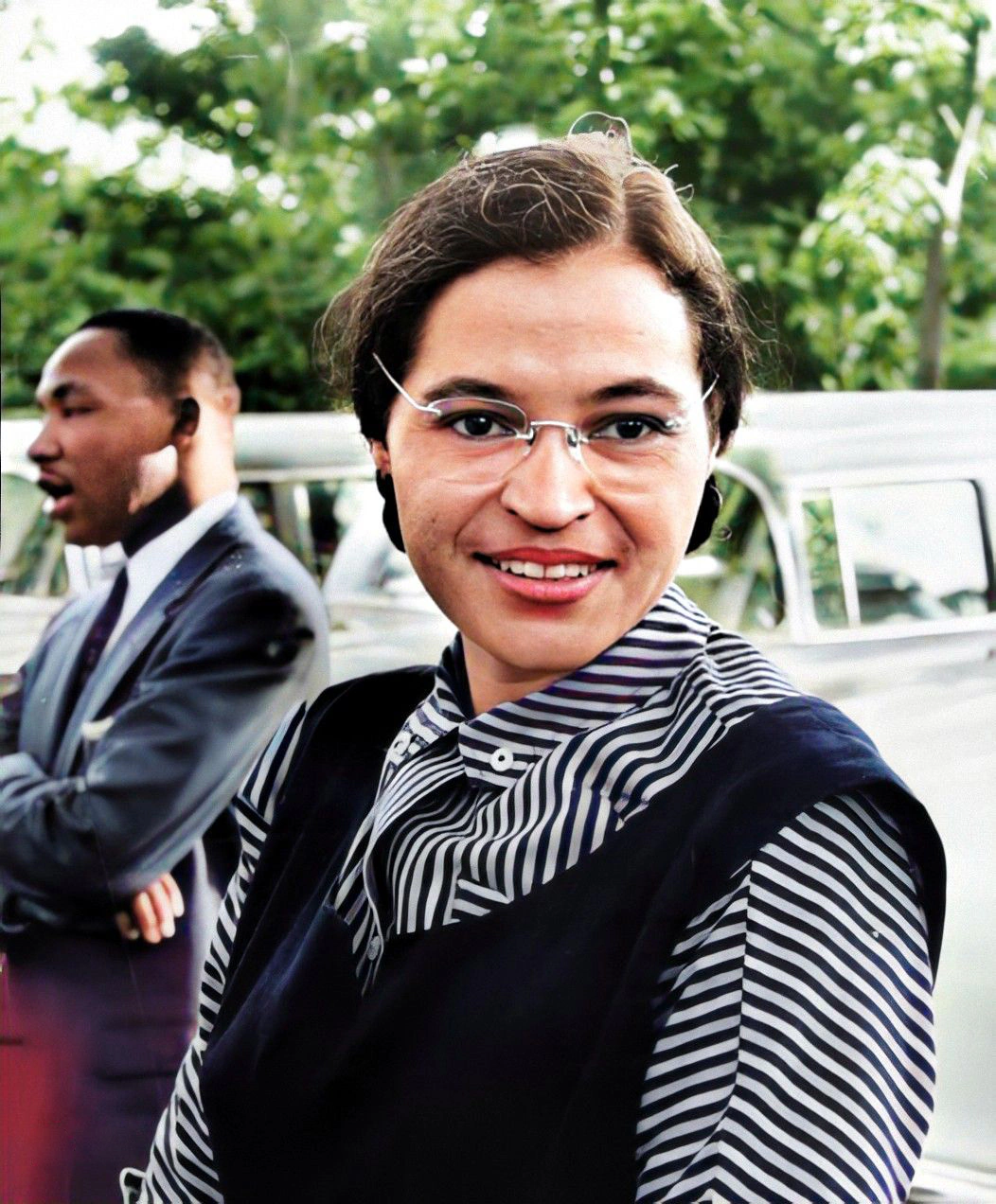
| 13 Quotes | |
| Born as | Rosa Louise McCauley Parks |
| Occup. | Activist |
| From | USA |
| Born | February 4, 1913 Tuskegee, Alabama |
| Died | October 24, 2005 |
| Aged | 92 years |
| Cite | |
Citation Formats
APA Style (7th ed.)
Rosa parks biography, facts and quotes. (2026, February 11). FixQuotes. https://fixquotes.com/authors/rosa-parks/
Chicago Style
"Rosa Parks biography, facts and quotes." FixQuotes. February 11, 2026. https://fixquotes.com/authors/rosa-parks/.
MLA Style (9th ed.)
"Rosa Parks biography, facts and quotes." FixQuotes, 11 Feb. 2026, https://fixquotes.com/authors/rosa-parks/. Accessed 5 Mar. 2026.
Early Life and Background
Rosa Louise McCauley Parks was born on February 4, 1913, in Tuskegee, Alabama, and raised primarily in Pine Level outside Montgomery after her parents, James McCauley, a carpenter, and Leona Edwards McCauley, a teacher, separated. In the rigid architecture of Jim Crow, childhood was not a private sanctuary but a training ground in racial boundaries - separate schools, threats of white violence, and the constant need to calculate safety. Her grandparents home, rooted in self-reliance and church life, also carried a quiet militancy; family stories and daily humiliations formed an early moral ledger of what was owed and what was stolen.Those early years were marked by illness, instability, and vigilance. Parks later recalled nights when the Ku Klux Klan rode; her grandfather sometimes sat up with a shotgun, an image that lodged in her imagination as both fear and refusal. That tension - between the vulnerability of Black life in the rural South and the insistence on dignity - became a lifelong interior posture: not theatrical defiance, but steady self-possession under pressure.
Education and Formative Influences
She attended local segregated schools, then the Montgomery Industrial School for Girls (often called Miss White's school), an institution run by northern white women that emphasized discipline, literacy, and personal worth in a society structured to deny it. She later enrolled at Alabama State Teachers College for Negroes but left to care for family members, a decision that sharpened her sense of the everyday burdens placed on Black women. In 1932 she married Raymond Parks, a barber and NAACP organizer, and through his activism - including support for the Scottsboro Boys defense efforts - her private indignations were braided into political purpose.Career, Major Works, and Turning Points
Long before 1955, Parks was already an experienced organizer: NAACP secretary in Montgomery (1943-1957), investigator of sexual violence cases, and a key figure in voter-registration work amid reprisals. On December 1, 1955, after leaving her job as a seamstress at Montgomery Fair, she refused bus driver James F. Blake's order to surrender her seat to a white passenger and was arrested. Her case, strategically embraced by local leaders and the Women's Political Council, ignited the Montgomery Bus Boycott led by a young Martin Luther King Jr., and the legal challenge Browder v. Gayle (1956) ended bus segregation. The victory did not bring safety; she and Raymond lost work and endured threats, moving in 1957 to Detroit, where she later worked for Congressman John Conyers (1965-1988) while remaining active in housing, policing, and anti-war debates. In later decades she helped found the Rosa and Raymond Parks Institute for Self Development, and her public honors - including the Presidential Medal of Freedom (1996) and Congressional Gold Medal (1999) - arrived alongside continued advocacy.Philosophy, Style, and Themes
Parks' public image is often flattened into a single tired woman who sat down; her own words complicate that myth into an ethic of ordinary resistance. “All I was doing was trying to get home from work”. The insistence is not smallness but precision: she located history inside routine, showing how oppression lives in procedures, seats, lines, and tone of voice. Her politics began with the body - where you may sit, how you may be addressed - and widened into a theory of citizenship grounded in daily practice.Her style was quiet but unyielding, shaped by church discipline, NAACP fact-finding, and a temperament that disliked spectacle. “I'm tired of being treated like a second-class citizen”. Fatigue here is moral exhaustion, the end of bargaining with insult. Yet she resisted the lone-hero narrative that the nation preferred because it made change seem accidental and safe: “At the time I was arrested I had no idea it would turn into this. It was just a day like any other day. The only thing that made it significant was that the masses of the people joined in”. Psychologically, this is humility fused with strategic truth - she understood that her act mattered because networks, meetings, leaflets, and collective courage transformed a personal boundary into a public demand.
Legacy and Influence
Rosa Parks died on October 24, 2005, in Detroit, Michigan, and lay in honor in the U.S. Capitol Rotunda, a rare national recognition that nevertheless cannot domesticate her radical clarity. She helped reframe American democracy by proving that a single refusal, prepared by years of organizing and sustained by communal action, can puncture a legal order. Her influence runs through grassroots training, womens leadership in the movement, and the continuing argument that civil rights are not granted by sentiment but claimed by disciplined participation - a model of freedom that begins in the smallest contested space and expands until the law must change.Our collection contains 13 quotes written by Rosa, under the main topics: Leadership - Freedom - Equality - Human Rights - Legacy & Remembrance.
Other people related to Rosa: Angela Bassett (Actress), Henry Hampton (Activist)
Source / external links