
Ross Perot Biography Quotes 23 Report mistakes
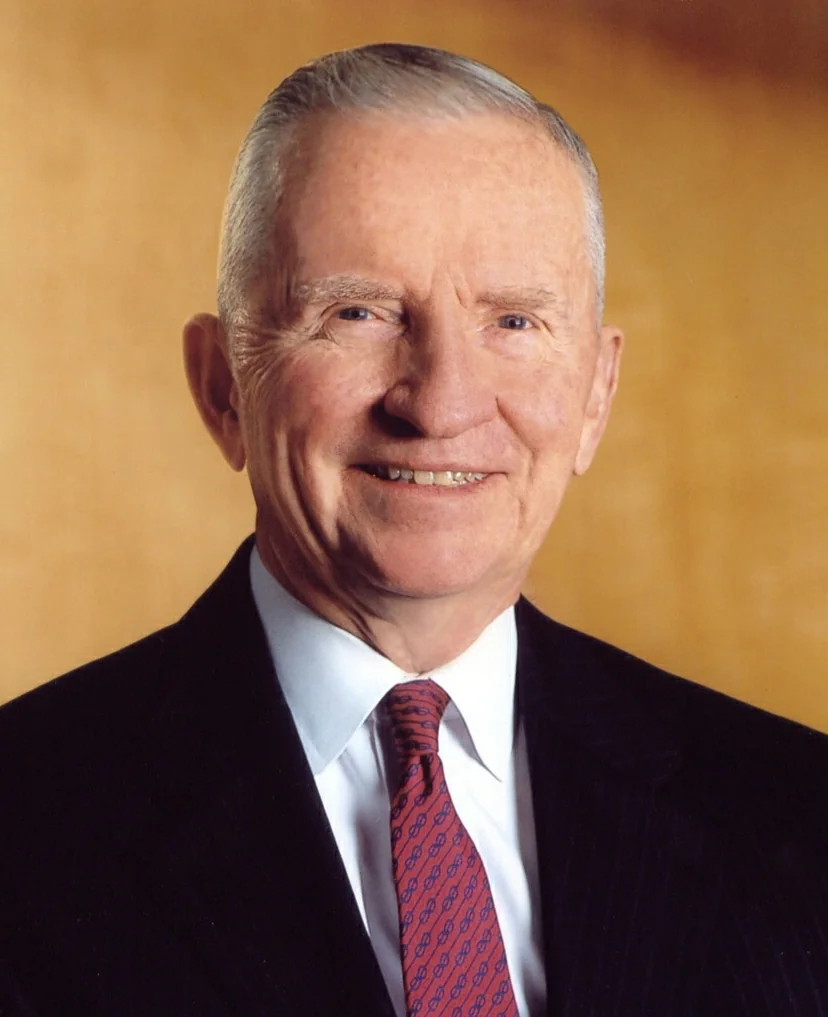
| 23 Quotes | |
| Born as | Henry Ross Perot |
| Occup. | Businessman |
| From | USA |
| Born | June 27, 1930 Texarkana, Texas |
| Age | 95 years |
| Cite | |
Citation Formats
APA Style (7th ed.)
Ross perot biography, facts and quotes. (2026, February 2). FixQuotes. https://fixquotes.com/authors/ross-perot/
Chicago Style
"Ross Perot biography, facts and quotes." FixQuotes. February 2, 2026. https://fixquotes.com/authors/ross-perot/.
MLA Style (9th ed.)
"Ross Perot biography, facts and quotes." FixQuotes, 2 Feb. 2026, https://fixquotes.com/authors/ross-perot/. Accessed 5 Mar. 2026.
Early Life and Background
Henry Ross Perot was born on June 27, 1930, in Texarkana, Texas, a border city where oil money, farm cash, and small-town networks met at the courthouse square. The Perots were not dynastic tycoons; the household culture prized work, plain talk, and the idea that competence should count more than pedigree. That sensibility stayed with him: he carried himself like a salesman who had to win trust in a single conversation, yet he thought in systems, always scanning for leverage points where one stubborn person could change outcomes.Texarkana also gave him a lifelong feel for the overlooked middle - people far from Washington or Wall Street who still had to make payroll, buy health insurance, or watch their kids enlist. Friends and admirers often described an intense inner drive, a mix of impatience with excuses and deep loyalty to those he decided were "his". That psychological pairing - urgency plus personal obligation - later fueled both his business model and his public crusades, from corporate rescues to veterans and POW/MIA advocacy.
Education and Formative Influences
Perot attended Texarkana Junior College and then the U.S. Naval Academy, graduating in 1953 and serving as a naval officer. The Navy sharpened his taste for clear chains of responsibility, fast decisions, and measurable performance - habits that later clashed with bureaucracies he believed hid behind procedure. Just as important, it cemented a moral framework in which leadership meant taking personal risk for subordinates, a view that would surface repeatedly when he spent his own money and reputation to fight for people he felt had been abandoned.Career, Major Works, and Turning Points
After leaving the Navy, Perot sold IBM computers, quickly becoming one of the companys top salesmen, then broke away to found Electronic Data Systems (EDS) in 1962 in Dallas, betting that corporations would outsource the unglamorous back office work of data processing. EDS grew into a signature firm of the information age, built on strict discipline and a cult of service; in 1984 General Motors bought EDS in a landmark deal, and Perot became both insider and irritant, publicly feuding with GM leadership over accountability and performance before departing in 1986. He then founded Perot Systems in 1988, and his national profile widened beyond business through dramatic interventions - most famously financing and organizing a 1979 rescue mission to extract EDS employees jailed in Iran during the revolution, an episode recounted in Ken Folletts "On Wings of Eagles". His most consequential pivot came with the 1992 presidential race as an independent, when his charts, debt warnings, and anti-establishment posture turned him into a mass-media phenomenon; he won 18.9% of the popular vote, the strongest independent showing in decades, and ran again in 1996, ultimately helping normalize third-party pressure on fiscal issues and trade.Philosophy, Style, and Themes
Perots inner life read like a collision between an engineer and a populist preacher: he craved order, but he loved the messy, face-to-face moral drama of persuading people. His business creed was relationship-heavy and anti-abstract, insisting that “Business is not just doing deals; business is having great products, doing great engineering, and providing tremendous service to customers. Finally, business is a cobweb of human relationships”. That line explains both the devotion he inspired and the fear he could provoke - he treated organizations less as charts than as obligations, and he expected the same personal buy-in from everyone around him.He was equally famous for impatience with delay and what he saw as careerist hedging. “If you see a snake, just kill it - don't appoint a committee on snakes”. Underneath the bravado was a psychological intolerance for helplessness: to Perot, inaction was not neutral but complicit. In politics, that translated into blunt talk about debt, trade, and competence, and a suspicion that process had replaced responsibility. Yet he also had a talent-scouts mystique, believing excellence was rare and had to be hunted: “Eagles don't flock, you have to find them one at a time”. The theme connecting the three is faith in decisive individuals - recruited carefully, led hard, and judged by outcomes.
Legacy and Influence
Perot died in 2019, but his imprint remains visible in two arenas. In business, EDS helped professionalize IT services and made outsourcing a mainstream corporate strategy, while his management style - intense culture, metrics, and customer obsession - prefigured later service giants. In public life, his 1992 campaign proved that a self-funded outsider could seize the national agenda through media savvy and fiscal argument, foreshadowing later waves of anti-establishment politics; his warnings about deficits and trade entered everyday debate, and his model of direct, data-driven persuasion - equal parts boardroom brief and revival meeting - reshaped how businessmen imagined their route into American power.Our collection contains 23 quotes written by Ross, under the main topics: Witty One-Liners - Motivational - Never Give Up - Leadership - Meaning of Life.
Other people related to Ross: James Stockdale (Soldier), Hamilton Jordan (Public Servant), Larry King (Entertainer)
Ross Perot Famous Works
- 1996 The Dollar Crisis: A Blueprint to Help Rebuild the American Dream (Book)
- 1993 Not for Sale at Any Price: How We Can Save America for Our Children (Book)
- 1992 United We Stand: How We Can Take Back Our Country (Book)
Source / external links