
Ruth St. Denis Biography Quotes 13 Report mistakes
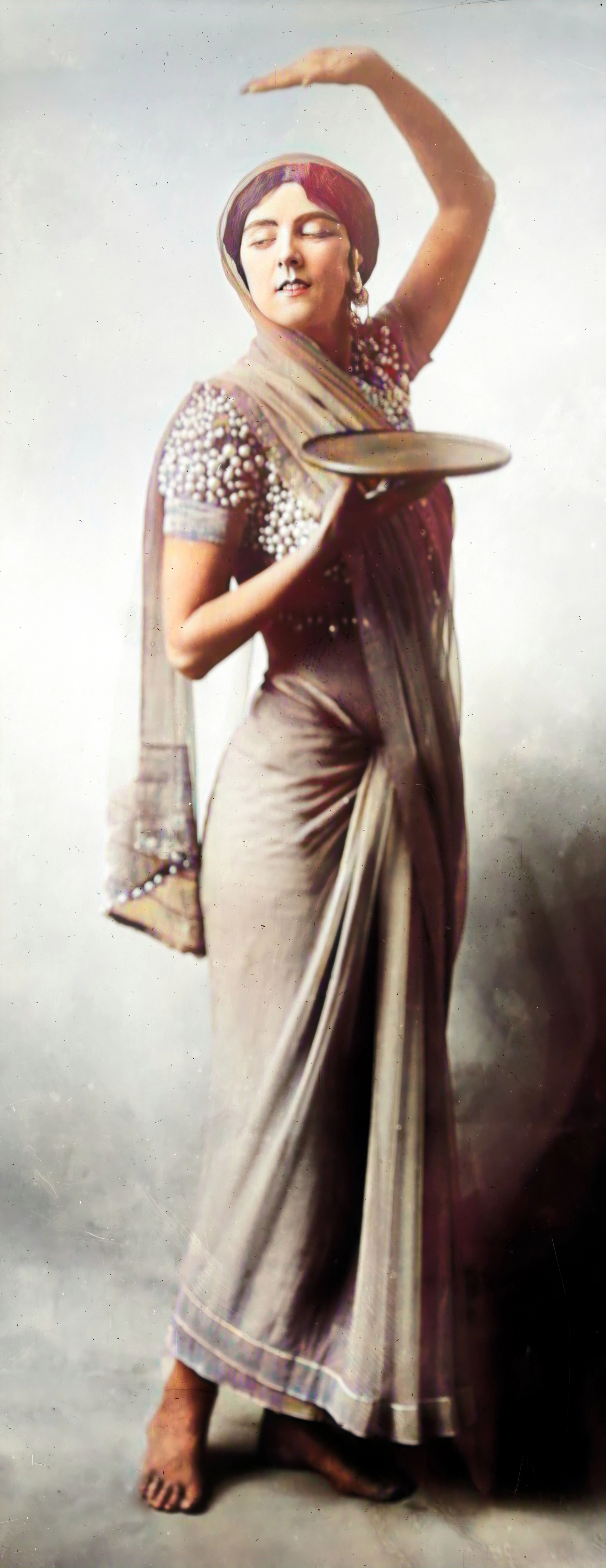
| 13 Quotes | |
| Born as | Ruth Dennis |
| Occup. | Dancer |
| From | USA |
| Spouse | Ted Shawn |
| Born | January 20, 1878 Newark, New Jersey, USA |
| Died | July 21, 1968 Los Angeles, California, USA |
| Cause | Natural Causes |
| Aged | 90 years |
| Cite | |
Citation Formats
APA Style (7th ed.)
Ruth st. denis biography, facts and quotes. (2026, February 11). FixQuotes. https://fixquotes.com/authors/ruth-st-denis/
Chicago Style
"Ruth St. Denis biography, facts and quotes." FixQuotes. February 11, 2026. https://fixquotes.com/authors/ruth-st-denis/.
MLA Style (9th ed.)
"Ruth St. Denis biography, facts and quotes." FixQuotes, 11 Feb. 2026, https://fixquotes.com/authors/ruth-st-denis/. Accessed 5 Mar. 2026.
Early Life and Background
Ruth St. Denis was born Ruth Dennis on January 20, 1878, in Newark, New Jersey, and grew up in an America newly electrified by vaudeville circuits, dime museums, and the dream of self-invention. Her father, a farm-machinery inventor, died when she was young; the household was shaped largely by her mother, Ruth Emma Dennis, a disciplined, spiritually curious woman who believed physical culture and elevated taste could make a life. That combination - bodily training as salvation, art as a ladder out of ordinary circumstance - became the dancer's lifelong template.As a girl she absorbed the era's contradictory pressures: Victorian propriety alongside mass entertainment; Protestant restraint alongside fascination with "Oriental" imagery and theosophical ideas. She began performing early, first in modest venues and touring settings where audiences demanded spectacle and clarity. Those years taught her to project emotion with economy, to read a room quickly, and to treat dance not only as art but as a craft of persuasion.
Education and Formative Influences
St. Denis was shaped less by formal conservatory schooling than by a patchwork education in movement and stagecraft: Delsarte-style expressional gesture, skirt dancing, popular theatrical dance, and the discipline of touring companies that required stamina and invention. She worked in New York's theatrical world and, crucially, encountered the turn-of-the-century spiritual marketplace - Theosophy, comparative religion, and the popular "Orientalism" that framed Asia and the Middle East as sources of ancient wisdom. A famous spark came from a cigarette poster image of the goddess-like Isis; for St. Denis, such commercial iconography could be transmuted into devotional theater.Career, Major Works, and Turning Points
By the first decade of the 1900s she emerged as a modern dance pioneer, crafting solo works that translated imagined sacred worlds into theatrical ritual - among them "Radha" (1906), which became her signature, and later pieces such as "The Incense" and "The Cobras". European tours amplified her fame and validated her as an "art dancer" beyond vaudeville. In 1915 she married Ted Shawn; together they founded Denishawn in Los Angeles, a school and company that professionalized American concert dance and trained a generation, including Martha Graham, Doris Humphrey, and Charles Weidman. The Denishawn era was both triumph and strain: grand productions, relentless touring, and clashing temperaments - Shawn's organizational drive and her mystic, image-led creativity - eventually led to separation and the company's decline. In later decades she pursued explicitly religious work, forming the Society of Spiritual Arts and continuing to lecture and perform as a kind of dance evangelist.Philosophy, Style, and Themes
St. Denis understood dance as a spiritual technology: the body as instrument, the stage as sanctuary. “I see dance being used as communication between body and soul, to express what it too deep to find for words”. That sentence is not ornamental; it exposes her psychology - a performer for whom language felt inadequate, and whose solution was to build a symbolic vocabulary of hands, gaze, and controlled stillness. She sought ecstasy without chaos, designing movement that looked inevitable, almost priestly, even when the source materials were filtered through Western fantasy and theatrical need.Her style fused pose-based expressional dance with pageantry, incense, costume, and a studied slowness that asked audiences to watch as if witnessing revelation. In her inner life, the sacred was not elsewhere but latent, waiting for a signal from nature or symbol: “We can hear the silent voice of the spiritual universe within our own hearts”. The artist's task, in her view, was to refine receptivity until gesture carried cosmology: “Remembering that man is indeed the microcosm, the universe in miniature, the Divine Dance of the future should be able to convey with its slightest gestures some significance of the universe”. This ambition made her compelling and also controversial - her work often depended on cultural borrowing typical of her era, yet it was driven by sincere devotional intent rather than parody.
Legacy and Influence
Ruth St. Denis died on July 21, 1968, after living long enough to see modern dance become an American institution, partly built by her own infrastructure. Her enduring influence is paradoxical and foundational: she helped shift dance from novelty to art, from entertainment circuits to schools, repertory, and serious critical debate; she also exemplified the period's romantic "East" as a spiritual mirror for Western longings. Denishawn's alumni revolutionized movement language by rebelling against its aesthetic, yet they inherited its professionalism and its belief that dance could carry big ideas. St. Denis remains a primary figure for understanding how early modern dance intertwined spirituality, spectacle, and the longing to make the body speak as soul.Our collection contains 13 quotes written by Ruth, under the main topics: Wisdom - Truth - Art - Nature - Deep.
Source / external links